The results are in for our 2022 poll of Film Comment’s contributors! Our Top 20 lists in both the Released and Undistributed categories feature original appreciations from our critics, as well as links to features, reviews, and interviews about these films and directors from throughout the year. On this page, you’ll find our list of the best films that were released either theatrically or virtually in 2022 in the United States.
Don’t see your favorite? Check out our Best Undistributed Films of 2022 list, featuring films that premiered this year but have not yet announced stateside distribution.
Curious to see who voted and for which films? Check out our voters’ individual ballots here.
Also online: curator Inney Prakash’s list of Best Short Films of 2022, and filmmaker and programmer Gina Telaroli’s list of Best Restorations of 2022.
Peruse the poll results of yesteryear.
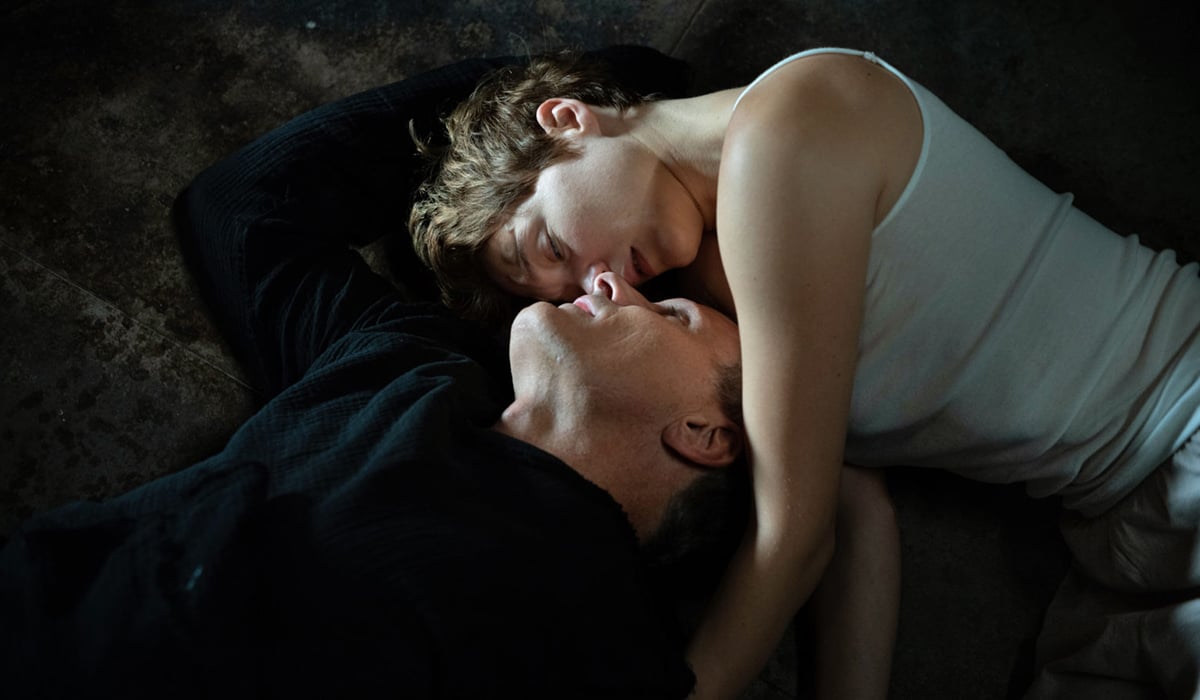
Okay, okay, so some bits are slightly cheesy. But Cronenberg delivers a combination of visceral fascination and philosophical intrigue found in few other films this year, reaffirming his place as Canada’s greatest living filmmaker. What I loved about Crimes of the Future was not just how it extends the idea of the “new flesh,” asking us to consider who we are without pain, what right the state has to regulate our bodies, and what the place of transgression is in art. It was also the reminder of something that has long been true but which is far too easy to forget in these days of anodyne “content” and never-ending franchises: popular cinema—entertainment, even—can be weird, base, and wickedly smart. The decadent grime of Cronenberg’s dystopic Athens feels like a world on the edge of extinction—one more like our own that we might care to imagine.—Erika Balsom
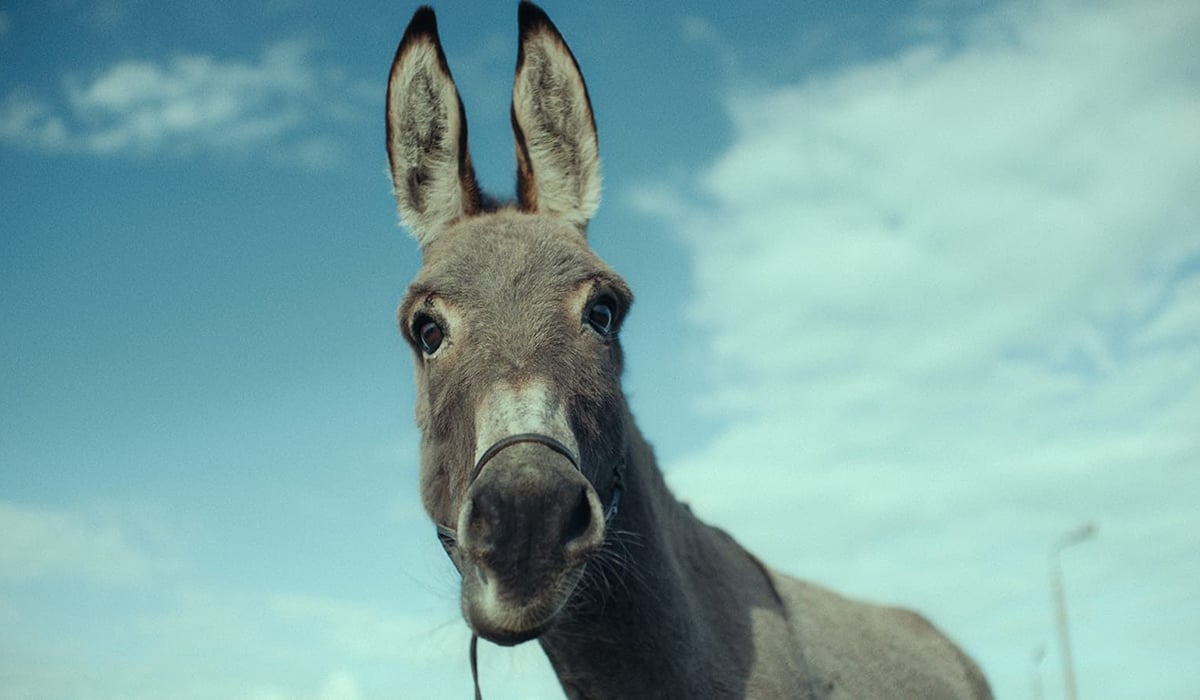
Only a fool would attempt an explicit homage to Au hasard Balthazar. Only a master could pull off what Jerzy Skolimowski achieves in this unpredictable, perceptually ingenious, deeply felt picaresque of a donkey making his way through our ruined world. The surface correspondences to Balthazar are less significant than how Skolimowski leans into one of Bresson’s maxims: “The greater the success, the closer it verges on failure.” EO’s wondrous evocation of animal phenomenology flirts with, but never succumbs to, an anthropomorphized perspective; the film’s psychedelic expressionism could just as well be fungal, mineral, or climatological. The story’s progression through various social contexts risks sentimentality or moralizing but short-circuits both through its syncopated treatment of time and space: EO is always one hoof ahead of the obvious. Running less than 90 minutes, the movie is quietly colossal, building to a sober, inexorable finale that—like the rest of the film—is simultaneously unadorned and ecstatic.—Nathan Lee
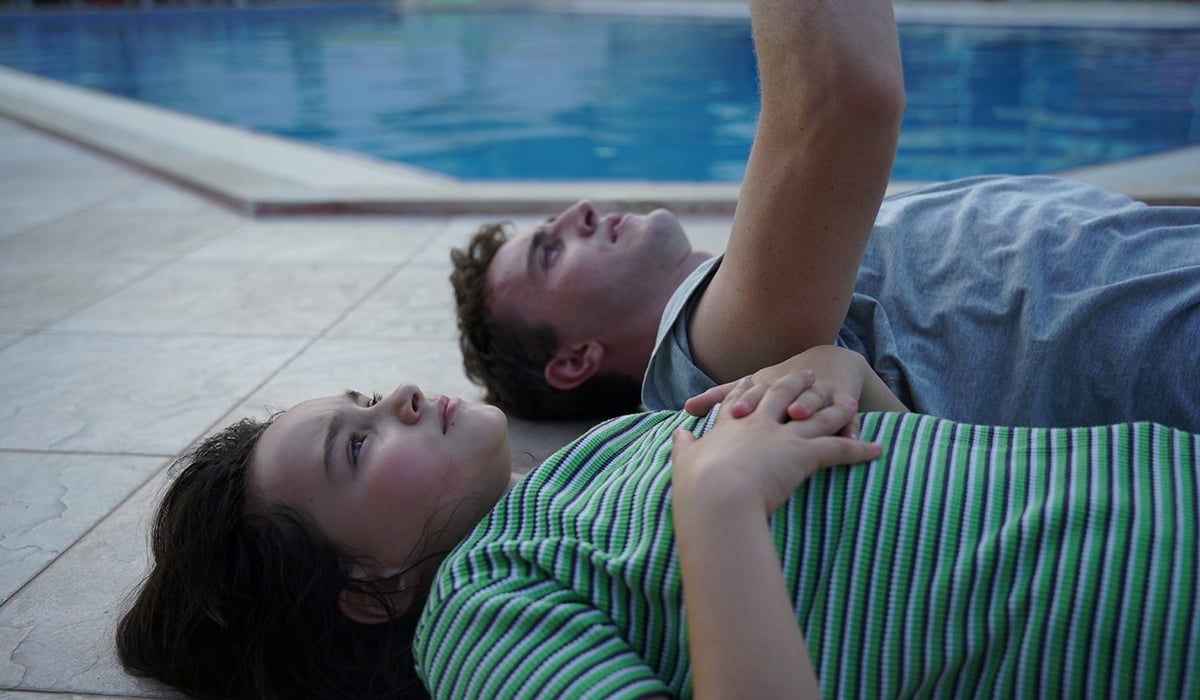
The title of Charlotte Wells’s film invokes a balm used to soothe skin scorched by an unforgiving sun. Again and again in Aftersun, the characters partake in the restorative rituals of this salve; in recurring close-ups, Calum, a young, separated father, and Sophie, his 11-year-old daughter, rub lotions into each other’s limbs and pale-pink faces as they holiday in a bright, garish resort in Turkey. Like much else in this chimeric film of tender gestures and glances, these mutual refrains of touch—of protection and healing—stand in for all that goes unsaid but is deeply felt: the inarticulable fear, flickering deep within Paul Mescal’s soft, sensitive face, of a father trying to shield his child from his hurt; and the yearning of a wide-eyed daughter too green to understand why her parent eludes her grasp. In the film’s finale, as Calum spins into the abyss—both in front of a young Sophie who does not know what is to come, and in the memories of her older self who, heartbreakingly, does—Aftersun singes us with one of life’s hardest lessons: there are scars that even love cannot heal.—Devika Girish
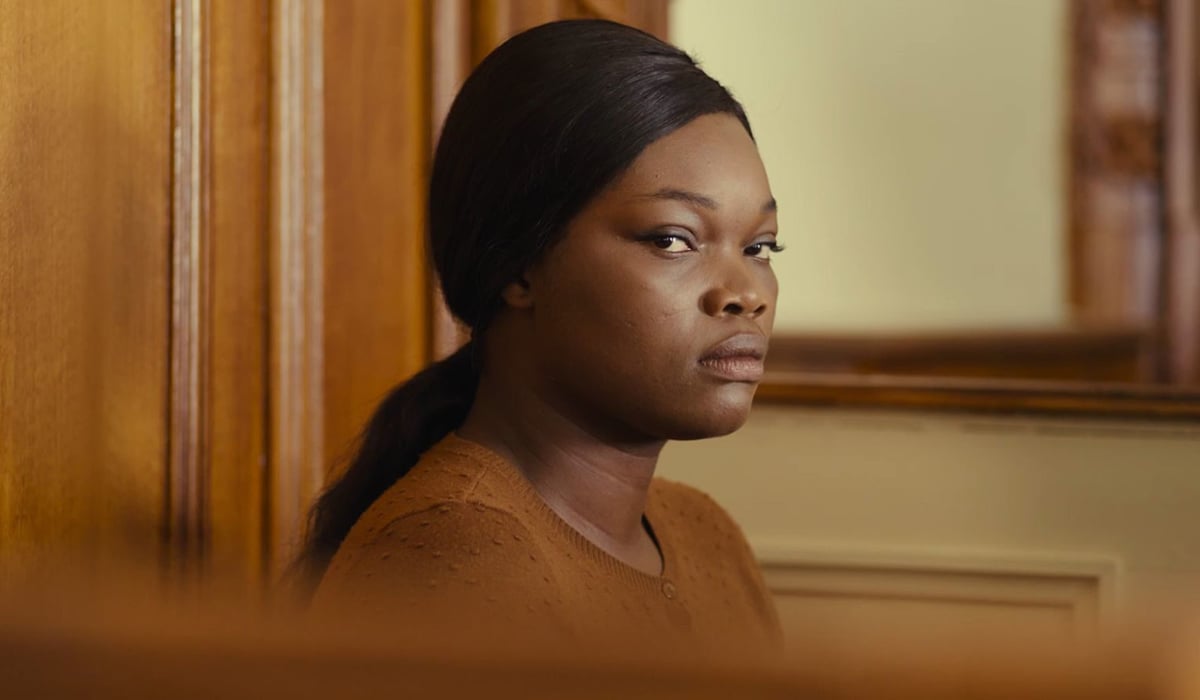
Where the courtroom-drama genre typically relies on a key revelation to produce a morally satisfying sense of justice, Alice Diop’s Saint Omer refrains from a verdict or even an explanation of the crime—in this case, a young French-Senegalese mother’s murder of her infant daughter. Instead, Diop and her screen surrogate, author Rama (Kayije Kagame), an observer at the trial, are drawn to the testimony of Laurence Coly (Guslagie Malanda), who admits to the crime but says she does not know why she did it. Based on a real-life case (and utilizing actual court transcripts), the trial yields significant details—Laurence’s vulnerability as a penniless immigrant, the neglectful ways of the child’s white French father—but fails to produce any semblance of understanding. Instead the film explores Diop’s desire, if not to unravel the mystery of Laurence’s story, then to dwell in it. The plight of an isolated Black mother fending for herself in contemporary France is a tragedy that exceeds the tidiness of the legal system. Diop’s unwavering attention is witness to its refusal of closure.—Genevieve Yue
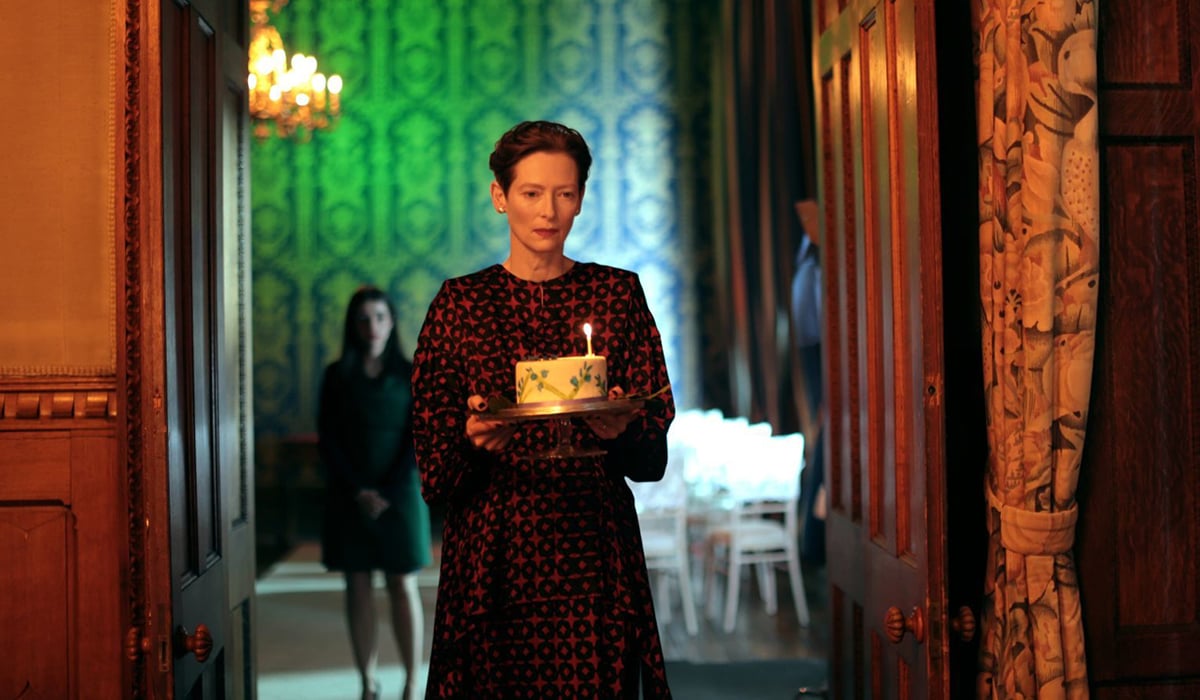
The ghosts of our mothers haunt us throughout our lives—perhaps even more so when they’re still with us. In Joanna Hogg’s intricate and devastating Freudian mystery, family, loss, and looming mortality present more terrifying horrors than anything that goes bump in the night. Tilda Swinton turns in an astounding performance, or performances, in mirrored roles as both an elderly, patrician mother and her late-middle-aged filmmaker daughter, Julie, a stand-in for the director. The two are ensconced in a creaky, fog-shrouded country manse for a long, leisurely weekend, over the course of which it becomes evident that their relationship is not quite what it seems. Hogg exhibits preternatural control of the genre tropes of classic British horror cinema, often deployed to comic effect—until suddenly, things aren’t funny anymore. As Julie drifts dreamlike through eerily lit corridors, taking notes for her next project, we realize that her creative labor is synonymous with the exorcism of her grief, refracted through the haunted house of memory that is cinema. After all, as her mother notes at one point, Julie’s films are her children.—Clinton Krute

“No one makes art about themselves,” artist Nan Goldin recalls being told derisively by male artists and gallery owners in All the Beauty and the Bloodshed. Laura Poitras and Goldin might seem, at first glance, like an unlikely pairing: Poitras’s films trot the globe uncovering abuses of power, while Goldin’s haunting photography rarely leaves the bedrooms and barrooms of New York City. Both artists venture into new realms in All the Beauty and the Bloodshed: the film chronicles Goldin’s attempts to push museums and galleries to sever ties with the untouchably powerful Sackler family, major art-world donors who made untold billions peddling OxyContin, the source of Goldin’s own struggle with addiction. Poitras casts an unwavering gaze, both upon Goldin’s raw personal histories—including of familial dysfunction, queer community-building, and art-making—and, in a stunning sequence depicting a Zoom hearing, the faces of her adversaries. As the film’s threads of art, affliction, and advocacy unspool, it becomes clear that the two women are, in fact, kindred souls—both are interested in image-making’s capacity to blur the barriers between pain and pleasure, and between the personal and the political.—Mackenzie Lukenbill
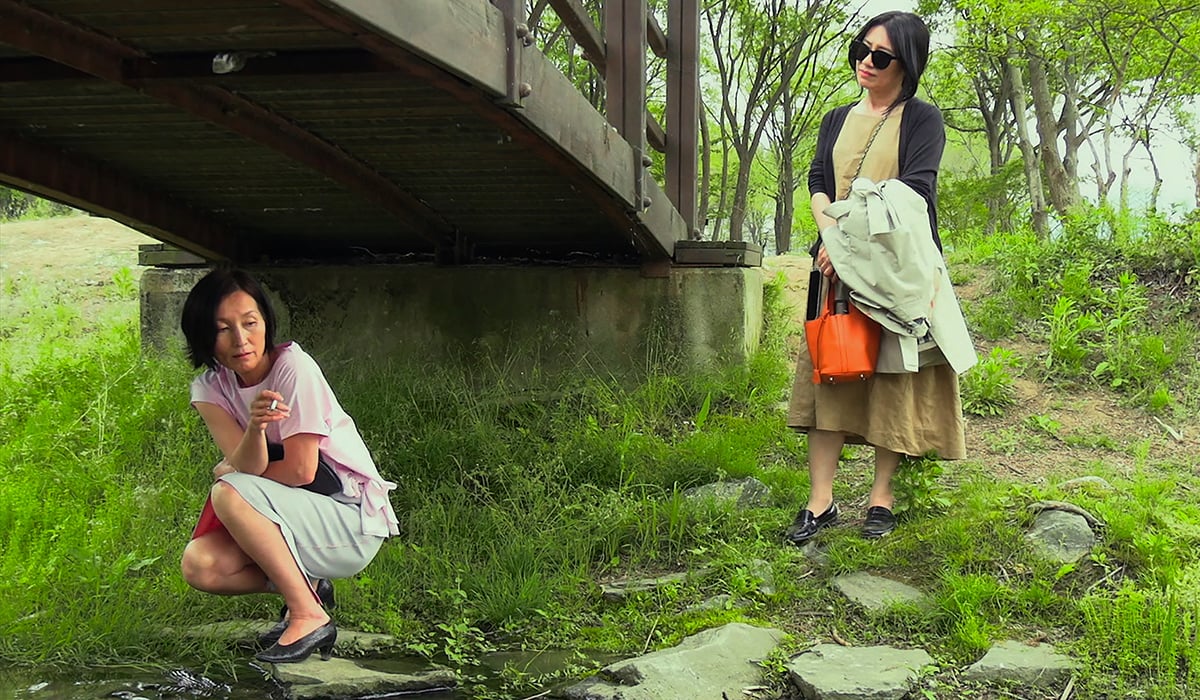
Among the things that Hong does best are titles. In Front of Your Face is a favorite: these are the exact words the film’s protagonist, Sangok (Lee Hye-young)—an actress who returns to Korea to visit her sister after decades abroad, suffering a terminal illness that she keeps secret—uses to describe the perfect lucidity, the quest for pure truth, that she wants to achieve in the final months of her life. But once these words become the title, they’re also pointed at us. What are we facing? Images, mere duplications of an overwhelming reality. At the end of the film, Sangok bursts out in laughter after a typically Hong-ian day during which a drunk director dangles a role in front of her only to retract it a few moments later. She laughs because she realizes not just that she has deluded herself again, but also that aiming at truth is the best way to miss it. In the end, before death arrives, laughter may be the only way to experience something real.—Antoine Thirion

For a film with deep misgivings about the violence of seeing, and whose plot hinges on the power of not looking, Jordan Peele’s third feature is rich with indelible images. Blood and coins shower from the heavens, a C.G.I. chimpanzee rampages through a sitcom set, and dozens of objects sparkle, stream, and soar in the desert sun in a breathtaking climax. Then there’s the indescribable antagonist, a thing named Jean Jacket, that has been variously identified in reviews as flying saucer, alien, or animal. Similarly, the film, most conveniently labeled a sci-fi western, contains multitudes, like a graduate thesis on Debordian spectacle and Glissantian opacity adorned with Spielberg homages. It may also be a feature-length clapback to the first motion picture, Eadweard Muybridge’s study of a horse and a Black rider. Through the radical reframing of Peele’s lens, cinema’s inception becomes an act of racial and animal subjugation in the service of technological extraction. Nonetheless, interrogating the exploitative properties of images doesn’t stop Nope from ascending to their awe-inspiring potential.—Kevin B. Lee
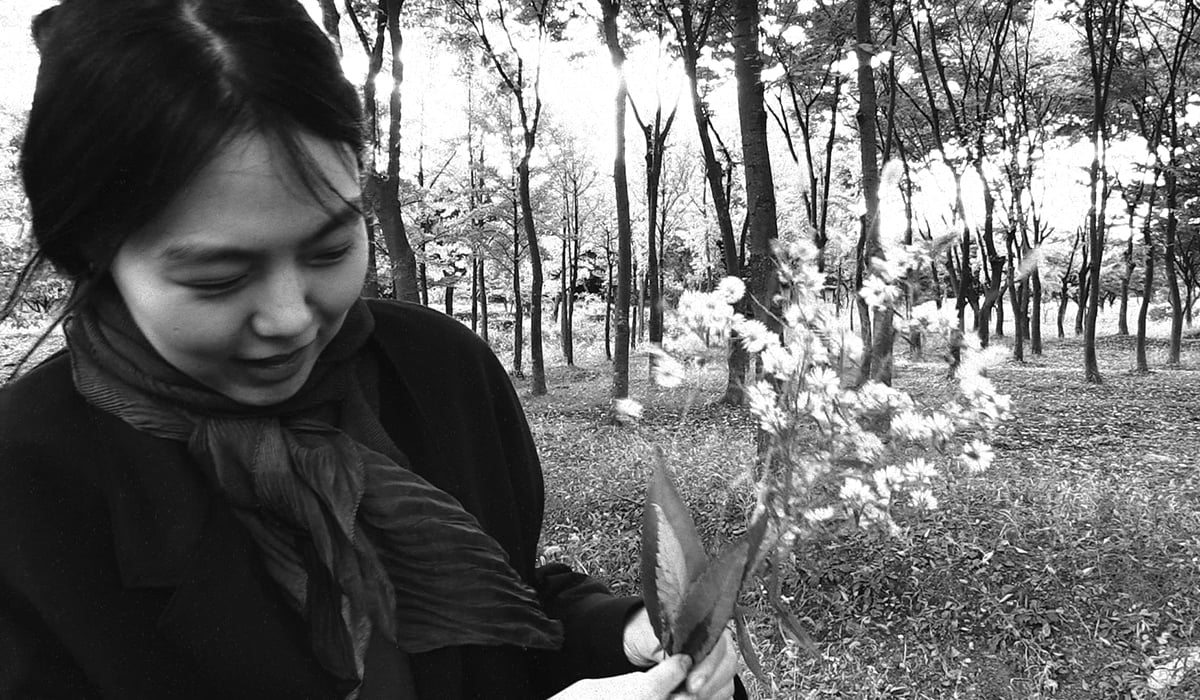
Among all the filmmakers in the Hong Sangsoo corpus, Jun-hee (Lee Hye-young) stands out. For one thing, she’s a novelist. And her neophyte status—she decides to make a film on the spur of the moment, almost free-associatively—allows Hong to consider head-on a question that increasingly preoccupies his work. To put it most elementally: what is cinema? What do you need to make a film, and what does a film need to be? The ending of the movie, a film-within-the-film, is a miracle, mind-boggling in its near-primitive simplicity and blindsiding emotional force. People have wondered if these closing scenes are from an actual home movie of Hong’s, given their rawness and intimacy. I suspect not, and if you were listening closely, you’d have heard the novelist herself foreshadowing this moment, describing precisely the uncanny palimpsest that is the film she will make: “The story won’t prevent the real things emerging from the situation I set up.”—Dennis Lim
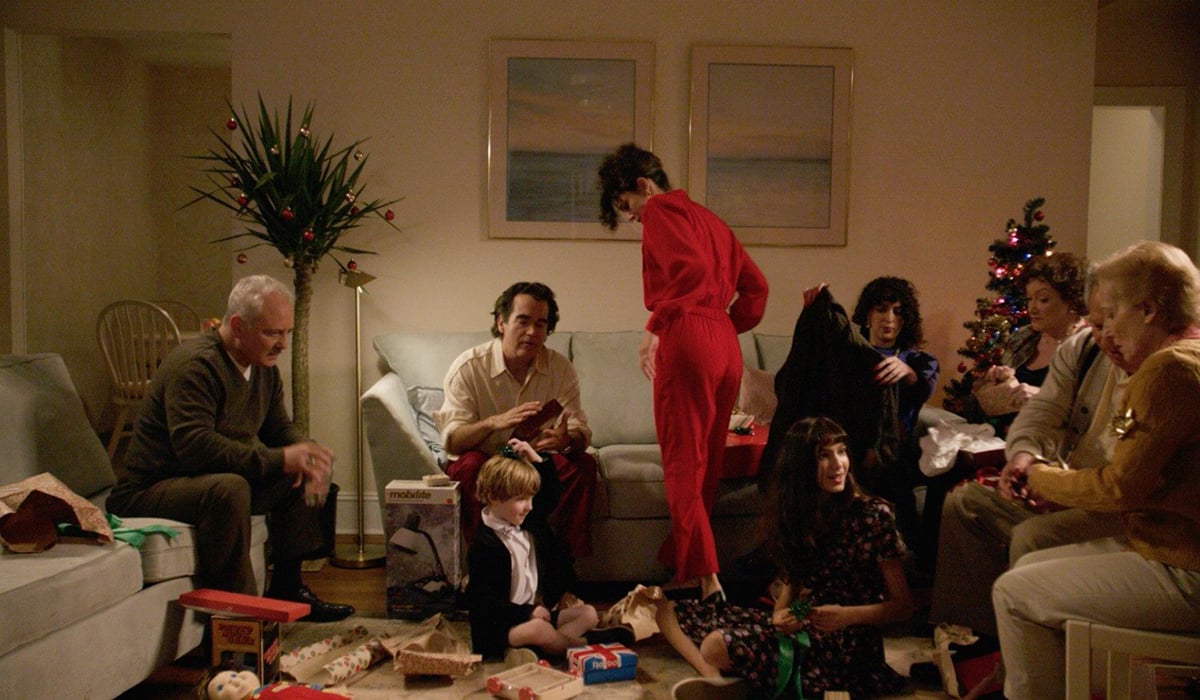
Auteurist autofiction has emerged as a bona fide post-pandemic subgenre, with filmmakers returning to their childhoods to offer everything from sentimental memoir to (self-)portrait of the artist to white-guilt clothesline. Ricky D’Ambrose’s The Cathedral both meets the demands of the convention and bursts its boundaries. In his portrait of the Damrosches, a late-20th-century tristate-area clan much like his own, D’Ambrose depicts the family’s internal mythologies, miserable communions, and contorted money matters largely from the delimited point of view of its youngest member (and director surrogate), Jesse. Rendered with the filmmaker’s trademark precision and economy of affect, much of The Cathedral unfolds in exquisite magic-hour tableaux, many of which are fastidious recreations of family photographs, crammed with period-specific minutiae and bathed in ’90s pastels. But the film’s performances (notably that of Brian d’Arcy James as Richard, the Damrosch patriarch) continually rupture the film’s meticulous composure—and Jesse’s dissociation—with outbursts of long-buried pain.—Leo Goldsmith
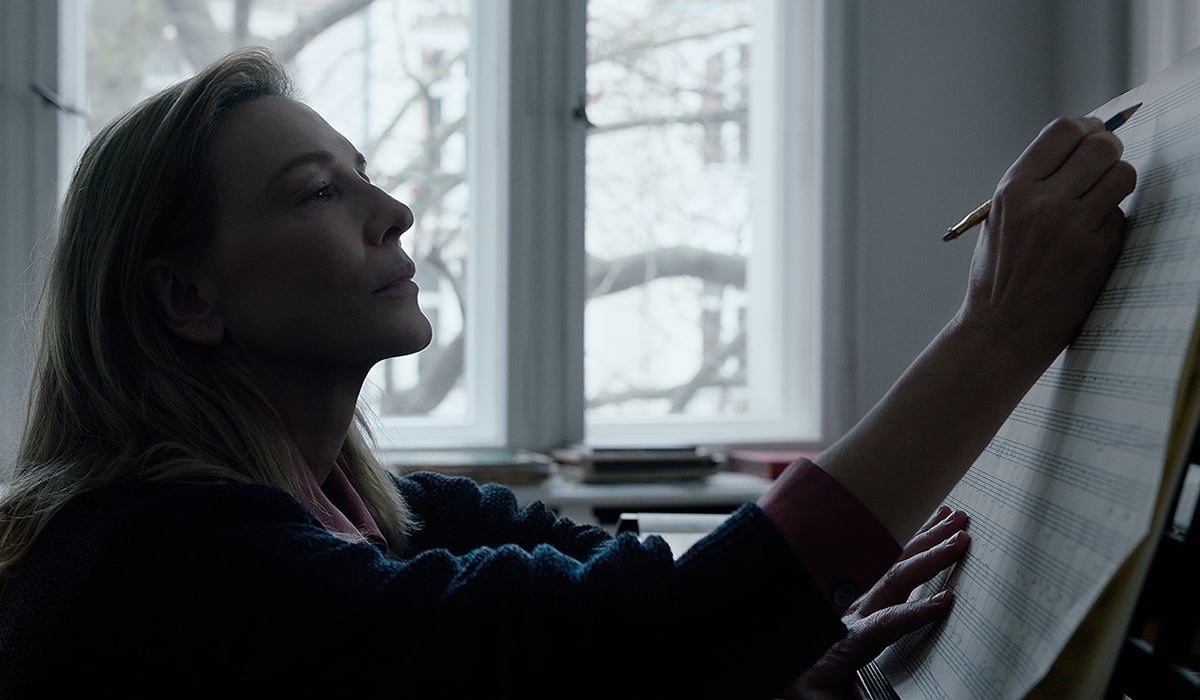
It’s a risky beginning, the tone uncertain. We’re at the New Yorker Festival, where Adam Gopnik playing Adam Gopnik is interviewing Cate Blanchett playing a world-famous orchestra conductor. As the scene goes on, with him fawning and her preening and self-mythologizing (she claims friendship with Bernstein, who died in 1990), the aim is clearly satirical: if the accolades of this preternaturally talented musician seduce, her arrogance, and eventually her cruelty, repels. This is a film full of ambivalence, including about the issues of “cancel culture” it raises. Blanchett, marble-like and imperious, is wrapped in an impermeable casing of self-regard. In a revealing scene, she is glimpsed binding her breasts into a tuxedo as Todd Field underlines (perhaps a little too obviously) the effort of self-creation she has undertaken, effacing all traces of femininity, and hence weakness. TÁR has divided audiences like no movie in recent memory; I see it as a majestic and provocative fable about female ambition on a scale rarely seen—for rarely has life provided such opportunities for female success and self-immolation.—Molly Haskell

An immigrant and a detective on opposing sides of the law fall in love, each seeking the trace of an authentic life that eludes them. Seo-rae (Tang Wei) and Hae-joon (Park Hae-il) enjoy fleeting moments of domesticity together when they’re not separated by layers of glass: interrogation room and apartment windows, camera lenses, and, most importantly, phone screens. Park’s script (co-written with Chung Seo-kyung) fashions smartphones into everyday pieces of secret-agent gadgetry; they become extensions of Seo-rae’s many selves. Her phone translates her native Mandarin speech when her overly classical Korean, learned from period dramas, can’t keep up with the pace of contemporary communication. Like Jacques Tourneur’s Cat People (1942), another film about a shape-shifting immigrant trapped between ancestral burdens and new loves, Decision to Leave ends by exchanging rationality for a tragic, elemental mysticism. Seo-rae tells Hae-joon to throw her phone into the sea before succumbing to it herself, so that she, too, becomes a missing signal.—Emerson Goo
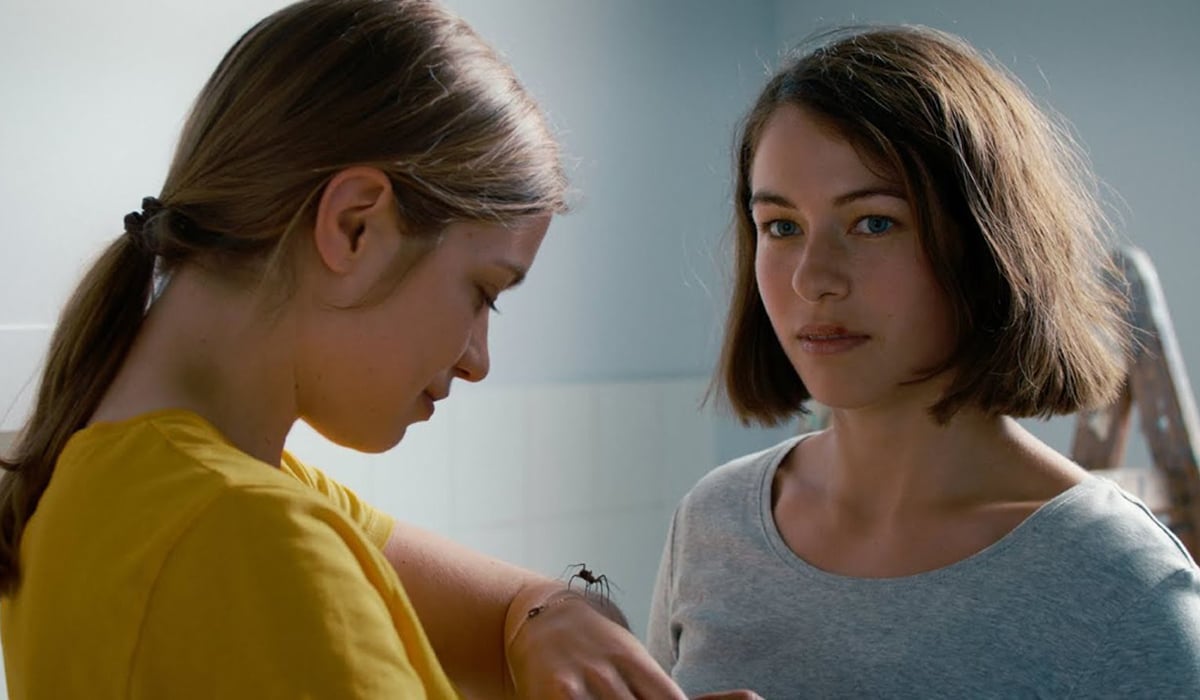
Few tasks feel more solitary and exhausting than moving out, but in The Girl and the Spider, the melancholy rite of emptying a home swells into a symphony of interpersonal mystery. Across two days, an ensemble of roommates, neighbors, and sundry helpers graze and bristle against each other. In place of legible emotion—and its usual narrative engine—the Zürchers center dense clouds of affect that emerge from the friction of cryptic encounters. Every interaction is charged with semantic possibility, forking into infinite paths of feeling. Sly glances and unyielding stares are electric with eros, judgment, and fondness all at once, each gaze casting palpable vectors between watchers and the watched, relations also thrown into moving relief by the editing. The Zürchers have built, with this film, an entire cosmos in the architecture of the everyday, like a webbing spider spinning a gossamer universe in its chosen enclosure.—Phoebe Chen
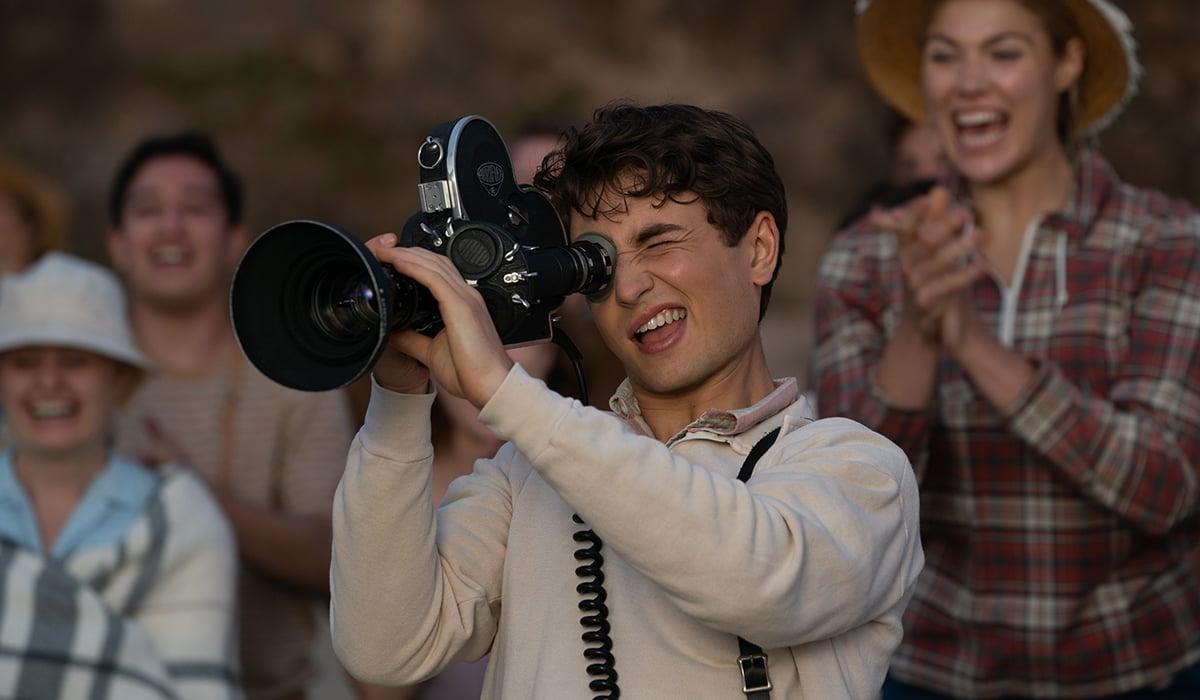
The unquenchable desire to tame and thereby control an unruly and chaotic world through images is perhaps the major theme of Steven Spielberg’s films. The Fabelmans, the director’s autobiographical account of how his growth as a prodigiously gifted young filmmaker coincided with the gradual and traumatic breakup of his parents, suggests that mastery might also be his primary creative impulse. If the awesome natural and supernatural terrors that threaten the family unit from without in Spielberg’s greatest mass entertainments have always been only sublimated expressions of the desires and resentments that threaten it from within, this ambivalent, late-period reflection provides an origin story without necessarily offering catharsis. When we leave Sammy Fabelman (Gabriel LaBelle), he’s just starting on his path to becoming the most successful film director of all time, but the question of this truly fable-like film still follows this young man, his present-day analog, and us out of the theater: what’s the use of control when it’s all an illusion?—Edo Choi

There’s a deceptive simplicity to One Fine Morning, reflected in the airy hopefulness of its title and the cool, clear light of its contemporary Parisian milieu. Mia Hansen-Løve chronicles a few seasons in the life of Sandra (Léa Seydoux), a young widow and mother, who navigates the twin challenges of caring for an elderly father as he faces cognitive decline and braving the highs and lows of a heady love affair with a married friend. Textural details of setting and character are poetically wrought, and Hansen-Løve’s fleet, lived-in dialogue is infused with philosophical heft and a distinctive literary sensibility, all of which finds its gravitational center in Seydoux’s finely honed performance. The unhurried narrative traces the emotional currents of Sandra’s inner life, the story’s course beholden to the unpredictable terrain of interpersonal relationships. In the process, the film reveals itself to be a gorgeous meditation on the workings of language, love, and memory.—Madeline Whittle
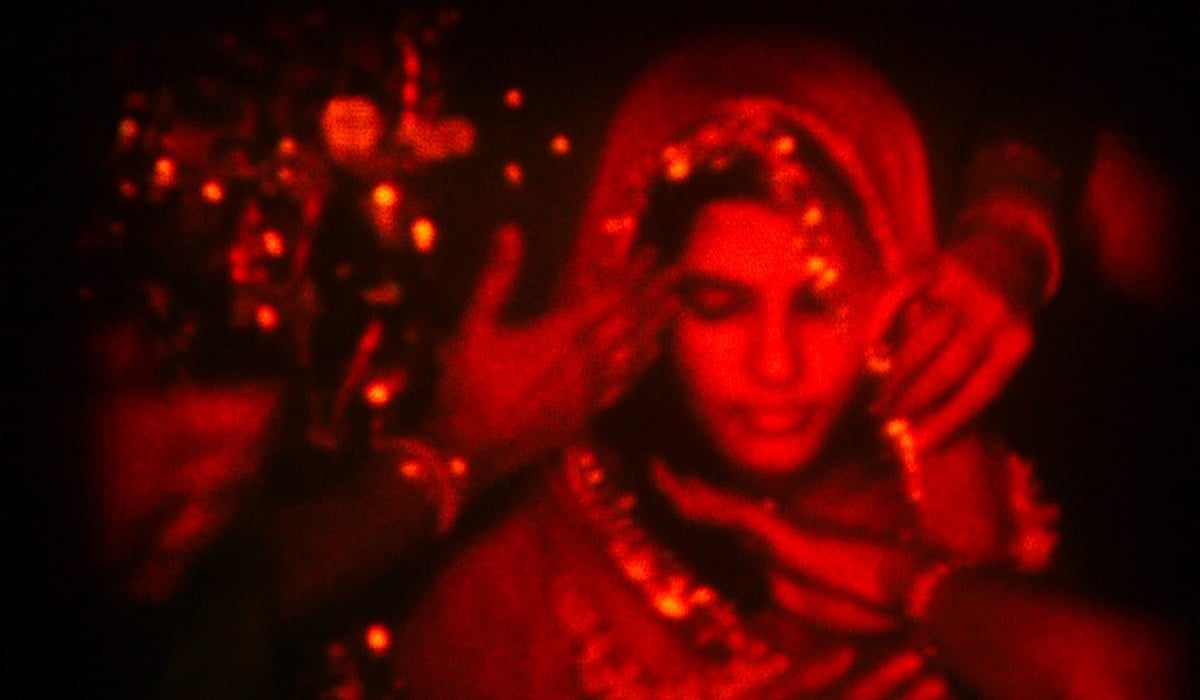
Starting with an accomplished trilogy of short films, Mumbai-based filmmaker Payal Kapadia has developed a bold cinema that seamlessly combines fiction and nonfiction. In A Night of Knowing Nothing, her Cannes prizewinning first feature, Kapadia’s hybrid vision turns found-footage genre trappings into powerful politics. The film’s hushed voiceover narration—fashioned out of a fictional series of letters between two students at Kapadia’s alma mater, India’s preeminent public film school—bridges the black-and-white 16mm-lookalike footage that Kapadia and collaborator Ranabir Das started recording and collecting from their friends after a student strike in 2015. As the letter-writers’ intercaste romance dissolves, we hear interviews and watch images of protest from different Indian universities, alongside scenes of nighttime revelry. Capped by a repurposed CCTV video of brutal police violence against students barricaded in a classroom, A Night of Knowing Nothing offers an object lesson in the capacity of experimental documentary to name the unspeakable under authoritarian coercion.—Abby Sun
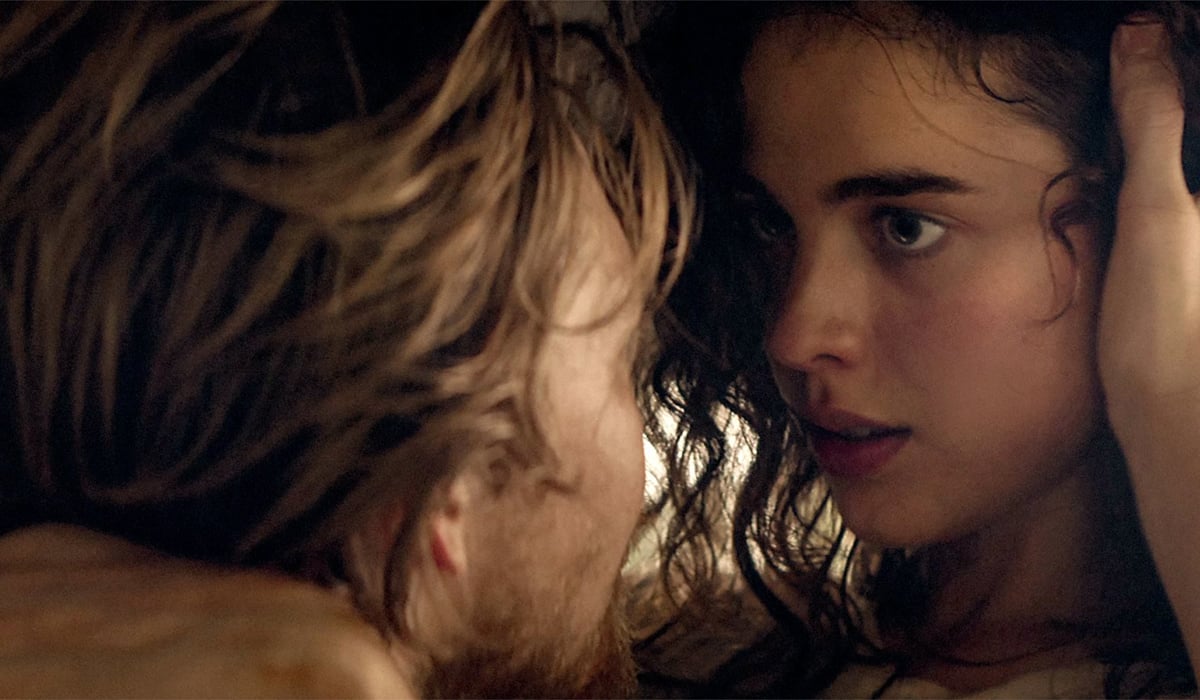
What kind of world won’t allow a conventionally attractive, white American sylph to fake it till she makes it? One that’s been ravaged by American imperialism—at least as Stars at Noon would have it. Though most of her romanticism has been washed away by the time we join her, it’s clear that Trish (Margaret Qualley)—who traveled to Nicaragua in order to write hard-hitting journalism with the help of her mediocre Spanish and heroic amounts of liquor—still thinks her failed sojourn through “the developing world” is a game, and one she can win by pretending to be an insider. However, her affair with an English oil-company fixer leaves behind a number of dead or ruined Central Americans, among other indignities of varying sizes wrought by U.S. intervention. Denis’s candor about the extraordinary, blind privilege of the protagonists, paired with her characteristically oblique narratology, expresses fundamental truths about living under the dirty thumb of Western governments and private interests—which, as is made clear here, are essentially indistinguishable from each other.—Violet Lucca
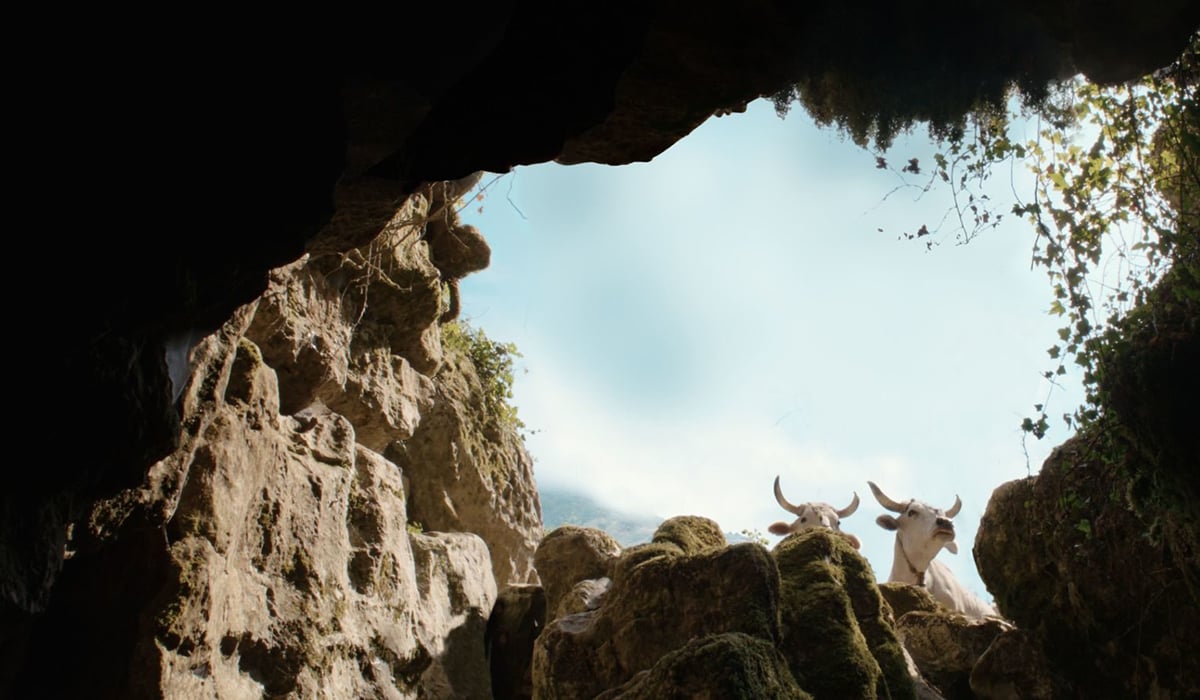
Michelangelo Frammartino takes his time making films—his latest comes 11 years after his previous feature, the extraordinary Le quattro volte—but it’s worth the wait, as the results go deep (literally so, in this case). Il buco, or “the hole,” is an imaginative recreation of an early-’60s spelunking expedition in Calabria. Frammartino takes us down into the Abisso di Bifurto network of caves, a trip that took the crew five hours each time, with Renato Berta’s photography sculpting the darkness with firelight on smooth cavern walls. But Il buco also takes us high into the surrounding hills, the domain of real-life nonagenarian cowherd Nicola Lanza, and into modern Italian history, with newsreel footage of Milan’s Pirelli Tower representing the futuristic dreams of a ’60s boom economy. Altogether, the film’s heightened sense of the unearthly makes us reconsider our understanding of the shape of the planet, and our place on it.—Jonathan Romney
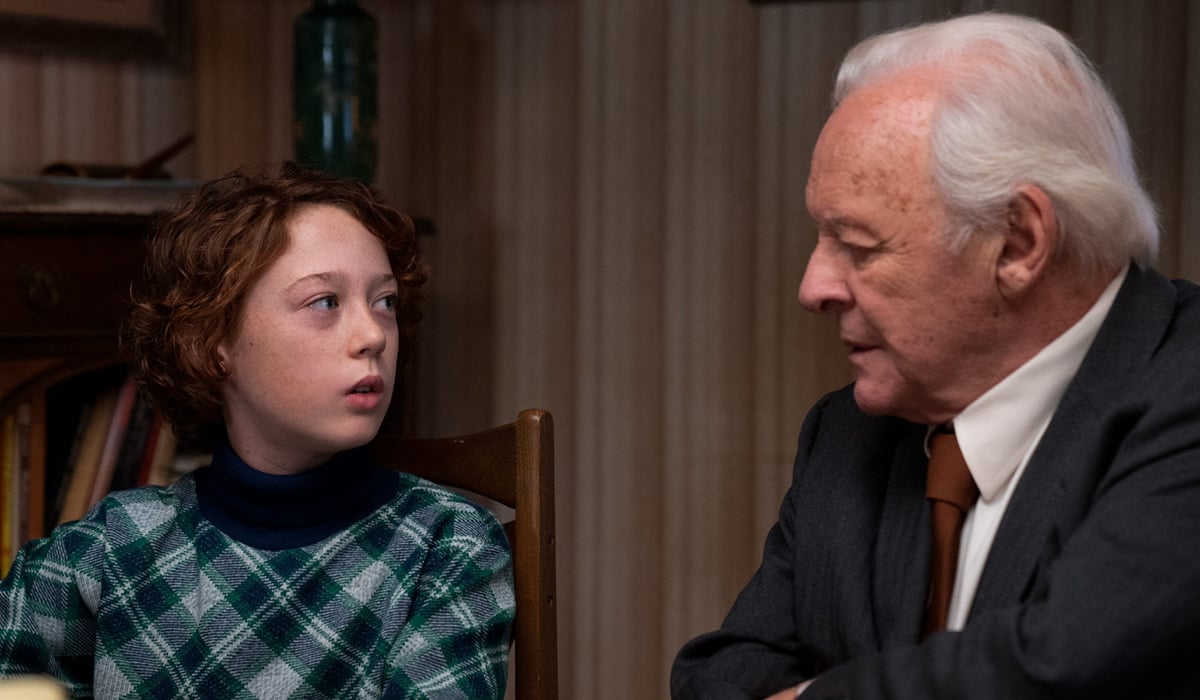
James Gray’s Armageddon Time follows the friendship between two boys, one Jewish and one Black, in New York in 1980. The film was written off by some critics as a didactic slog and a self-indulgent semi-autobiography that marshals coming-of-age tropes in order to flatter the filmmaker’s ego. A shame and a misreading, because Armageddon Time is the opposite; Gray takes an uncomfortable and regretful look at his own childhood, the ubiquity of racial and class divides, and how these factors shaped his own Jewish family’s desperation to hold on to the social standing available to them through their proximity to whiteness. Most importantly, Gray dramatizes how bonds across communities are severed when solidarity is withheld for the sake of status. Rather than offering wistful, nostalgic gratification, Armageddon Time mounts a stirring rebuke against moral cowardice.—Nicholas Russell

With the insight-deprived spectacle of Elvis and gasp-inducing tawdriness of Blonde, the biopic has reached a crisis point. Perhaps only Terence Davies, long canonized as a premier cine-memoirist, understands that the most fruitful way to tell a creative person’s story is to reconstruct their social and intellectual milieux—including the repressive institutions and nurturing subcultures that incubated them. As he did with Emily Dickinson in 2016’s A Quiet Passion, Davies opens up the private world of English poet Siegfried Sassoon, sweeping us from the trenches of the First World War, which Sassoon captured in agonizing verse, through the psychiatric facilities where his harsh critiques of military zealotry landed him, and into the epigram-dispensing circles of gay society between the wars. Each period—extending to Sassoon’s embittered dotage in swinging-’60s London—is infused with the director’s lyrical sense of movement and music, which depicts life not as a causal sequence of acts and consequences, but as a stream of pain, carrying a man from sites of bitter trauma to states of unfulfilling heroism.—Steven Mears Benediction is tied for 20th with We're All Going to the World’s Fair
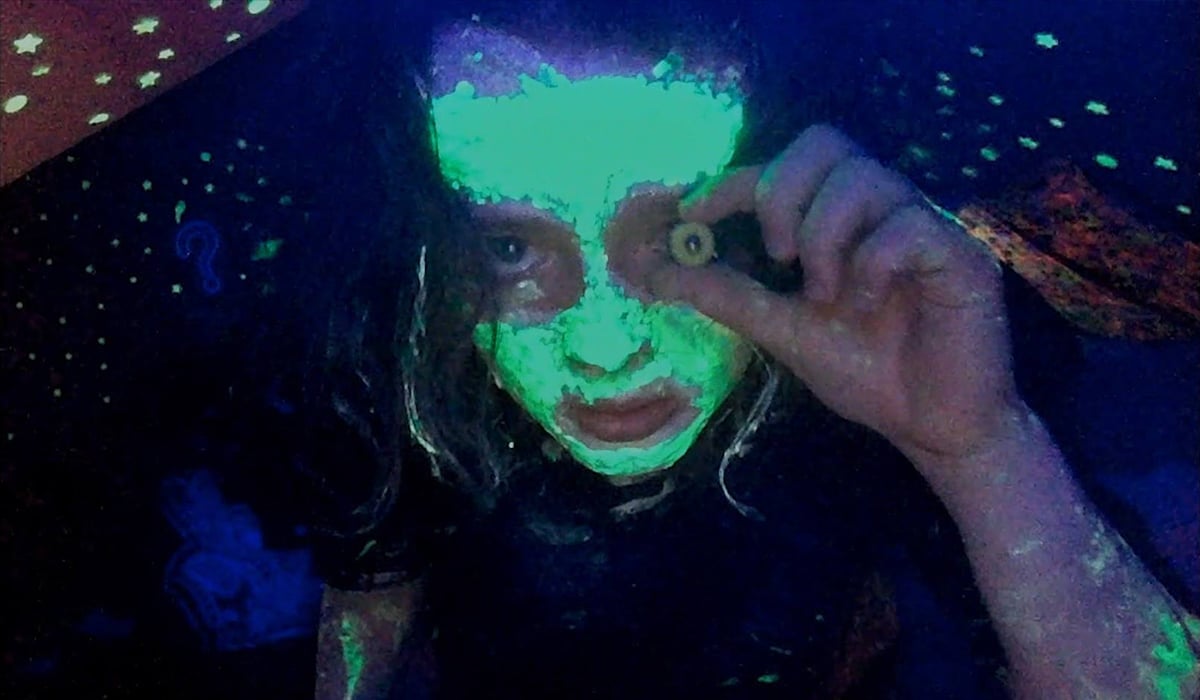
Jane Schoenbrun’s eerie evocation of screenlife feels like a breakthrough in the genre of desktop cinema: there is no winking when its characters fret over their video uploads, no finger-wagging when they face the fallout. We’re All Going to the World’s Fair takes the psychology and aesthetics of the internet seriously as it explores one of its many sordid corners. To join the film’s online horror community, a user must take the “World’s Fair Challenge,” involving incantations, blood oaths, and a Ringu-esque video transmission. Per lore, the partaker then experiences a frightening physical metamorphosis. When troubled teenager Casey (Anna Cobb) performs the ritual, she receives an ominous message from an anonymous older stranger (Michael J. Rogers) seeking to save her from its curse, and the two enter into a doomed conversation in a creepy, credible depiction of online intimacy. For all the dread generated by the crooked power dynamics, what actually gets under one’s skin is the unspoken pain and crushing isolation that drives the reckless posting of these two lonely souls.—Chris Boeckmann We're All Going to the World’s Fair is tied for 20th with Benediction