Our Best Undistributed Films list, voted on by Film Comment contributors worldwide, recognizes the new films that premiered—at festivals, or elsewhere—in 2025 but did not have U.S. distribution at press time. (Of course, that could change at any moment; keep an eye on FC for future coverage!)
For the best films that received a theatrical or streaming release in the U.S. this year, go to the Best Films of 2025 list.
Curious to see who voted and for which films? Read our voters’ individual ballots. Also, don’t miss our Best of 2025 Countdown Podcast, featuring guest critics Amy Taubin and Bilge Ebiri.
Also, read critic and programmer Inney Prakash’s list of the year’s Best Short Films, filmmaker and programmer Gina Telaroli’s list of the Best Restorations, critic and editor Gavin Smith’s list of the year’s Best Repertory Releases, and writing on the Best Scenes by Devika Girish and the Best Performances by Michael Koresky, all available in the links above.
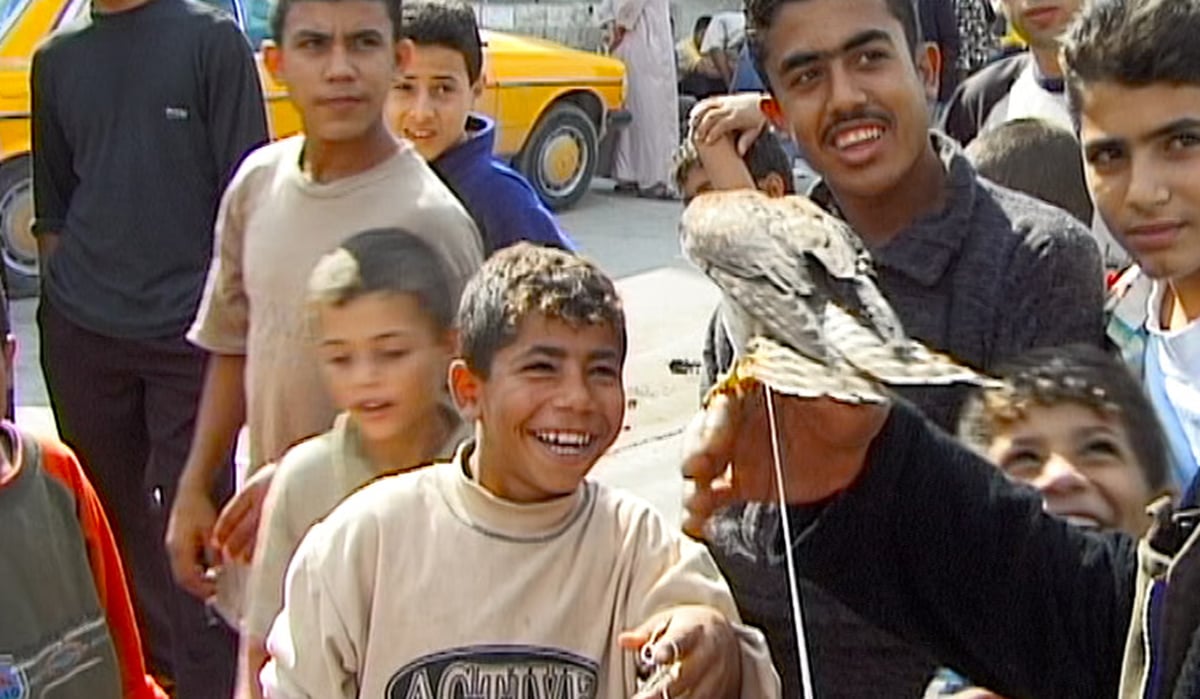
Kamal Aljafari’s quiet and haunting With Hasan in Gaza, made from MiniDV tapes shot in 2001, returns us to a Gaza still standing and accessible to the Palestinian filmmaker more than 20 years ago. Documenting Aljafari’s search for a friend with whom he shared a prison cell as a teenager, the film is composed entirely of this “found” footage, minimally framed in the present by captions relaying his prison memories and a soundtrack that alternates a sparse synth score with brilliantly selected Palestinian and Arab songs, whose lyrics recast the images in light of Gaza’s destruction. Much of With Hasan’s pathos lies in our anachronistic encounter with Gaza’s once-vibrant streets and souks, where smiling children play and fresh vegetables abound. Rarely in cinema is Gaza granted the care of close, tender observation that seeks to know the place from the perspective of a neighbor and friend rather than a journalist or emergency worker.—Kareem Estefan
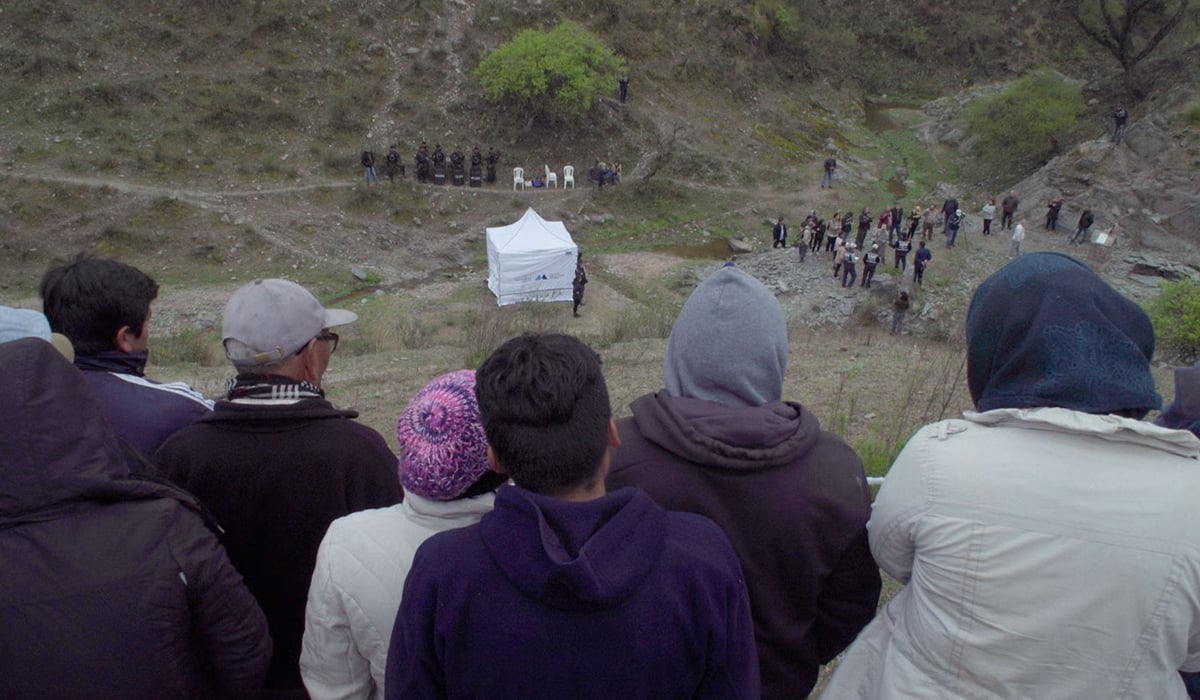
For Lucrecia Martel, time is of the essence—in particular, what she calls the “conventional straight arrow version, like a ray of light,” which hurtles past both history and the present in the name of progress. Her feature doc debut starts with the 2009 killing of an Indigenous activist by police and landowners trying to evict the Chuschagasta community from their ancestral lands. But the film treats this incident not as an exceptional rupture—a point on a line—as the judicial system makes it out to be. Her approach is centrifugal, spinning out from footage of the shooting and the ensuing hearings to extensive research into the thefts and sleights of legal hand that have, over centuries, turned bureaucracy into a weapon of the slow, ongoing, and entirely sanctioned murder of Indigenous life. In a visual corollary, occasional drone shots pull us out of the present, evoking the ghostly feeling that the land precedes all the rigmarole we see onscreen—that it stood witness to lives that came before even the state of Argentina.—Devika Girish

Since Ross McElwee’s 1985 breakthrough Sherman’s March, the filmmaker’s first-person documentaries have used his life as raw material. But the material has never been as raw as in his new film, Remake. We learn early on that McElwee’s son, Adrian, died of a drug overdose in 2016, at 27 years of age; the film is a deep dive through past and present to sort through the lives of father and son. The title was inspired by a misbegotten Hollywood attempt to remake Sherman’s March as a fiction feature, but it also comes to signal many other things over the course of the film: parents’ attempts to remake themselves through their children; how a remarriage is a remake of a failed union; and the ways in which cinema attempts to remake life. In the film’s opening scenes, McElwee asks a 7-year-old Adrian what he loves about fishing. His response also applies to Ross’s filmmaking: “The deep surprise of the ocean. You never know what you’ll catch.”—David Schwartz

The second feature by Canadian filmmaker Rhayne Vermette is a cryptic nocturne set in Ste. Anne, Manitoba, where the outdoors is all darkness and whipping snow, and interiors are lit by the silvery static of old television sets. A strange monolith appears. A civil servant pursues an investigation, viewing security-camera footage and reading through files relating to the commissioning of a monument. Its sculptor, an elderly woman, grieves someone’s death. Nuns perform a sinister ceremony, collecting the tears of an Indigenous woman and bottling them as holy water. A man leads a procession to a graveyard, holding up an infinity symbol, which is also the symbol of the Métis Nation, to which Vermette belongs. The film’s poetic symbology—moon, mirror, stone, river—is embedded in a laconic depiction of everyday life; its runic images, captured on broken Bolex cameras, stay etched in the mind, perhaps all the more so for being unexplained.—Imogen Sara Smith

Pedro Pinho’s three-and-a-half-hour epic is an open world through which the viewer is encouraged to wander freely. Portuguese civil engineer Sérgio (Sérgio Coragem) arrives in Guinea-Bissau to conduct an environmental-impact study for a proposed road, continuing the work of an Italian predecessor who abandoned the project under mysterious circumstances. A feckless naïf who leaves roadkill in a communal fridge, Sérgio generates awkward comic friction wherever he goes: to Bissau’s nightclubs; to villages performing traditional rituals for back-patting aid workers in matching T-shirts; to an energy plant in the desert and the brothel where its European contractors blow off steam. I Only Rest in the Storm’s caustic thesis, about the legacy of colonial violence that persists in the development agenda, emerges from scenes of labor, partying, and explicit sex that Pinho, a former documentarian, stages with a verité density.—Mark Asch
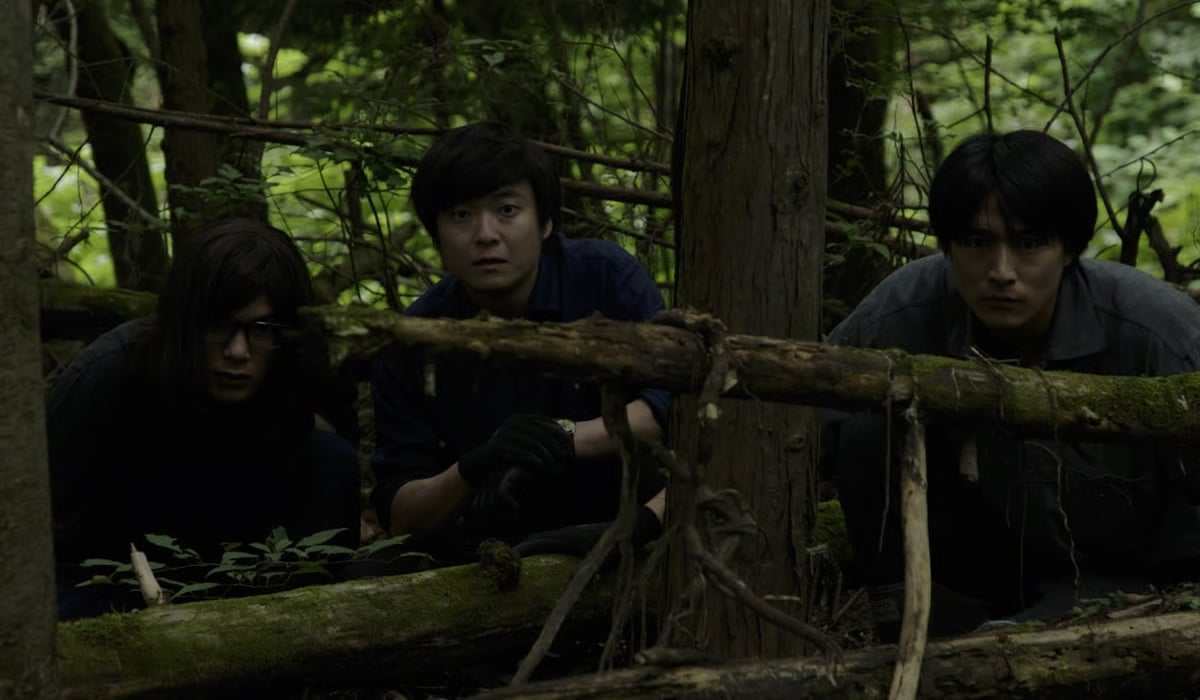
It’s not the only 2025 release about aging revolutionaries, but Escape comes to us from a filmmaker uniquely equipped to speak to the subject: Masao Adachi, now 86 years old, left the heyday of the Japanese New Wave in 1971 to co-direct a documentary with the Japanese Red Army in Lebanon, then dedicated himself to Palestinian liberation until he was extradited to Japan in 2000. His latest is a biopic of anarchist Satoshi Kirishima, who evaded capture for nearly 50 years after participating in a series of bombings against Japanese corporations in the mid-’70s—until, remarkably, he revealed his true identity on his deathbed in 2024. Adachi has characterized Kirishima’s lonely life on the run as “a form of struggle,” which the film renders in quiet, quotidian detail. Memories of the comrades Kirishima has lost crossfade into his present, accumulating a half century of reenactments and apparitions. Painful as they are, these recollections compel him to keep their struggle alive—and devotion to their cause, Adachi suggests, is a marathon, not a sprint.—Chloe Lizotte
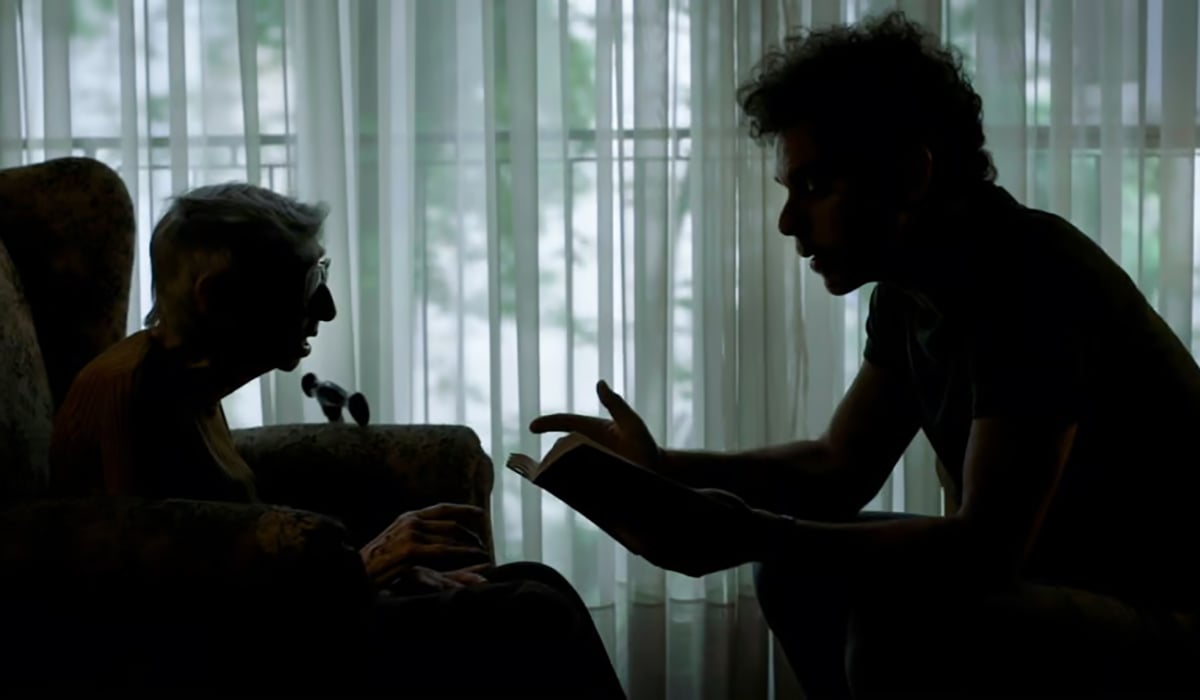
Pin de fartie is not so much an adaptation as an anagram of Samuel Beckett’s Fin de partie, or Endgame. Alejo Moguillansky—a member of the whimsical, genre-bending Argentine troupe El Pampero Cine—expands the one-act play into multiple nested narratives organized around three contrapuntal pairs, each approaching a parting of ways. A despotic blind father (Santiago Gobernori) aggravates his servant-like daughter (Cleo Moguillansky) in a bucolic Swiss canton; two actors (Laura Paredes and Marcos Ferrante) nurture a latent desire for one another while rehearsing Fin de partie in Buenos Aires; a blind, aging pianist (Margarita Fernández) and her son (Moguillansky himself) discover the uncanny similarities between themselves and the characters in Beckett’s play. It would all be too twee if not for Moguillansky’s fourth-wall-breaking games, revealing the props, the foley artists, and the presence of two omniscient narrators. Each repetition brings the duos closer to their inevitable separations, which are constantly deferred by Moguillansky’s hopelessly romantic impulse to hold on—if only for one more act.—Cici Peng

Halfway through Bouchra, our titular protagonist encounters a classic lesbian conundrum: “I didn’t know if she was flirting or if I was just, like, making it up.” It doesn’t help that Bouchra, a New York–based artist originally from Morocco, is visiting her hometown of Casablanca. The longings and complexities of the diasporic life add to her confusion, as does the fact that she’s at a crossroads with both work and a family unable to contend with her queerness. Directed by artist-filmmakers Meriem Bennani and Orian Barki (of the viral web series 2 Lizards), this animated feature is a witty, tender wonder of a film, partly based on Bennani’s own life. The characters are represented by anthropomorphic animals (our heroine is a lithe, stylish coyote), and yet Bouchra feels astonishingly visceral, rendering a recognizably moody New York and a vibrant, jewel-toned Casablanca with CGI, and incorporating real-life conversations (including phone calls between Bennani and her mother). The result is an intimate meditation on the porous boundaries between life and art.—Dessane Lopez Cassell
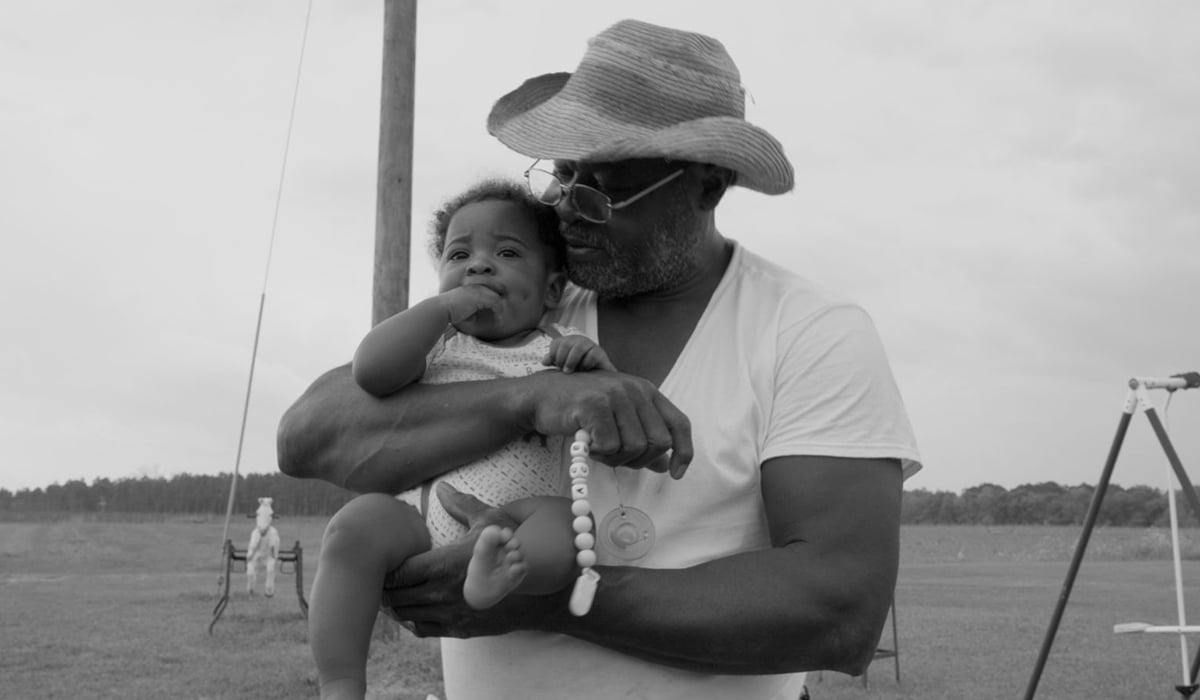
Rendered in striking monochrome and alive to the textures of Black agrarian life in the American South, Brittany Shyne’s Seeds announced an extraordinary new voice in creative nonfiction cinema when it premiered at Sundance 2025 and won the U.S. Documentary Grand Jury Prize. What began as Shyne’s MFA thesis grew, across nine devoted years, into a film shaped by attention and trust. Seeds opens with the funeral of a Black elder, and then follows centennial farmers whose families have tended Georgia and Mississippi soil for generations as they fight to protect the land that holds their history from racio-economic dispossession. Shyne’s approach was hyper-independent—she drove down alone from Ohio to the Deep South and did her own cinematography and sound recording—and that gives the film its remarkable intimacy. Her solitude breathes a quiet lyricism into her debut feature. Honoring the farmers’ invitation into their lives, Shyne crafts a time capsule of love and labor, proof that they were here and that the land remembers.—Ruun Nuur
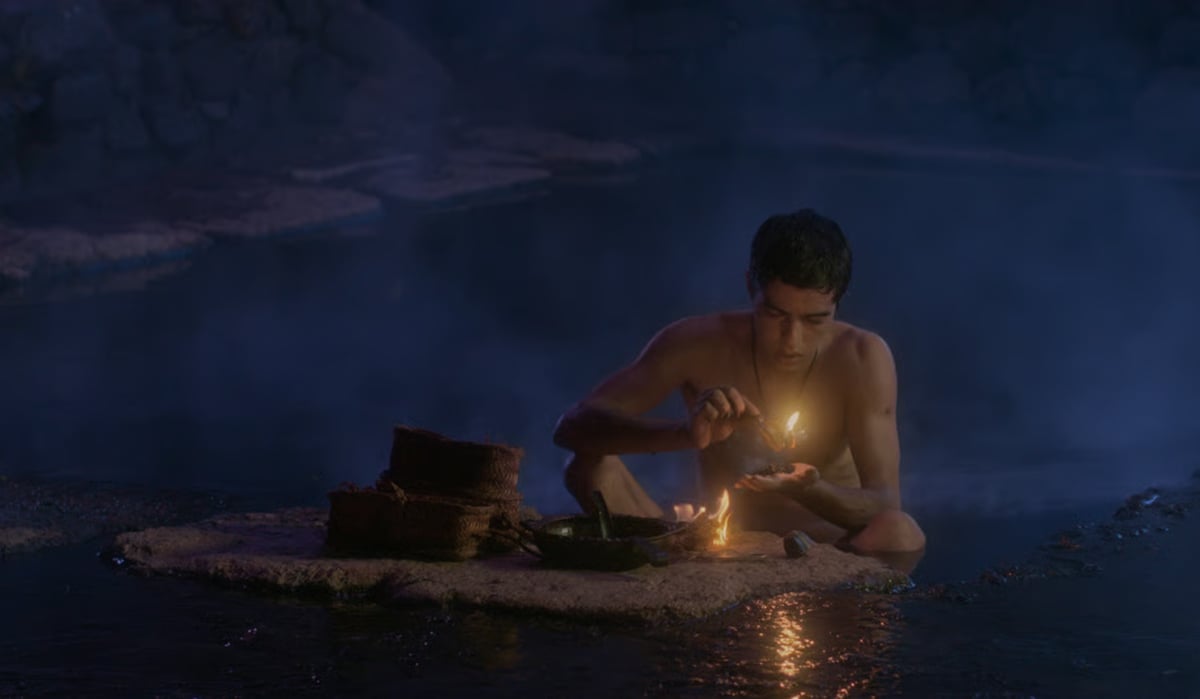
In a great year for Spanish cinema, Gabriel Azorín’s debut fiction feature, Last Night I Conquered the City of Thebes, is the unexpected outsider. Except for a lengthy opening sequence containing one stunning drone shot, the film exclusively takes place in a Roman Empire–era hot springs in Galicia, where a group of young men who appear to have returned from the front lines of a war spend the night. What happens as the boys plunge into the regenerative waters is both delicate and thought-provoking. Bodies float together, minds soak in pools of time, eyes adjust to darkness, and new dimensions open. Evoking—and expanding beyond—the contemporary strategies of filmmakers like Eduardo Williams, Apichatpong Weerasethakul, and Albert Serra, Azorín’s tour de force is a trippy journey through stars and ruins and historical battles and virtual wars, exploring cinematic time as a dream both fleeting and permanent, simultaneously linear and circular.—Antoine Thirion