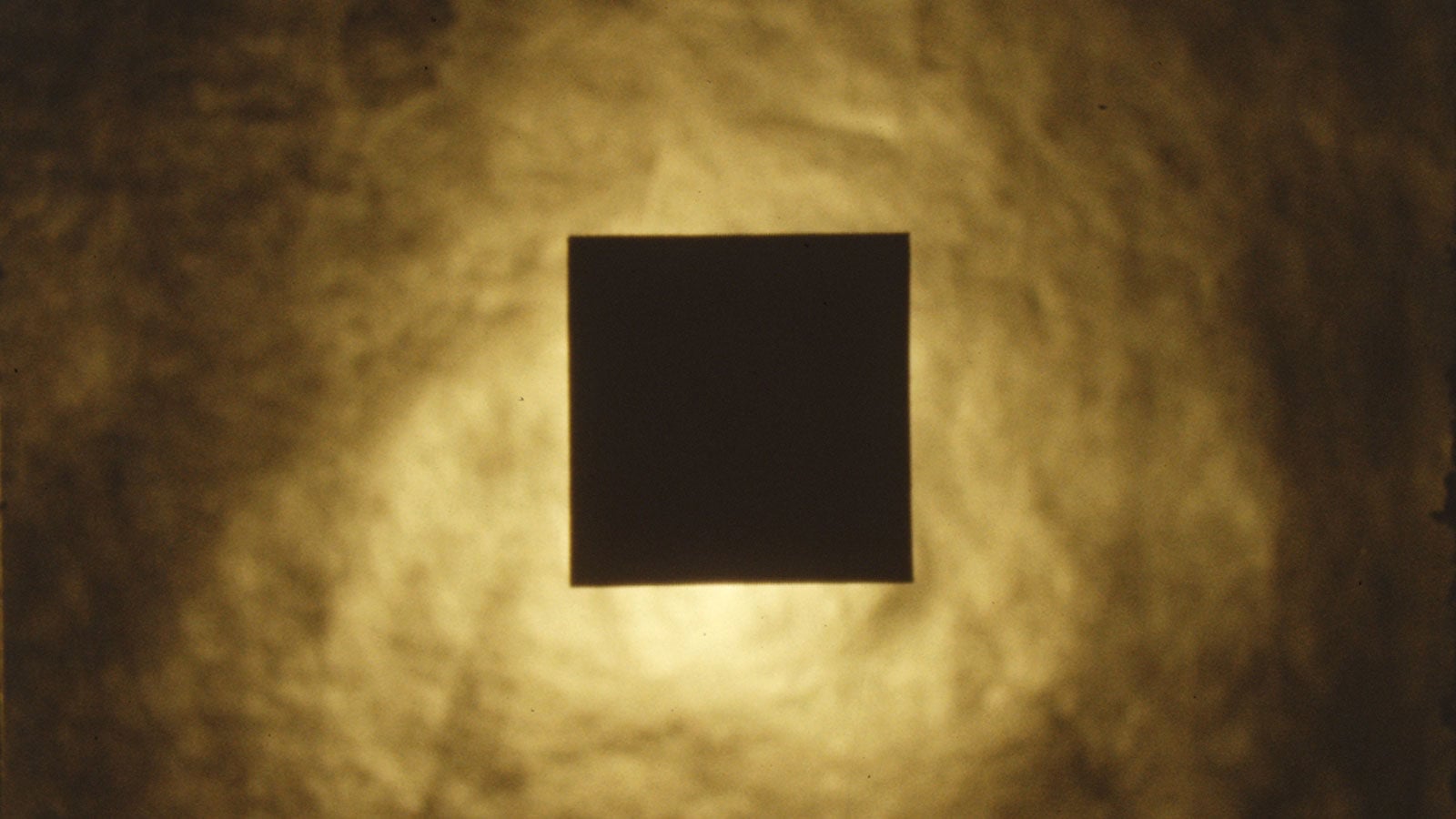
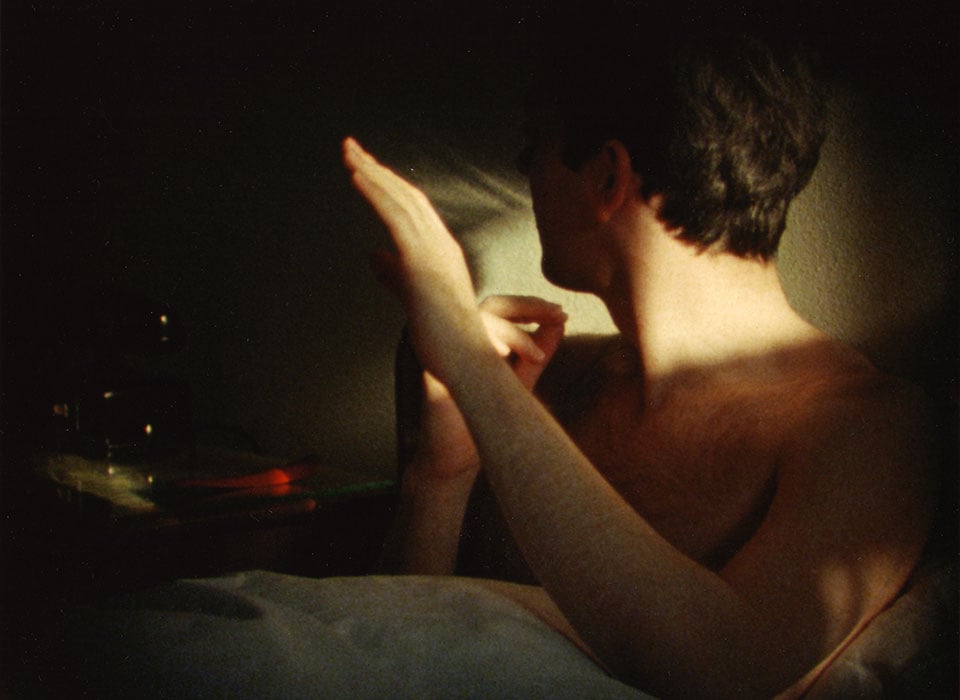
The Painting (72), Work Done (72), and Ruskin (73-74) confirmed his authority as a filmmaker. In the first of these, he intercuts details from a Flemish triptych, The Martyrdom of St. Hippolytus, which depicts a saint being drawn and quartered, with traffic patterns in a busy square in Bern; he intricately rhymes colors and vectors of tension until an image of Markopoulos and the torn pieces of a photo of himself anchor the metaphor in an allusion to a private conflict. (Beavers showed the film initially in a version without these revelatory final images.) Work Done projects the mental construction of Florence outside the filmmaker’s workroom. It fuses simple activities that impressed him in the city—bookbinding, frying blood, felling trees, paving a street with cobblestones—into a lyrical affirmation of the dignity and majesty of images, evoking in its careful depiction of artisanal labor the illuminated calendars of the Middle Ages.
The task of the middle cycle of Beavers’ career seems to have been to invent modes of mediation to curtail but not deny the subjectivity of the filmmaker’s imagery. At all points the images are objective and referential; yet he glazes their transparency by stressing a context of cultural artifacts. They are images touched by the filmmaker’s reading or viewing of historical art. In turn, they ask to be read in the same context. Ruskin visits the sites of John Ruskin’s work: London, the Alps and, above all, Venice, where the camera’s attention to masonry and the interaction of architecture and water mimics the author’s descriptive analysis of the “stones” of the city. The sound of pages turning and the image of a book, Ruskin’s Unto This Last (his widely influential work on the dignity of manual labor and craft), forcibly remind us that a poet’s perceptions, and in this case his political economy, are preserved and reawakened through acts of reading and writing. The extraordinary grace and beauty of the film, the polished perfection of its images, might deflect attention from its allegorical theme of the process of Becoming. In this allegory, a poet’s attention to the concrete particulars of water, stone, weather, and metropolis, mediated as images, can be recuperated both in Venice because it is an archaeological museum, and in the Alps insofar as weather patterns cyclically recur; in London, however, the traces of Ruskin’s city have been largely erased. Beavers’ self-representation as a reader/filmmaker, here unseen, links Ruskin to From the Notebook of…, thus bracketing the four films of the early Seventies that make up the second of three cycles of his work.
The third cycle, when it is completed, will consist of nine films—the longest of them a half hour—made since 1975. Two are not yet completed: one on themes from Borromini’s architecture, another on a painting of Il Sassetta. Sotiros Responds (75), Sotiros (Alone) (77), and Sotiros in the Elements (77), which have now been condensed into one film, began the series. Sotiros will be shown in the U.S. for the first time at the Walter Reade Theater in May. “Sotiros,” one of the Greek epithets for Apollo, means savior, redeemer, healer. Uncannily Beavers made the first of these films after visiting the temple of Apollo at Bassae, near to which Markopoulos selected a site for the Temenos, before he sustained serious injuries to his leg and to his vision when he and Markopoulos were hit by a bus. The second Sotiros film took Beavers’ convalescence in Graz as its theme.