Interview: John Smith on Being John Smith
This article appeared in the July 11, 2025 edition of The Film Comment Letter, our free weekly newsletter featuring original film criticism and writing. Sign up for the Letter here.
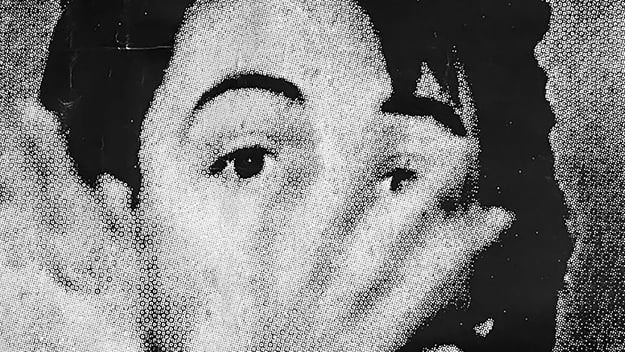
Being John Smith (John Smith, 2024)
Since premiering in TIFF’s Wavelengths section last September, Being John Smith has been on a veritable victory lap of the festival circuit, picking up prizes at DOK Leipzig, the International Festival Signs of the Night in Urbino, Italy; and more. The first film in three years from the titular British director is at once a playful wander through a lengthy life and career and an ample demonstration that Smith’s characteristic intelligence, humor, and cinematic ingenuity continue to find invigoratingly fresh avenues of expression after more than five decades.
After studying at the Royal College of Art, Smith started out with the London Film-Makers’ Co-op in the 1970s and went on to build a wonderfully heterogenous body of work. Privileging the short form, his films combine avant-garde, documentary, and fictional modes to experiment with language, humor, and the medium of film [Associations (1975), Shepherd’s Delight (1980-84), The Girl Chewing Gum (1976)]; explore urban landscapes [The Black Tower (1985-87), Home Suite (1993-94), Slow Glass (1988-91)]; or openly decry political failings [the Hotel Diaries series (2001-07), Covid Messages (2020), Citadel (2020)].
For anyone planning a retrospective of the still underscreened films of this experimental filmmaking legend, no centerpiece could be better than his latest. The 27-minute Being John Smith is deceptively simple in both form and content: alternating still images and sections of black screen are given structure by intertitles and voiceover that relate a largely chronological account of Smith’s lifelong struggle to live with the most common name in the English language. But the account is as rich in digression as it is in autobiography, and complicated by the fact that said voiceover and intertitles increasingly speak over (and even contradict) one another.
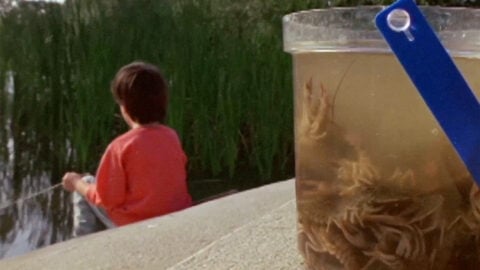
An unruly rhythm is also established by the sonic and visual motifs (the sounds of a crying baby and an old-school modem; pictures of the Tate Gallery logo, William Shakespeare, and a retro living room) that are often jaggedly inserted to interrupt an otherwise seamlessly anecdotal flow. Class, politics, and the mechanics of filmmaking rear their heads as always in Smith’s films, but these themes are further obscured by asides on all manner of cultural detritus: Lyle’s Golden Syrup, a Pulp concert, and a broad-jawed Disney hero, to name just a few. If the tone remains largely cheerful, even jovial, this mood too is regularly pierced by images of ghostly brain scans, violent protest, and gallows humor, creating a sense of everyday disquiet that feels very recognizable in 2025. As in all the best autobiographies, and Smith’s work in general, the I is never far from the We.
I spoke to Smith this past March in Paris, just after Being John Smith screened at Cinéma du réel.
Can you talk about incorporating yourself into your work? Your films often play with a productive tension between autobiography and fiction.
I don’t make conscious decisions; it just seems to happen that almost everything I do comes out of personal experience. I don’t see much of a distinction between Being John Smith and my earlier films, because they’re all autobiographical in a sense, but that film came about from the fact I’ve been thinking about my name for quite a long time [laughs]. I always thought I would make a film about it.
Most of my films are about empathy and connecting with people. In films like Home Suite (1993-94) or Hotel Diaries (2001-07), the narration is like a conversation with the viewer, like a one-on-one conversation, but I’m the only person speaking [laughs]. I sometimes feel disappointed when Being John Smith is shown and they talk about it being an autobiography. For me, it’s important that it isn’t just an autobiography. Autobiography is a means to talk about things that affect us all.
Where do these self-reflexive elements of your work stem from?
That’s rooted in the time when I first started making films. When I was studying film at the Royal College of Art, left-wing politics and structural film were a big part of things. I started making films at a time when it was [an] unsaid [truism] that the work you made would draw attention to its construction. There were also Bertolt Brecht’s ideas around distancing and being aware that you’re looking at artifice rather than being drawn into an illusionistic world. But all theory aside, I just like work where I’m aware of the fact that it’s bits of stuff bolted together.
Which is essentially cinema itself.
I’m interested in playing with psychological immersion, but also reminding you that you’re looking at a film. I’ve always loved storytelling and narrative. I like work that takes you in and out of that experience. Many of my friends back then were people who hadn’t gone into higher education and didn’t know anything about artists, cinema, or art in general. I wanted to make work which was accessible to them.
Text and language are so key to your films that I was wondering about the writing process.
I have a love-hate relationship with language, because it’s so powerful in terms of how you can sell people on what the world is. In terms of actual writing, it’s very different in every film. For the longer films, I might write a little bit, start to film some material, and then put it together. It’s a back-and-forth process among filming, editing, and writing. But Being John Smith was one of the most simple ones to make. I basically had a text that was partly written around things I had.
The “Stop the Genocide” intertitle in Being John Smith, which I know you see as central to the film, is just one of the many political statements you’ve made across your oeuvre. Where does that desire to bring politics into your films come from?
I don’t really think of it as incorporating politics into the work; such things are there because they’re part of what I experience. If I walk down the street and I see a bit of red paint on the pavement, it might make me think of the latest massacre in Palestine. Such small details can trigger things, so I wanted it to come up. The other reason was that I made a resolution a while ago that whenever I showed my work, I would say something about the situation in Gaza. I thought that I would put it in the film, so I wouldn’t have to have an argument about it later. If you’ve got an issue with me mentioning genocide, you don’t have to show [the film].
The handful of shots of London in Being John Smith almost seem to stand for the countless other shots of it that appear across your oeuvre. What’s your approach to capturing such an ever-shifting city?
I could just be very simplistic and say it’s where I live. The films are made in the places where I live. Citadel (2020) was a view from my bedroom window during lockdown. Most of the films that are observational of place have to do with me having spent a bit of time looking at that thing, which often means they’re shot from very near to where I live.
It was similar with The Black Tower (1985-87), a fiction which started from a building I could see from the window of the house I moved into in the early 1980s. It is painted in such unreflective black paint that it looks like a hole cut out of the sky. That was the initial impetus for filming.
I believe that if you look close enough, you’ll find what you need. You don’t need to go far to gather information. Images are so mutable that we can make them mean lots and lots of different things. The closer I am to home when I make something, the better, and that very often doesn’t even involve leaving the house. Even the films which don’t seem like they fit into that [category] are often shot through windows in other countries. I like the idea of the window. The window frame restricts your view, and I really like limitations. I can’t work without them; I will even create a formal framework to find them.
Being John Smith does the same thing, working with still images but breaking the pattern with a few moving ones.
Let me generalize and say that whenever I make a new film, I want the film to have its own language and [hope] that the film will teach the viewer that language. Maybe you’re quite disorientated by what you’re looking at to begin with, and then after a certain point, you realize what’s going on. That’s the point where I want things to change, where I break my own rules.
My early London Film-Makers’ Co-op films were very formally severe, with rules I never broke. I got very dissatisfied with that. I don’t like to make films which are immediately classifiable within any particular genre. The Girl Chewing Gum (1976) starts off with me just directing, and then that direction moves into description as I start to describe characters, until I’m talking about somebody robbing the post office.
There’s something very playful about not allowing the viewer to get comfortable.
It can be a bit cruel because I sometimes leave people hanging, especially in relation to humor. In Being John Smith, I’ve got the audience laughing, and then I start to talk about cancer, and people don’t know whether to laugh or not. I enjoy creating discomfort. I see the films as games with the viewer, but hopefully in a way in which the viewer gets let in on the game. You’re aware you’re being manipulated.
When I first made The Girl Chewing Gum, I remember some people were very critical because they felt it was so manipulative. You’re filming unsuspecting people in the street and saying things about them. But I’ve got no qualms about that as long as it’s really clear that you are actually doing that manipulation; I don’t think it’s a big problem. The real problem is a supposedly empathetic documentary where people really are being manipulated and you just don’t know it.
Playfulness goes hand in hand with humor. What role does that play in your work?
It’s a cliché, but humor is a serious thing. And one of the most important ways for me to cope with the horrors of the world is to make a joke, sometimes in very bad taste. I can’t help it!
I don’t set out to make funny films, but I’m very interested in ambiguity. Let’s take the idea of a voiceover and an image: if you’re told an image means something and you know it doesn’t, then that can be quite funny, because you can imagine it even though you know it’s a lie. In The Girl Chewing Gum, you know that that boy hasn’t just robbed the post office, but you could easily imagine that he had. It’s so easy to ascribe meaning to things. And humor also comes back to what I was saying about discomfort—that’s very often what makes people laugh.
The most important thing to me is that the humor is just a by-product of the ideas, but I’m glad that it’s there. Hopefully it makes the films more accessible. And if you have an audience actually laughing at the things that you want them to, it’s quite reassuring.
Laughter is something hard to fake.
It’s part of the commonality of the cinema experience. I like going to a mainstream cinema, sitting in an audience of people I don’t know and still feeling some sense of commonality, although I can’t speak to them.
The last shot in Being John Smith is about that, too. It was actually the starting point for the film. I was looking down at this crowd of 35,000 people at a Pulp concert and wanted to be down there with them as they were all losing their egos; there was this amazing sense of communality. They’re singing “Common People,” and I have the commonest name in the English-speaking world, so I thought I could finally make that film about my name. So I already had the final shot, and it’s always nice to have an ending before you start.
James Lattimer is a film critic and festival programmer based in Berlin.