Cannes 2026: All Together Now
Anxieties over fascism permeated this year’s festival, where the best films refused transparent metaphors and neat endings
Anxieties over fascism permeated this year’s festival, where the best films refused transparent metaphors and neat endings
It’s not unusual for the Cannes Film Festival to open amidst controversy; Festival Director Thierry Frémaux alone can usually be relied upon to provide fodder for days of headlines in his pre-festival press appearances. But this year, a sense of urgency permeated the Croisette. On May 11, the eve of the 2026 edition, a petition signed by 600 members of the French film industry was published in the newspaper Libération, sounding an alarm about the consolidation being rapidly pursued by the French right-wing billionaire Vincent Bolloré. Over the past decade, Bolloré has taken over a wide swath of the country’s media and entertainment landscape, from television channels like CNews (France’s version of Fox News) to newspapers, radio stations, and publishing houses, pushing these institutions toward his conservative positions.
The Libération letter is the latest in a series of protests in the arts industry against Bolloré’s growing influence. In 2023, the journalists of Le Journal du Dimanche went on strike for 40 days to protest the appointment of a far-right editor in chief as Bolloré made moves to acquire the paper’s parent company. This April, more than 200 authors left the historic publishing house Grasset, a subsidiary of the Bolloré-controlled Hachette Group, after its longtime CEO was dismissed from his position, purportedly after a dispute with the media mogul over the acquisition of a book by a conservative author. Film professionals in France had been on high alert since 2015, when Bolloré became the chairman of the telecommunications company Canal+ and its subsidiary StudioCanal—one of the biggest film producers in Europe—and shook up management; concerns reached a fever pitch last year after Canal+ acquired a 34% stake in UGC, the country’s third-largest cinema chain, with plans for a complete takeover by 2028.
At Cannes, the feelings of audiences on the matter were clear; loud boos could often be heard when the Canal+ logo appeared on screen before a movie. Signed by major French artists like Arthur Harari, Juliette Binoche, Adèle Haenel, and Zita Hanrot, the letter notes that Bolloré and his allies are now “in a position to control the entire film production chain, from financing to distribution on both the small and big screen”—a worrisome prospect at a time when the French right, gearing up for the 2027 elections, threatens to slash public funding of the arts. Though his influence had thus far been “discreet” (despite rumors that Bolloré, a conservative Christian, had stopped the acquisition of François Ozon’s 2018 film about sexual abuse in the Catholic Church, By the Grace of God), the signatories warned that “a fascist takeover of the collective imagination” could be on the horizon. Their fears were only confirmed when the CEO of Canal+, Maxime Saada, announced at a panel at the festival that the company would no longer work with the signers of the petition.
***
Going by the top prizewinners at this year’s festival, “collective imagination” seems, indeed, to be at risk. One of the most potent tools of cinema is its ability to allow us to envision and experience new and different worlds. A consequence of fascism is that it often provokes art that, even when positioned as critique, dutifully mirrors dismal realities rather than challenging us to imagine new ones.
Cristian Mungiu’s Fjord, which won the Palme d’Or, is a prime example. The film presents a strategically topical (and overly constructed) culture-war premise: a half-Romanian, half-Norwegian couple newly arrived in Norway are accused of child abuse for raising their children according to their orthodox Christian tenets. The film’s carefully balanced rhetorical battle between the dogmas of liberalism and conservatism predictably leads nowhere; if there’s anything the actual culture wars we’re living through have demonstrated, it’s that the stakes lie not in the semantics of debate but in the control and dissemination of information. The Grand Prix winner, Andrey Zvyagintsev’s Minotaur, similarly sinuates its way to a dead end. Inspired by Claude Chabrol’s 1969 film The Unfaithful Wife, as well as the lore of the eponymous creature of Greek myth, it centers a high-ranking businessman who is tasked with choosing employees to send to the war in Ukraine, while at home he confronts his wife’s adultery. Over nearly two and a half hours, we watch the protagonist wring his hands over ethical dilemmas and illusions of choice, only to arrive at the cynical point already made in the first few scenes: power corrupts and wealth insulates.
In contrast, the two best films in the Competition refused transparent metaphors and neat endings. Arthur Harari’s body-swap mystery, The Unknown, polarized viewers with its cryptic, Inland Empire–esque riddles, but its opacity is what allows it to summon so intensely the structures of feeling that undergird life in the West today: the loss of subjecthood, the alienation of modernity, the bulldozing homogenization of global capital. (For more on The Unknown, read Dennis Lim’s conversation with Harari here.) Valeska Grisebach’s The Dreamed Adventure (whose Jury Prize win signaled that there is perhaps some hope yet for the awards) has one foot firmly rooted in the real—the film employs nonprofessional actors and is based on exhaustive research—and another in a similarly liminal place of affect and imagination. The German director’s follow-up to her tremendous third feature, Western (2017), returns to that film’s thematic and geographic terrain: the gray zones between national borders, where immigrants, laborers, traders, and criminal enterprises operate in the shadows.
Here, the action unfolds in Svilengrad, a Bulgarian town near Greece and Turkey that’s home to the busiest border checkpoint in Europe. Said (Syuleyman Letifov, an auto-parts salesman and quarry worker whose artfully weathered face and warm eyes first graced the screen in Western) arrives by car after an unspecified period of time away. He crosses paths with archaeologist Veska (cosmetics seller and first-time actress Yana Radeva, with a majestic and chiseled visage to rival Letifov’s), another local who has been away for a long time, and is back in the region for a dig in a nearby town. From the beginning, the film undulates between rambling (and riveting) verité-esque scenes and genre-inflected ruptures. Said and Veska’s affable, romantically tinged catch-up at the dig site is bookended by the theft of a car and a meeting with a mysterious mob leader called “The Raven,” from whom Said buys a large amount of diesel as part of a sinister-sounding deal. Then, Said disappears from the town and the tale with the same in medias res suddenness with which he first appeared onscreen.
Veska is as puzzled as the viewer might be, and in her attempts to track him down, she stumbles into the maze of an underworld thriller. The details accumulate at their own pace, like dust on the windshield of a car; we learn of smuggling gangs and turf wars, meet more locals and mafiosi, and hear of murders, rapes and other violent acts. Veska, as it turns out, was once entangled in these networks along with Said and mob boss Iliya, a rival of The Raven. Her search for Said seems, in part, to be a quest for vindication after the misogyny she witnessed and experienced in her youth, as the local gangs cemented their control. This synopsis only accounts for a small portion of Grisebach’s nearly three-hour film; the real substance of The Dreamed Adventure, the meat on the bones of its plot, is everything that happens in the interstices.
There is a term in social sciences for a particular kind of ethnographic writing: thick description, which embeds an act or object deeply, intractably, in all the nuances of its context. Meandering from place to character to event, dwelling on documentary-like conversations among locals, and refusing to concede to the needs for closure demanded by what Grisebach describes in the press notes as the “male-coded” format of genre, The Dreamed Adventure achieves a cinematic thickness that is thrilling and absorbing. The film brims with details that are loaded with topical histories—the effects of the post-1989 economic collapse in rural Bulgaria, the illegal oil trade in Turkey, the trafficking of Eastern European women—but they suffuse the background, as in real life: we do not experience politics with a capital P, but as a kind of polluted air we breathe and become inured to before we even know it.
***
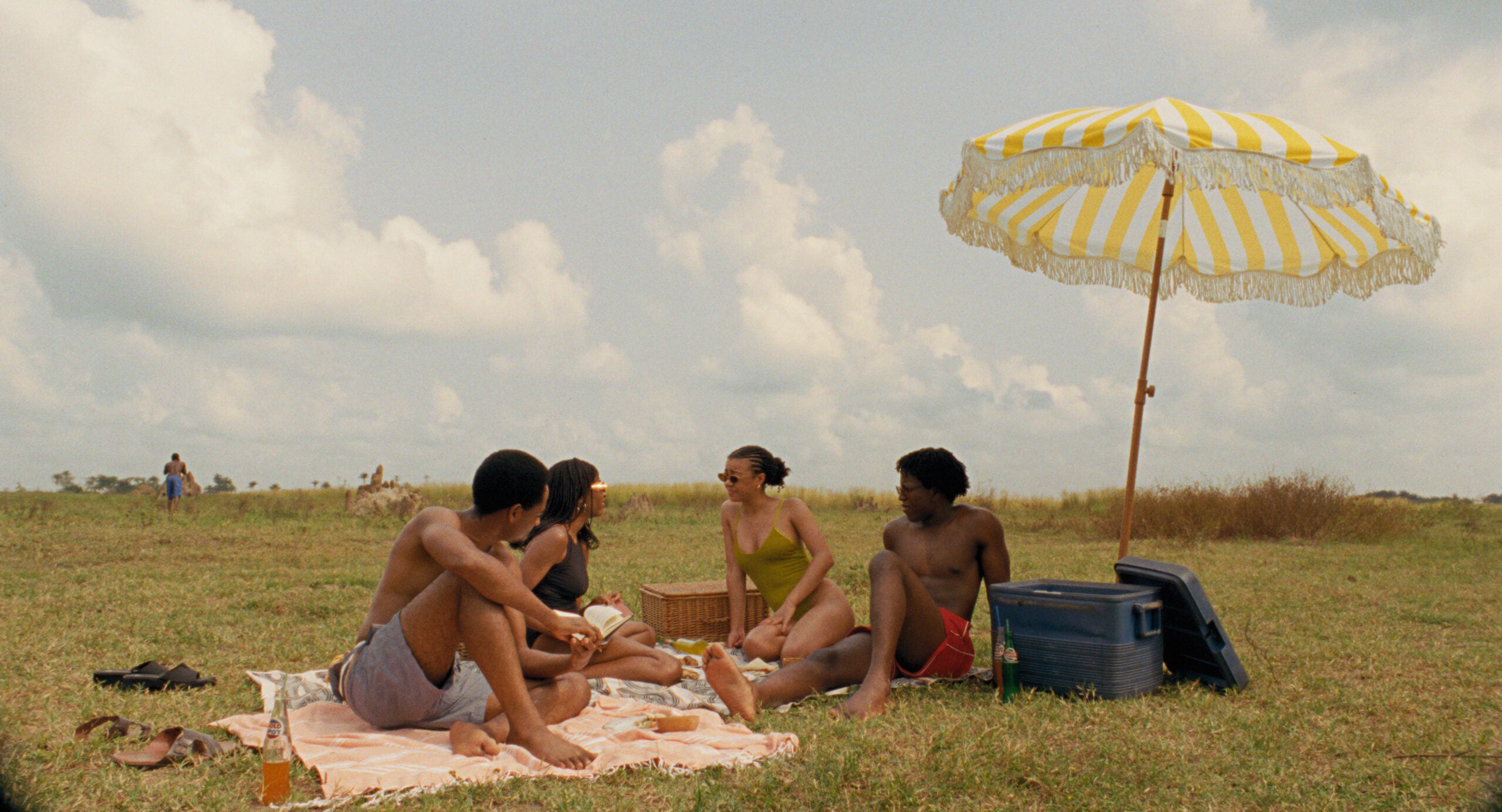
In his indignant defense of Canal+, Saada cited that the company’s investment in films by and about Africans: they backed Souleymane’s Story, from the 2024 Un Certain Regard lineup, about a Guinean immigrant in Paris; and the Rwandan drama Ben’Imana, which premiered in this year’s Un Certain Regard selection and won the Camera d’Or for the best debut feature. Tokenizing the rare films from Africa that make it to Cannes might as well be a tradition at the festival, where European institutions, whose wealth derives from the very extractive structures that keep artists from the Global South reliant on their scraps, can often be found patting themselves on the back for their largesse. I was rankled when a Directors’ Fortnight programmer introduced Clarissa, directed by Arie and Chuko Esiri, by saying that the selection committee was delighted to find this title given that it “does not receive many films from Africa.” To reduce this rapturous, Nigeria-set adaptation of Virginia Woolf’s Mrs. Dalloway to a supposedly unique representative of a continent of over 1.5 billion people is contrary to the very substance of the movie.
By transposing Woolf’s post–World War I novel about the chasms of class and complications of desire to present-day Lagos, the Esiri brothers have crafted a story that explodes the reductive, monolithic illusions of Nigeria—let alone Africa—that neocolonialism thrives upon. In the Lagos of Clarissa, multiple places, timelines, and countries exist all at once. There is the world of the title character (British actress Sophie Okonedo in a career-defining turn), with its country homes, servants, parties, and literary conversations, where time seems to stretch languorously. And then there is the world of the soldier Septimus—played by Fortune Nwafor, who first appeared in the Esiris’ 2020 debut feature, Eyimofe (This Is My Desire)—suffering PTSD from witnessing the bloody corruption of the army while fighting Boko Haram; for him, time seems to stagnate. When I interviewed the Esiri brothers, they told me that one studio executive to whom they had pitched the film thought that its depiction of a class of posh, British-educated Nigerians was “a fantasy.” It reminded me of my first month of college in the U.S., when an American classmate, clearly amazed at my English and other accoutrements of Western modernity, exclaimed, “But I thought Indians were poor!”
My classmate’s reaction was marked by racism and ignorance, but I couldn’t quite bring myself to summon indignation, in part because there was some truth in his statement. Many Indians are poor, and those of us who aren’t—the ones who get to travel to the U.S. and shatter stereotypes—are not exemplars of postcolonial progress; rather, we are proof that the prefix “post-” is premature. Those are the intersecting, rarely articulated realities that Clarissa gets across with extraordinary density, in part because the film is unafraid to treat its characters as real people, with lives too complex and rich to be entirely contained by the film. Clarissa and her compatriots gauchely order around their help, but their lovelorn melancholy and deep alienation feel as true as does Septimus and his wife Aisha’s beautiful, uncomplicated romance (in contrast to the loveless relationship depicted by Woolf). That is not to say that everyone suffers equivalently—the material inequities of class, gender, race, and religion are undeniable in the film. But its world is as complex in close-up as it is in wide angle, crisscrossed by both local and global forces of power, some of which obscure others. This is the task for the collective imagination in this time of ruthless consolidation and monopolization of our means of expression: sometimes, the hardest thing to imagine is that which already exists all around us.
This story is part of the Summer 2026 issue of Film Comment.
By clicking Sign up, you agree to our site’s Terms of Service and consent to our Privacy Policy.
Get full access to Film Comment with a paid subscription. Already signed up? Log in.
Thank you for signing up for The Film Comment Letter.
Check your email to set up your account and get access to select articles, or become a paid subscriber for full access.