Arie Esiri, Chuko Esiri, and Blair McClendon on Clarissa
The directors and editor of the Cannes 2026 standout on their Nigeria-set adaptation of Virginia Woolf’s Mrs. Dalloway
The directors and editor of the Cannes 2026 standout on their Nigeria-set adaptation of Virginia Woolf’s Mrs. Dalloway
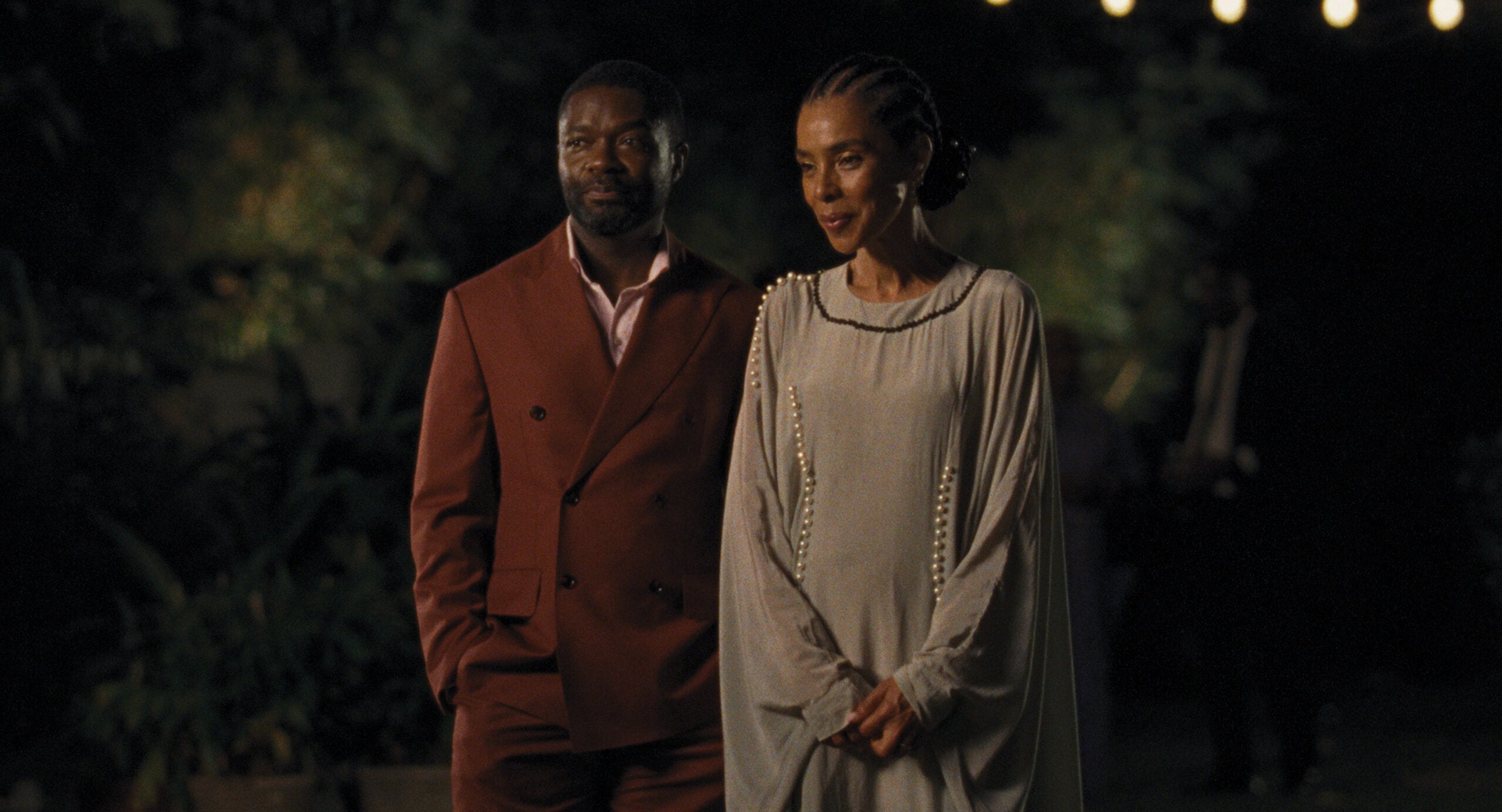
Nigerian-born, U.K.–based brothers Arie and Chuko Esiri announced themselves as filmmakers to watch with their 2020 debut feature Eyimofe (This Is My Desire), a subtly observed, woozily beautiful story of three working-class Lagos residents striving to find ways to immigrate to Europe in search of a better life. Their follow-up, Clarissa, a Lagos-set adaptation of Virginia Woolf’s Mrs. Dalloway, arrived at the Directors’ Fortnight at this year’s Cannes like an invigorating sea breeze, cutting through a festival where the movies, even when well-made and ambitious, rarely felt fresh or novel.
Clarissa brings to the screen a much-adapted text that’s over a century old, and quite faithfully at that, yet it feels sparklingly original. Woolf’s fragmented, time- and perspective-hopping novel—about a high-society lady hosting a party and ruminating on lost, youthful loves and life choices, while elsewhere in the same city, a World War I veteran suffers from severe PTSD—is transposed nearly seamlessly to present-day Nigeria. The posh elite of Lagos are (perhaps too) much like their colonial counterparts, while the city’s working class grapples with the lingering effects of the coups, political crises, and Nigeria’s ongoing battle against Boko Haram.
But it’s in the details—for which the Esiris have a keen, patient eye—that the nuances of this postcolonial adaptation emerge: in Clarissa and her friends’ holiday musings on the legacy of colonialism; in the variations of accent, language, and pidgin spoken by the characters; in the sounds of construction and calls of the muezzin that layer the film’s ambiance; and in the yearning glances and lived-in gestures of a tremendous ensemble of actors, including Sophie Okonedo, India Amarteifio, David Oyelowo, Ayo Edebiri, Fortune Nwafor, and others. The film’s editor, Blair McClendon, who also happens to be one of Film Comment’s own contributing editors, translates Woolf’s experiments with narration into a movie that flows like a river through different time periods and material worlds, delicately swirling together the particular tragedies of class and the universal tragedies of love.
I chatted with the Esiri brothers and McClendon at Cannes about the making of the movie, its approach to beauty, and the challenges of pitching—and exhibiting—an African film in the West.
Your family is in Nigeria, but you’ve spent a large part of your life in the U.K., if I’m not mistaken. Could you share a little bit about how you grew up?
Chuko Esiri: Well, we did our formal education in England. So boarding school from age 8, then high school, then college. For holidays we’d go back home to Nigeria. So it was a weird “one foot in, one foot out” thing.
This film seems more about the milieu in which you grew up, while Eyimofe was maybe not. How was it to go from that film to this one?
Arie Esiri: I think Eyimofe was a political film in many ways. It stemmed from many things, but also an article that Chuko had told me about, where a family had passed away by leaving a generator on. Here, we tried to balance those things and other themes and concerns—things that I’ve always thought to be political, [in a] subversive way, like all of the colonial aspects of [society] that we touch on.
Was it hard to pitch a film that occupies two very different worlds within Nigeria? You said in the press notes that one of the challenges you faced during development was that people had a certain idea of what an “African film” looks like.
CE: We did have a meeting with a potential financier who was like, “Is this world a fantasy?” Arie was like, “No, I had matcha in the morning. And it was overpriced like it was everywhere else.” It was just getting over that hurdle. Arie tells a story of an English teacher who was like, “To be honest, when I close my eyes and think of Africa, I only have images of safari. The only things I can think of are elephants and zebras.” And at boarding school, early on, it was like, “Do you live in mud huts and stuff?”
AE: I told lies; I said I had a pet rhino. [laughs]
I was amazed at how faithful the movie is to the book, even though you also make it very organic to the Nigerian context. Were there things that, when you were on the ground and started putting the film together, either diverged from the novel or maybe brought the film closer to it? I’m curious what actually taking the story to the locations was like.
AE: We struggled to find Clarissa’s house, mainly because these are kind of old—well, actually they’re postcolonial, but they have, like, a colonial feel to them—houses that exist in the fancy part of Lagos. And a lot of those homes are now being torn down and turned into high-rises. In our search for that, we thought: oh yeah, we are in a city of change, one that is evolving and urbanizing very quickly. And we had the idea of making that part of Clarissa’s story as well, as someone who is trying to let go of her past, but also clinging on to it.
When we found the house, it just so happened that next door, they had torn down whatever was there, and started building a high-rise. And actually, the house we filmed in—it belongs to a family friend of ours—probably won’t be there by the end of the year. We weren’t actually quite sure how to tie that into everything until the edit, because we had a bunch of buildings under construction in all parts of Lagos and I felt like it was very important to add that to the story. Then Blair had this idea of a scene with a security guard in the building at night, which was just great—we can close that thread.
I’m curious about the edit and its approach to time. Obviously, with Virginia Woolf, temporality is the existential foundation of the book. At the text level, it’s already very complex, with the streams of consciousness and the shifting perspectives. To do that in a film is even harder, right? But I just loved that it took me about 45 minutes to figure out who was who, what scenes were in the past, and which were in the present. I thought that was a miraculous feat to be able to do that without confusing me, and actually adding to the pleasure of the film.
Blair McClendon: I do really think that, mostly, movies are all about: are the transitions good? And if so, you’re probably fine. Everything else, you can do whatever you want. I reread the book before we started, and there is something in it that you can’t really do in movies, which is that a new paragraph will start, and it’ll take a few sentences for you to realize: oh, we’re in somebody else’s consciousness now. You just can’t do that in a movie, because I see a face and I know we’re somewhere else now. What you do have, though, are bridges of sound, or matched images, or rhyming images that get you there. You rely on a lot of those to be like: there’s pleasure even in the movement between places.
The movie is stunningly beautiful and so textural. I love how long it takes to get to a shot of a street in Lagos from high up, with the hustle and bustle—that’s usually the shot that a lot of Western movies set in Africa or Asia will start with. But you guys had this beautiful opening series of close-ups and one-shots of people on the street doing things with their hands. It is just a very different kind of introduction to the space.
AE: We live in the same London neighborhood as Clarissa Dalloway, as Mrs. Dalloway, in the book. And one of the things I loved was just being like: oh my God, these places are still here. We’re walking the same streets. I can have the same kind of morning—I don’t have a party to prepare for, but I could go and get flowers, and if I do, I’m walking the same streets. Big Ben is still there. Westminster Cathedral, we live right next to it.
One of the things that struck me the most was the way Woolf moves from character to character. For example, when the plane is flying overhead, and you get these glimpses of people’s lives for about a paragraph each. Everybody has a name and is doing something at the start of their day—there’s this little thing, the convoy or the plane, that connects them all. I really responded to that, and wanted to bring that to the way we did our B-roll.
CE: We were thinking about the start of the day. We went out in Lagos and we filmed people starting that day—it’s like: the restaurants opening up, the welders opening up. There was a small narrative in that. And we showed those people again at the end of that day, and had the guy closing up the shop, for example. So it’s a neat narrative thread, rather than just B-roll for B-roll’s sake.
Your transposition of the story to Nigeria is wonderful in so many ways, but one of them is that Septimus and his wife are not English and Italian, respectively, but two Nigerians from different cultural and religious backgrounds. And unlike in the book, there is so much love between them. I thought it was great that all these posh characters are constantly questioning their relationships—did I marry above or below my status? And these two people never question their love for each other.
CE: Nigeria’s religious breakdown is roughly 50 percent Muslim, 50 percent Christian. I know so many “Chrislam” couples—that’s what they’re called—where everyone just goes about their business. And funnily enough, [if you] think about the army and why they were so successful at coups, it’s the one unit where all the different tribes and ethnicities come together.
We always spoke about making something romantic. That also extended to the upstairs/downstairs aspect of the film—it extended to Septimus’s world and to making characters feel whole, like they have entire lives. Septimus is such a broken character in the book, and his wife Rezia is just a caregiver—she’s not even fully human. She doesn’t have her own inner life. In the movie, you can imagine Aisha’s entire life. We all know what it is like to love someone. So we wanted it to be a thing of: I can associate with what’s happening in the posh world, and I can associate with what’s happening to [Septimus and Aisha] as well.
[The following section of the interview was conducted solo with Blair McClendon.]
It’s pretty interesting what they said about you figuring out how to incorporate the construction into the film, and this connection with the security guard. How did you arrive at that?
BM: I had always liked that shot of the drivers and guys who were standing outside, because I thought it really speaks to something the Esiris are paying attention to, that is often left out of this kind of movie, which is that anybody who lives like that, their life is a production that a lot of people are making happen. And if you’re having a really nice party, there are a bunch of people who are just waiting for the party to finish.
I always remember years ago, I had a professor who said she’d lived in New York City since the ’70s, and that you used to see all these working-class guys around in Lower Manhattan, and now you don’t see them anymore. And I was like: there are working-class guys all around here, all the time. They’re just not Italian anymore.
There is something interesting about people’s inability to think of race and class as separate and intersecting things. So for a certain kind of person, the African is an eternal member of the working class. And for another person, the working class can only be ethnic whites. It’s so important in this movie to tease out those nuances.
BM: Yeah and there was so much discussion of that even with the always-fraught question of subtitling. What were the subtitles we were going to use no matter what, even when we were showing this to an English-language audience? Because there are actually several languages being spoken in the movie. There’s obviously English, there’s Nigerian pidgin, there’s Hausa, there’s Igbo. Every time you have to decide if you’re going to subtitle somebody, it opens up a huge can of worms. Because this movie takes in a broad swath of society, it does mess a little with that image of the “African film,” because it’s not as easy as saying: oh, they’re in Africa. Who they are, their class position, is also a function of language. It’s a function of where they are in Nigeria at that time. It’s a function of who’s talking to whom.
At what point did you come onto the film?
BM: I was on before they started shooting. The question you just asked them about the very tactile, textural things in the film—whenever they would call me and be like, “What do we need?” I was always asking for very tiny things. “What if we had a shot of a glass and there was some condensation on it? That would be really helpful for me.” Which certainly is to my taste, but I also was like, “Well, I’ve read your script. And the first four words of the script are ‘diaphanous rays of light.’ If the first word of your script is ‘diaphanous,’ then get me a tiny shot of a flower!”
It’s a credit to [Chuko and Arie] that they wrote this stuff in and then really committed to it, which I think is the harder part to do—to be on set and say, “I do actually need the light to be cutting across their arms.” Especially on a smaller production, to say, “We do need this person, who isn’t actually a character in the movie, to be shucking these shells.” It’s very easy to get tunnel vision and be like: what I need is the star to look at the camera and say these words. This is also why it’s really helpful to make your movie beautiful—it’s like, maybe you don’t understand it right now, but it’s still really beautiful to look at.
It’s tough with beauty, right? To figure out when it feels too precious and removes something from its context, and when it feels like it adds something.
BM: I think there are filmmakers—maybe not even filmmakers, there are films—that conceive of beauty as a moral category, and ones that conceive of beauty as, like: we’re making art, it would be nice if this were beautiful, right? If you commit to beauty as a moral category, you’re going to get in trouble. Like, I don’t think the fact that the images of Septimus’s world are beautiful tell you anything about that world.
It’s not necessarily the world that is beautiful—it’s that the gaze confers beauty. Even though the point of the narrative is to counterpoint the petty and yet existentially really painful tragedies of the upper class with the undeniable material tragedies of the lower class, the film doesn’t necessarily undermine any of them. Their experiences are not equivalent, but it’s not as simple as a contrast, either.
BM: It was really important to us not to say that love doesn’t matter compared to, like, the war. Because clearly it does.
Love is the great universal.
BM: Exactly. I don’t think we ever once said the word “romance” when we were cutting this. But I was watching it yesterday, and I thought: oh, right, the whole movie is a romance, because that’s everybody’s problem in the movie. What’s hard to do straight-ahead in an upstairs/downstairs story is to be like: actually, these people have the same problem, which is making love work. And then class and sex and gender and colonialism intrude as organizing forces in their lives, depending on where they are along that spectrum.
Have you been to Nigeria? Did you feel you needed to know what it was like to be there?
BM: I was so upset because I really did want to go. I didn’t know whether the Esiris were going to ask me to be there, or whether they were going to cut in New York. And then it wound up [being] London.
It was a funny thing to be doing from afar. When people are like, “This involves Black people, so we need to get a Black person involved,” my joke is that there are accents in the American South I find hard to understand. So I don’t know why you think I would know about this whole other place. I can’t help you with that at all here, because I am not from Nigeria. It’s funny to look back and think about what my conversation with the directors actually was, and it was me saying, “You should watch this Samuel Fuller movie because there’s a useful shot in it.” Or talking about Brief Encounter (1945), because it has a scene similar to one in this movie. We watched part of Cloud (2024) again, because there’s a really long shoot-out in that.
It gets back to the eternal “what is the image of African cinema” thing? We did have to sit and think a lot about that. I don’t think it was as simple as some people might think, of who are you talking to? I think there’s a very neat line to say, which is that you are talking to Nigerians. And I think the movie asks: what do you mean when you say that? Whenever somebody says, “This thing is authentic,” I don’t really know what they’re saying. Whatever it’s authentic to is just the vision of the set of people who came together to make the movie.
This story is part of the Summer 2026 issue of Film Comment.
By clicking Sign up, you agree to our site’s Terms of Service and consent to our Privacy Policy.
Get full access to Film Comment with a paid subscription. Already signed up? Log in.
Thank you for signing up for The Film Comment Letter.
Check your email to set up your account and get access to select articles, or become a paid subscriber for full access.