Our Best Undistributed Films list, voted on by Film Comment contributors worldwide, recognizes the new films that were viewed—at festivals, or elsewhere—in 2022 but did not come out in theaters in the U.S. for a full theatrical run. All of the below films had no announced U.S. distribution at press time—though do keep an eye on Film Comment for future coverage.
For the best films that received a theatrical run in the U.S. this year, here’s the Best Films of 2022 list.
Curious to see who voted and for which films? Check out our voters’ individual ballots here.
Also online: curator Inney Prakash’s list of Best Short Films of 2022, and filmmaker and programmer Gina Telaroli’s list of Best Restorations of 2022.
Peruse the poll results of yesteryear.
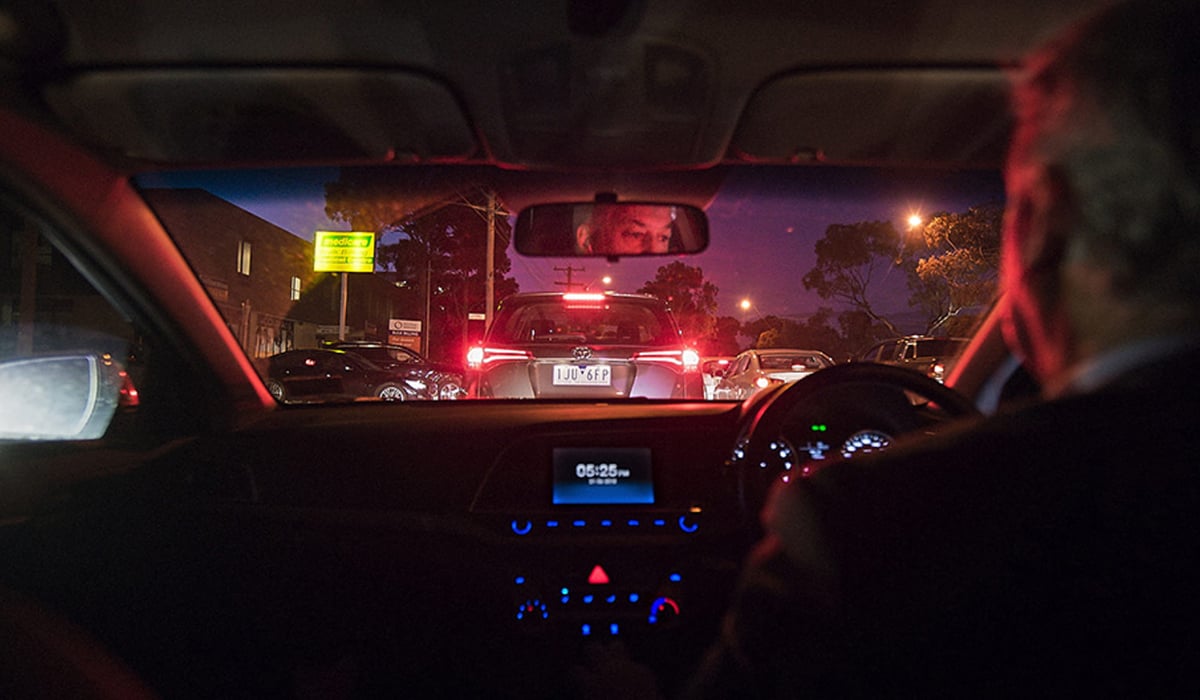
In Easteal’s first feature, the Australian director adopts a durational model of filmmaking that arguably hit its peak around the turn of the 2010s, but he parlays the conceptual framework into a casually engrossing work free of slow cinema’s more trying aspects (e.g., long passages of silence; quasi-symbolic characters on seemingly endless quests toward enlightenment). Running 180 minutes and set almost entirely inside a car, The Plains depicts the daily commute of a middle-aged businessman from the parking lot of a Melbourne law office to his home in the city’s outer suburbs. Every day, at just after 5 p.m., Andrew (Andrew Rakowski) gets into his Hyundai, calls his wife, and checks in with his ailing mother, before listening to talk radio for the remainder of the hour-long drive. Occasionally, he offers a lift to a coworker, David (played by Easteal), who’s going through a breakup and is generally dissatisfied with his personal and professional life. Over the course of the film—told recursively, beginning at the same time and location each day—Andrew and David reveal themselves in casual, offhand conversations (apparently scripted but delivered so naturally as to evoke the feel of a documentary) that accumulate into an acute portrait of modern life—one in which otherwise unarticulated beliefs, regrets, and anxieties bring to light a shared humanity too often lost in the commotion of the world.—Jordan Cronk

Dedicated to the director’s 18-year-old daughter via an epistolary voiceover that bookends the film, Bertrand Bonello’s Coma is a maximalist work made under extreme constraint. It uses dolls, animations, archival footage, the infomercial format, YouTube videos, Zoom sessions, and other media across a compact 80 minutes to approximate what it feels like when all contact with the outside world is conducted exclusively through digital means. It’s not a film that calls out to be liked or enjoyed, nor does it inspire much hope for the future; a closing montage suggests that though the pandemic may end, the ongoing catastrophe of climate change remains. Yet there is something cathartic in Bonello’s refusal of comfort as he disjunctively renders the contours of a teenager’s inner life, sketching how her psyche is shaped by the strangeness and damage of a crushing present. There’s something exciting, too, in seeing a filmmaker who customarily works on a grand scale test out a more experimental, modest form.—Erika Balsom
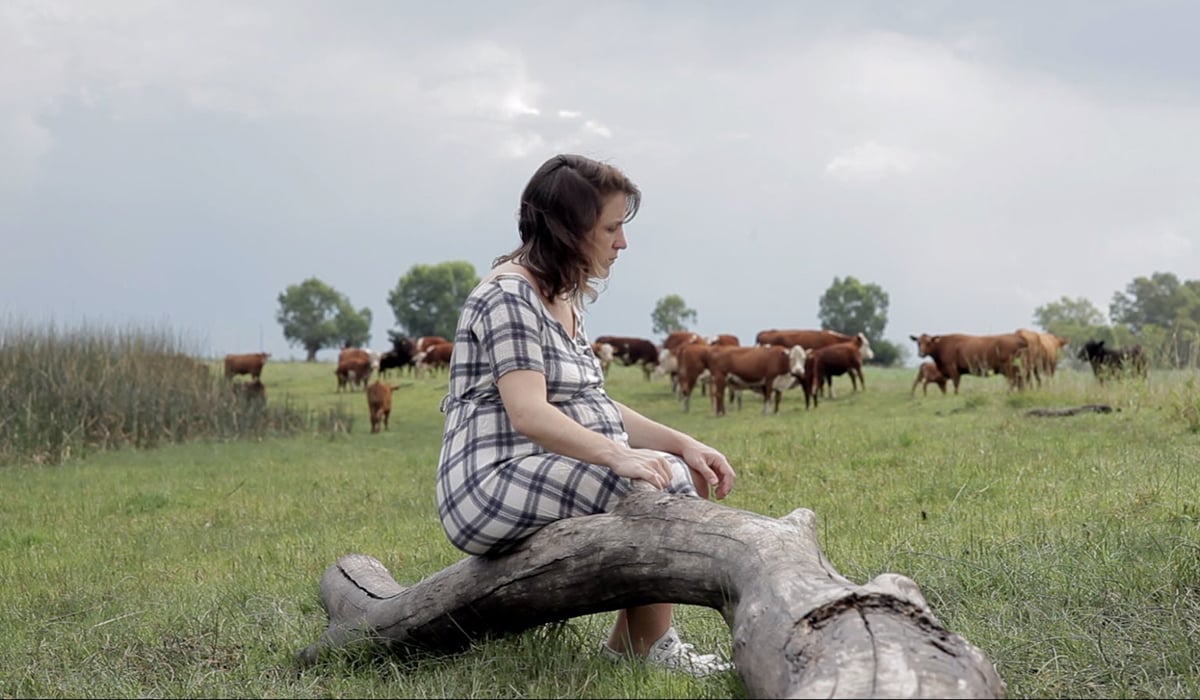
This four-hour, two-part drama is the latest labyrinthine exploration from El Pampero Cine, the Argentine group with one foot in experimental theater production and the other in the Latin-American metafictional tradition. Following Mariano Llinás’s epic La flor, that film’s producer, Laura Citarella, offers a peripatetic mystery story, co-written with her star Laura Paredes. Trenque Lauquen begins with two men searching for Laura (Paredes), who has disappeared in an Argentine backwater around the titular city. In a series of overlapping episodes, we discover how Laura embarked on her own detective adventure, involving a historical chain of love letters, a radio show about Lady Godiva, the writings of Soviet revolutionary and sexual pioneer Alexandra Kollontai, and an unearthly phenomenon concealed in the bathroom of a country house. A 21st-century feminist echo of Rivette’s Out 1, this is a twisty, unpredictable, yet surprisingly coherent pleasure, a field guide to the joys of getting lost—for heroine and viewers alike.—Jonathan Romney
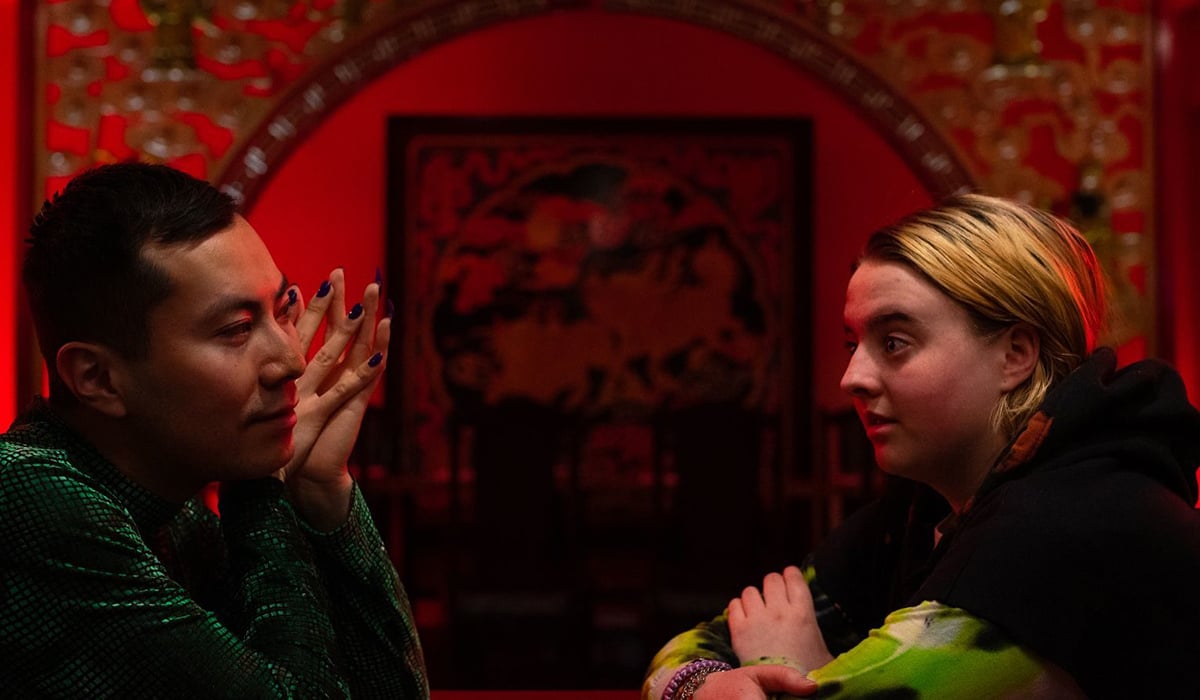
“Rats-backwards,” the Instagram username of Star, the 18-year-old protagonist of Queens of the Qing Dynasty, might seem like a typically flip teenage moniker, but such linguistic play is a lifeline in Ashley McKenzie’s unshakable second feature. As Star (Sarah Walker) recovers in a Cape Breton hospital after a suicide attempt, she bonds with her genderfluid caregiver, An (Ziyin Zheng), a recent immigrant from China. Their eccentric friendship, a small miracle in a world of bureaucratic indifference, is built on their balletic repartee, ping-ponging between humorous non sequiturs and matters of identity and mortality. As sound designer Andreas Mendritzki fades between diegetic ambience and a twitchy soundtrack—including an atmospheric score by Yu Su and Cecile Believe, and electronic tracks from Autechre—it’s as though the characters themselves are modulating the mix, toggling between their surroundings and the world inside their heads. Star and An each hum on a frequency that only the other can hear—and McKenzie graciously allows us to listen in.—Chloe Lizotte

Ruth Beckermann has been making films that interrogate the interstices of history and memory for over 40 years, but her latest feature feels like a new high point, with its arresting mix of rigor and playfulness. Mutzenbacher takes place almost entirely on a pink floral sofa in an abandoned factory, where an open casting call has summoned sundry Viennese men between the ages of 16 and 99 to reflect on a formerly banned, anonymously published, early-20th-century pornographic text, Josephine Mutzenbacher or The Story of a Viennese Whore, as Told by Herself. Notwithstanding the novel’s supposed female perspective (though it was likely written by a man), Beckermann herself is the only female presence in this entertaining and incisive psychological arm-wrestle with male fantasy. Beckermann’s experiment with the possibilities of language—and the reading and occasional chanting of her all-too-eager nonprofessional actors as they reenact the rhythms of the 116-year-old prose—revels in the absurdity of trying to make verbal sense of an unspeakable act, as much as it provokes candid admissions about desire.—Tyler Wilson
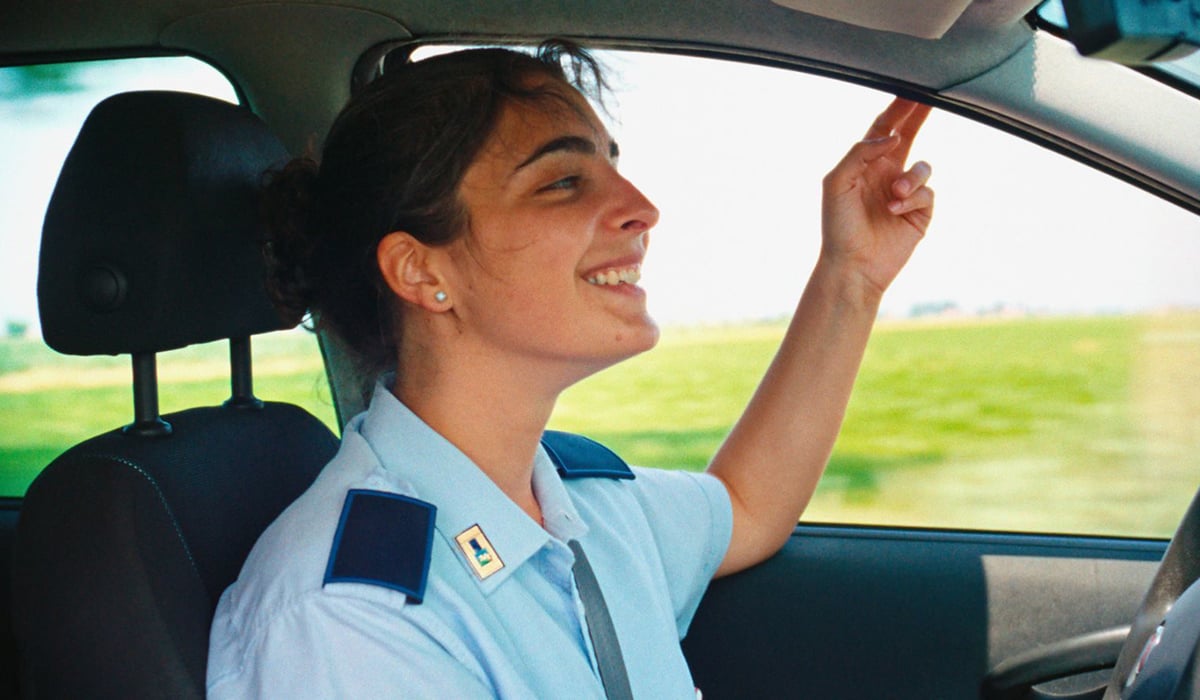
The Adventures of Gigi the Law stars Comodin’s uncle Pier Luigi Mecchia (a real-life cop) in the title role of a guileless police officer in San Michele al Tagliamento, a rural town in northeast Italy. Ostensibly investigating a suicide (or is it a murder?), Gigi spends his days not so much on the beat as in the clouds, driving around and telling mundane stories to his partner, or else exchanging flirtatious radio banter with the new female hire at the dispatch office. Meanwhile, at home, he’s in a feud with his neighbor over the absurdly overgrown garden that Gigi refuses to properly maintain. The film excels in the subtle humor of its dialogue (spoken in the hyper-regional Friulian dialect) and performance styles, which, with roots in the reality of this very specific milieu, dovetail to surprisingly moving effect in its closing moments. Seated on a park bench beside his partner, Gigi finally opens up with memories of an old acquaintance whom he once helped admit to a psychiatric clinic, revealing what might be a kind of self-therapeutic dimension to the character’s perennially upbeat demeanor.—Jordan Cronk

In this new film, 79-year-old James Benning expands the central conceit of his 1975 collaboration with Bette Gordon—also title The United States of America—into a systematic portrait of the nation, presenting a series of 52 static shots of every state in the country, plus Washington, D.C. and Puerto Rico, in alphabetical order. From the desolate plains and verdant farmlands of the Midwest to the manicured lawns and urban expanses of the coastal metropolises, the images present a wide view of the United States in all their faded glory. Meanwhile, on the soundtrack, a selection of canonized pop and rock songs alternates with speeches and musings from artists and activists about the sociopolitical struggles that continue to plague the country. No mere index, the film opens up a space for the viewer to consider the nation’s many contradictions, while simultaneously demonstrating the impossibility of defining or depicting its essence—a point put over by an end title card revealing that the film was shot entirely in California. Much more than a sly joke, this conceptual sleight of hand is a useful reminder that America, for all its surface-level similarities, is a vast canvas upon which new histories can still be written.—Jordan Cronk

Dane Komljen’s languorous and transporting Afterwater takes fluidity as its guiding principle as it explores the experience of lake bathing, here an act full of spiritual power yet cleansed of any Christian associations with baptism. Divided into three parts—each shot on a different format, set in a different time period, and featuring three performers—Komljen’s film plunges the viewer into a sensuous encounter with bodies human and nonhuman. Afterwater invites us to do what its characters do: leave the city behind, drift, and experience the pleasures of being unmoored yet in relation to nature and each other.—Erika Balsom
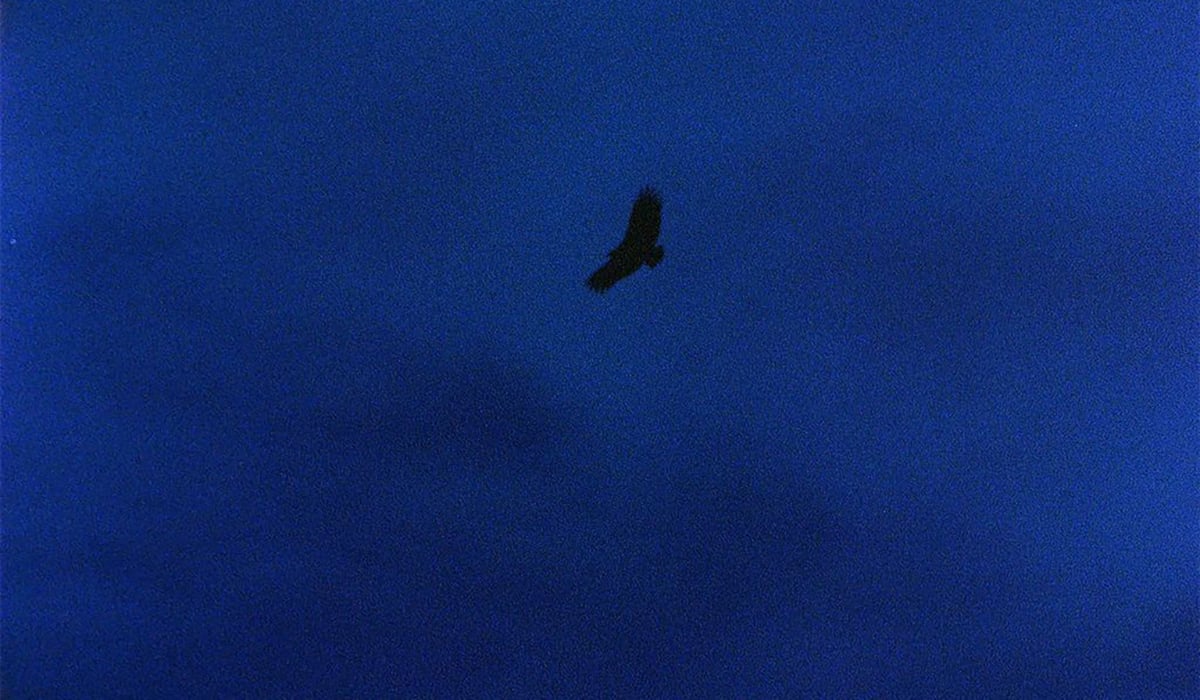
Shot predominantly in day-for-night (a technique that simulates nighttime while shooting in daylight), It Is Night in America is suffused with a crepuscular aura that renders Brasília, director Ana Vaz’s hometown, as a netherworld, with the camera zooming in on its faunal denizens. Close-ups of anteaters, owls, foxes, capybaras, and more at the Brasília Zoo and on the city’s streets alternate with light-studded skylines, while on the voiceover, we hear recordings of people’s calls to forest officers and a conversation with a veterinarian who refers to injured animals as “refugees”—thrust out of their habitat by voracious urbanization. Dense with the grain of expired film stock and the hum of crickets and traffic and waterfalls, the film engineered a kind of awakening in me, simultaneously fogging and clarifying my senses with its nocturnal visions. It would be too easy to commend a movie like It Is Night in America for its mesmerizing beauty or its subtle critique of settler colonialism, but in submitting to Vaz’s particular mode of perception, one realizes that content and contours, message and material, are not separable. Feeling is a way of knowing in the film, an alternate epistemology sensitive to the frequencies occluded by the tunnel vision of modernity.—Devika Girish
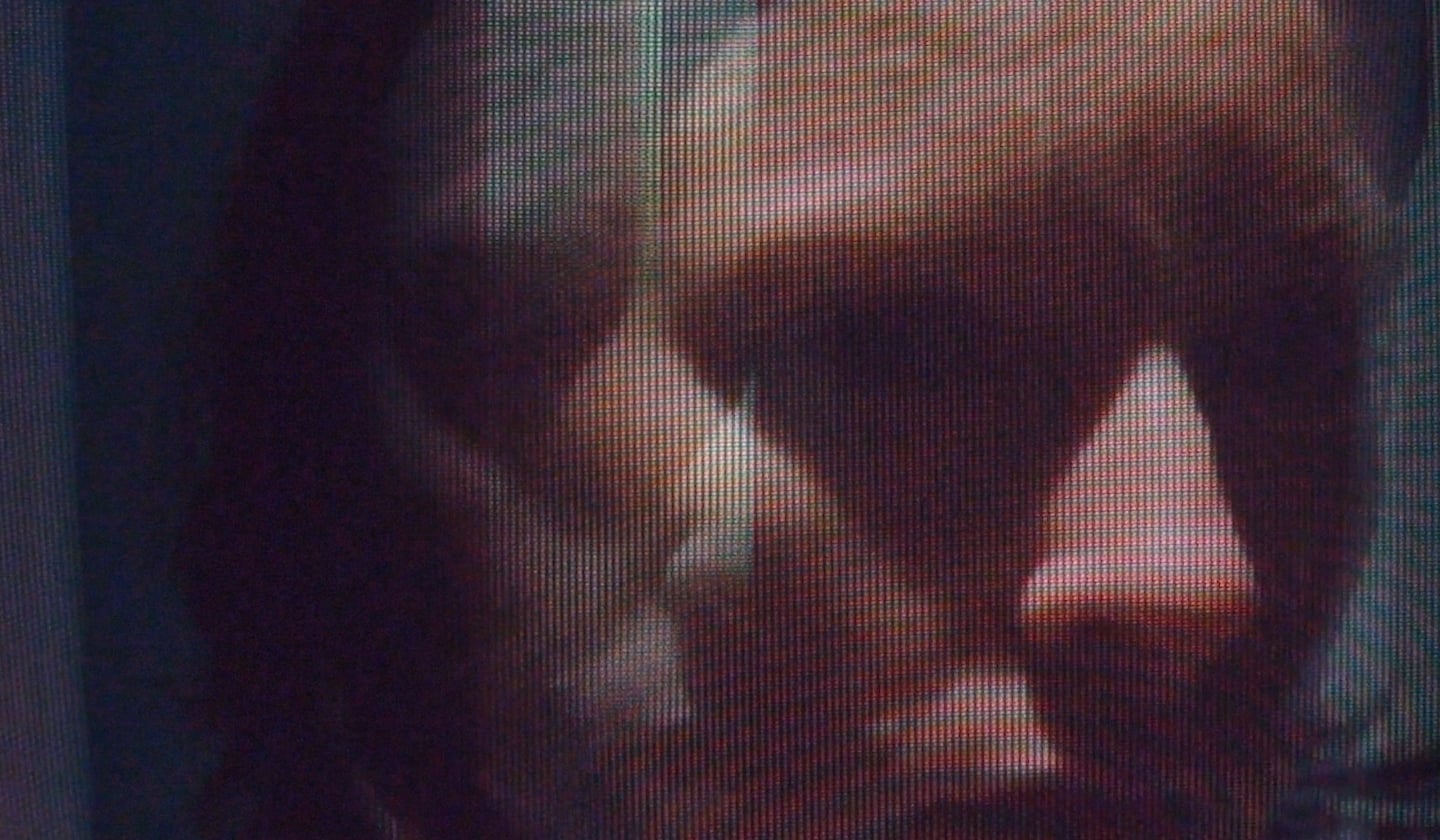
Co-directed by Sofia Bohdanowicz, Burak Çevik, and Blake Williams, A Woman Escapes is a collaborative work of autofiction—and possibly the world’s first 3D breakup movie. The film follows the newly heartbroken filmmaker Audrey Benac (Deragh Campbell) in Paris as her friends Burak and Blake attempt to lift her out of an emotional and creative funk through a series of video letters. Çevik and Williams shoot and narrate their own letters, while Bohdanowicz films Audrey in fuzzy-edged 16mm as the character wanders the apartment that belonged to her late friend, an astrologer named Juliane. Audrey is a kind of avatar for Bohdanowicz—she appears in four of the director’s other films, essayed each time by Campbell. Weak from grief, Audrey struggles to tend the rose boxes that line Juliane’s balcony, barely able to lift a metal watering can. So Blake mails her a small 3D camera, and encourages her to try a new perspective. Burak’s missives, shot in crisp digital 4K, betray a cheeky sense of humor: he sends her a video of a despondent dog that, like her, is unable to articulate its feelings. Throughout the film, hope appears in tactile stereoscopic images like roses that unexpectedly climb out of the screen, a cheerful beagle, and a billowing sheet of sheer organza. In a film about loss, these haptic moments feel like bursts of optimism.—Simran Hans