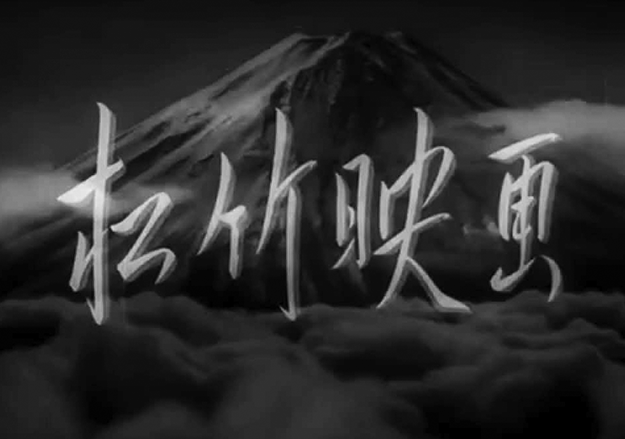
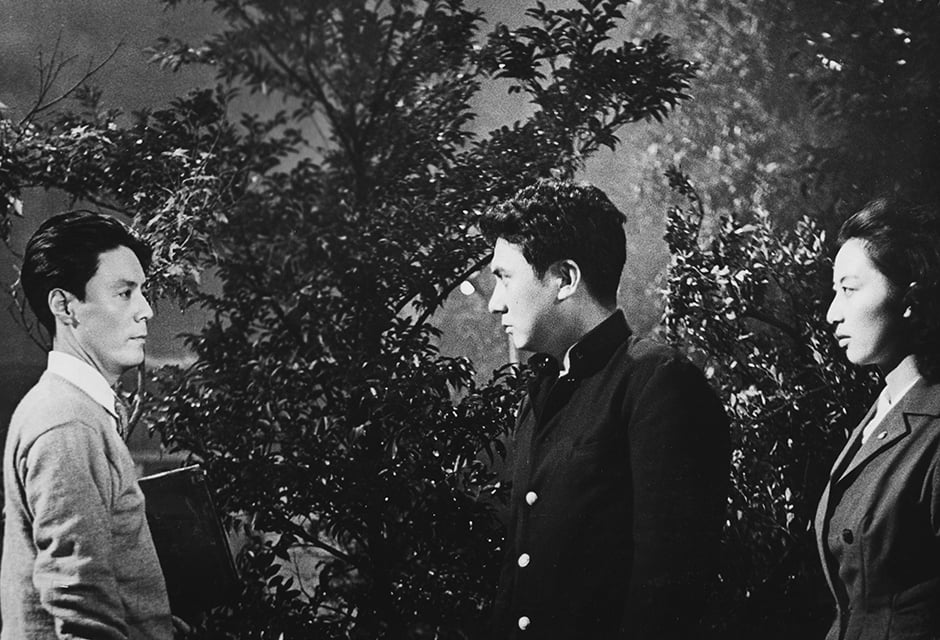
In so many ways, Ozu and Shochiku—which celebrates its 110th anniversary this year—were made for each other. An entertainment combine that prided itself as first and foremost a director’s studio, Shochiku had made the integration of antithetical approaches to filmmaking a company policy ever since the foundation of its Kamata studio and cinematic training school in 1924. The house specialty—a type of social realism called shomen-geki (tales of the underclass)—welcomed Stanislavski’s Method, Chaplin’s tearjerk antics, Griffith’s complex narrative cross-hatchings, and the cobwebs of Caligari’s expressionist cabinetry. There had to be parameters within which all that absorption of alien influence could function properly, however, and it fell to Shochiku’s young studio head, Shiro Kido—who would become Ozu’s lifelong supporter—to lay down the law. Kido’s ambitious plans included a Shochiku-specific formal approach to cinematic storytelling that valued the shot-by-shot construction of narrative favored by American filmmakers, and discouraged long-take, sequence-centered shooting as smacking too much of the fixed-perspective stasis and behavioral codes of kabuki and shimpa stage. He also called for a content-based value system. “We at Shochiku prefer to look at life in a warm and hopeful way,” Kido sermonized to both his audiences and his stable of young directors, which included formative masters like Heinosuke Gosho and Yasujiro Shimazu, further stipulating that “to inspire despair in our viewers would be unforgivable. The bottom line is that the basis of film must be salvation.”
And though “warm and hopeful” remained Kido’s watch-words, even movies about hookers and hoodlums were okay, as long as debts to society were properly paid and righteous paths recovered by the final fade. Hiroshi Shimizu made the most of such opportunities in his astonishing Japanese Girls at the Harbor (31), in which a Catholic schoolgirl pumps a few pistol rounds into the sorority sister she catches seducing her boyfriend in the campus chapel, serves time in prison, and ends up as a streetwalker in a geisha get-up going nowhere but down. Shimizu complied with a suitably Kido-styled happy ending, though he was clearly more interested in the moments preceding those pistol shots—when, in a hair-raising series of close, closer, CLOSE-UP! jump cuts, the girl’s seething visage lunges out of the darkness like some shadow-dwelling wraith from a long-forgotten prequel to The Ring.
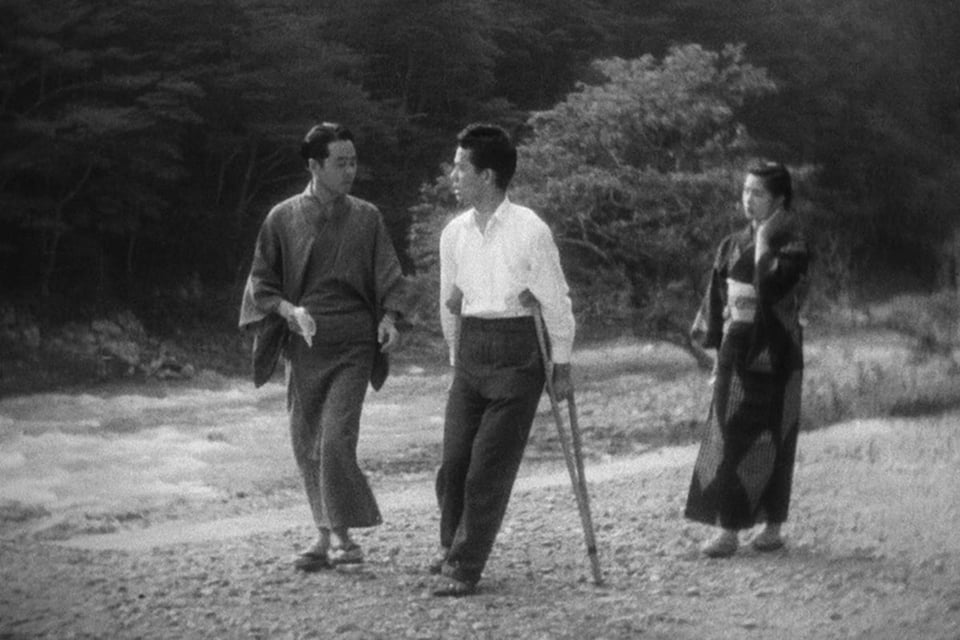
Shimizu’s fondness for letting his camera follow along with his forever-perambulating characters was matched only by his pioneering love for location shooting. Even as Japan’s wartime government began to bring the pressure for propaganda to bear on Shochiku’s productions, Shimizu still found ways to wander well wide of unwanted edicts, as when his barely repressed disgust with what he regarded as artistically crippling political interference resurfaced as the central dramatic event of his 1941 classic, Ornamental Hairpin, in which a wounded and limping Chisu Ryu struggles to regain his sure and steady walk. Shimizu somehow got away with all those strolling sequence shots, but it’s astonishing that Kenji Mizoguchi, whose penchant for equating the persistence of tradition with languorous and uninterrupted long takes began at Nikkatsu Studios and ended at Daiei, could ever have felt comfortable under Kido’s control. But then, perseverance was one of Mizoguchi’s pet perversions, and he pressed it for all that it was worth in Shochiku’s government-conscripted version of The Loyal 47 Ronin (43). Submerging his Chushingura adaptation’s militarist mandate beneath some four hours of the most gloriously glacial tracking shots ever filmed, Mizoguchi—as enamored of obviated omissions as Ozu was adoring of the elided big event —decided to simply wink away the warlords when he relegated the most famous samurai showdown in Japanese literature to a cinematic status so lowly and peripheral that it transpires entirely off-screen.