Still Waters Run Deep: Tony Leung
The great actor—and star of the new film Silent Friend—delves into his minimalist approach and remarkable career
The great actor—and star of the new film Silent Friend—delves into his minimalist approach and remarkable career
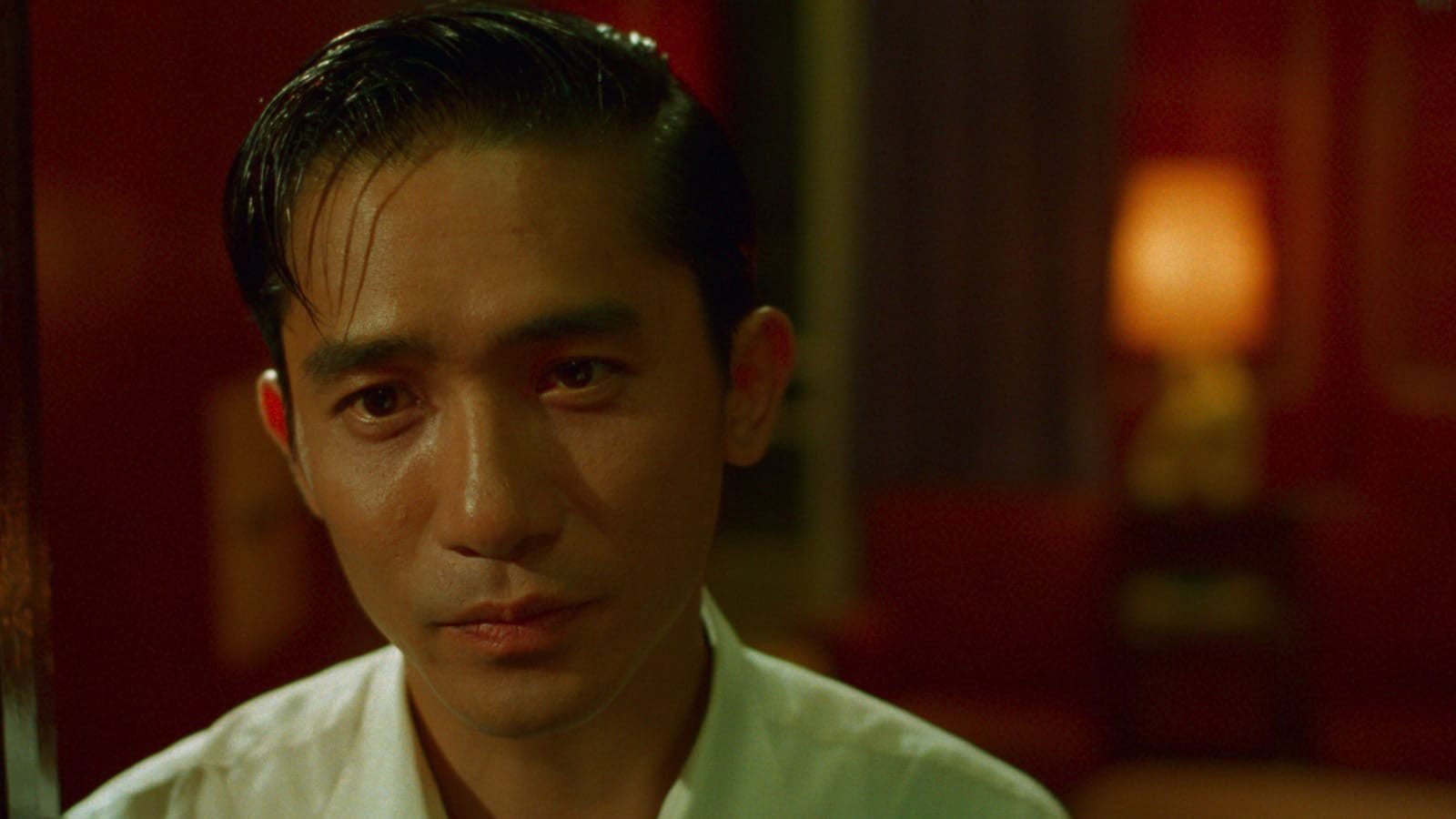
In one of the most enigmatic final shots in modern cinema, we’re alone in a room with Tony Leung Chiu-wai. The actor looms almost surreally large, occupying about a third of the screen, while the rest of the murkily lit frame is filled to the edges with domestic clutter. Leung’s unnamed character sits on a bed under an oppressively low ceiling, smoking a cigarette and filing his nails, his head tilted at an angle of rapt concentration. Before going out into the night, he stuffs a seemingly infinite number of pockets with the paraphernalia of his little world—playing cards, a thick wad of cash, a fastidiously folded handkerchief—and gazes into a mirror as he combs his pomaded hair. Conceived as a two-and-a-half-minute take, the scene is a riveting portrait of a private nocturnal ritual. But for all its intimate detail, we never hear the man’s voice or get a good, direct look at his face. The character’s sudden introduction at the end of the movie goes unexplained, his life a secret we won’t be privileged to know.
“When I saw myself in that scene, I said: this is what I want,” Leung told me when I interviewed him in early May. We were sitting in a similarly tight space, a meeting room in the middle of a busy Manhattan co-working office. He was remembering his performance in Days of Being Wild (1990)—the first of his several collaborations with director Wong Kar Wai—as an epiphany, the moment when he became the actor he is today. “I had tried to be a bit like a nonprofessional, like in A City of Sadness,” he explained, referring to Hou Hsiao-hsien’s 1989 masterpiece about Taiwan’s White Terror period, one of the most challenging films in the actor’s oeuvre. “But it never seemed to work. A movie is teamwork, and you can’t always do whatever you want. But [in Days of Being Wild] I realized that you don’t have to exaggerate. You don’t need any dialogue. You can be very natural, and somehow it attracts the audience and makes them guess what this guy is going to do.”
Leung was in New York to promote a new movie—Hungarian director Ildikó Enyedi’s Silent Friend—and to participate in a discussion about his career at Film at Lincoln Center, which was presenting a retrospective in his honor. (Most of the films included in the series, as well as a few others, can be viewed in a collection now featured on the Criterion Channel.) Before the sold-out talk, I spotted a large crowd waiting on the street for his car to arrive. This was just the latest in a string of international events that have celebrated Leung over the past few years, including the 2023 Venice Film Festival, where he was uncharacteristically teary-eyed receiving a lifetime-achievement award. The Hong Kong actor has been a global star for decades, but this recent wave of adulation seems different—an acknowledgment not just of his brilliance as a performer but of how his persona has resonated around the world. The discipline and unembellished beingness of Leung’s performance in Days of Being Wild—qualities that suffuse many of his most memorable roles, and that also characterize him as a public figure—may be even more alluring now, in this era of round-the-clock, social-media-fueled exhibitionism.
Of course, Leung’s brand of understatement can’t be reduced to just an antidote for the excesses of our age. He belongs to a special group of performers across time and genre who have used minimal expressive means to suggest profound interiority—a pantheon that, for me, includes artists as different as silent cinema’s “Great Stone Face” Buster Keaton and jazz musician Shirley Horn. I think of Leung as being in dialogue with these kindred spirits when I watch him in Trần Anh Hùng’s Cyclo (1995), in which he plays a chain-smoking criminal who rarely speaks, or in Wong’s In the Mood for Love (2000), a drama of suppressed longing in which the most overtly erotic gesture is the touch of hands in the back of a taxi. This connection likewise springs to mind when I hear Leung’s voiceover narration—an underrated component of his performances in Wong’s films—which masks a noirish fatalism with a matter-of-fact suaveness of delivery.
I also think of the Chinese aesthetic concept of liubai (or laubaak, in Cantonese), which favors negative space within a composition, creating an impression of depth and allowing viewers to contemplate realities beyond the physical realm. I told Leung that his acting style has long struck me as a modern embodiment of this ideal, and he nodded in agreement, noting that this is what separates Infernal Affairs (2002), a blockbuster crime thriller anchored by one of his most surprisingly devastating performances, from its Martin Scorsese–directed Hollywood adaptation, The Departed (2006): the latter “shows you everything and fills in every detail . . . I’m a big fan of Scorsese, and the script is really good. But the difference is we left space for the audience to imagine and feel.”
“Leung belongs to a special group of performers across time and genre who have used minimal expressive means to suggest profound interiority.”
It has become commonplace to emphasize this less-is-more principle when talking about Leung—as routine as mentioning those sad, seeking eyes, which he attributes to a difficult childhood marked by financial instability and the sudden departure of his father. But Leung didn’t arrive on the scene with a fully formed sense of his artistry; in fact, he was schooled in a much more commercial style of acting. In 1982, he enrolled in a famous “star factory” at the encouragement of his friend Stephen Chow, who has since become a fellow titan of Hong Kong cinema. Run by the television station TVB, the course served as a professional pipeline for some of the era’s most enduring talents—including Leung’s wife, Carina Lau, and his future co-stars Andy Lau and Chow Yun-fat—who populated the channel’s wide variety of shows. Leung’s first postgraduation gig was as a host of a zany, astronomy-themed children’s program, one YouTube clip of which shows him prancing and twirling in a metallic jumpsuit with a gaggle of young dancers.
The extroverted approach that Leung picked up from this training is present throughout his first decade of work. It’s there in his scenery-chewing turn as a young man suffering from mental illness in Derek Yee’s The Lunatics (1986), the title he named when I asked if there was a movie of his that he felt had been unjustly overlooked. And one need only look to Jeffrey Lau’s bonkers, all-star wuxia spectacle The Eagle Shooting Heroes (1993)—a comic companion to Wong’s epic Ashes of Time (1994), in which Leung also appears—to see how far he’ll go for a laugh, particularly when operating in the mode of Cantonese absurdist slapstick known as mo lei tau. His buffoonish character endures long stretches of getting mauled and clobbered, and spends much of the film with cartoonish blubber lips after absorbing poison.
I asked Leung what daily life was like at the TVB program. “We had a lot of lessons,” he said, “and went from nine till five every day until Saturday: singing classes, dancing classes. We had a teacher who helped us pronounce [our lines] correctly and beautifully. We also had lessons in script writing and in watching movies, including the classics.”
He had spent much of his childhood steeped in cinema. “My mother had seven brothers and sisters, and in the ’60s we didn’t have much to do with our leisure time, so they brought me to movies, and they all had different preferences. In Hong Kong, we had a chance to watch all the Hollywood movies, usually on the same release date they received in the States, and also movies from Japan and other countries.”
I was curious if, as a kid, he had had any idea of himself as someone with charisma that might translate well on screen.
“I don’t think so,” he said. “I never thought about being an actor. But the reason I enjoyed acting is because I found a way to express myself. It’s a kind of therapy, a balancing.”
Acting has also become something like a perpetual classroom for him. Leung has repeatedly chosen projects that have required him to master difficult skills: he improved his Mandarin for Lust, Caution (Ang Lee, 2007), trained rigorously in martial arts for The Grandmaster (Wong Kar Wai, 2013), and took piano lessons for Where the Wind Blows (Philip Yung, 2022). For Silent Friend, Leung has continued this tradition with gusto. He plays an accomplished neuroscientist named Dr. Tony Wong, who is stranded at a university in Marburg, Germany, during the COVID-19 lockdown. Before production began, the actor spent six months reading about his character’s field of study and consulting with scholars and researchers. For Leung, these self-directed crash courses seem to be as deep a pleasure—and as much of the point—as being on camera.
I told him that a different actor—someone in the mold of Laurence Olivier, who famously scoffed at his Marathon Man (1976) co-star Dustin Hoffman’s painstaking preparation—might have rolled up to set, delivered his lines, and been done with it. Leung, an ardent admirer of Method actors like Robert De Niro and Daniel Day-Lewis, shook his head. “This is the way I build up my confidence,” he said. “And it takes time, right? I prepare every single detail. I hired a British teacher to go with me through the process. I wanted to pick up a hint of a British accent, because this character is from Hong Kong, a British colony, and maybe went to Oxford or Cambridge. I had to study every day for six months to brainwash and convince myself. So after that I called up Ildikó and I said: okay, I am now a neuroscientist. After all that preparation, I get on set and I have no burden, no pressure. I just enjoy it; I make friends with the crew, and I say: let’s do something together. Let’s pour our hearts into it.”
“I want to keep my mood in the middle, so that when I’m acting I have space to go up and down. If I’m too high, then I can’t go any higher.”
–Tony Leung
Leaping back and forth among three different time periods, and centering on an old ginkgo tree in Marburg University’s botanical garden, Silent Friend is a high-concept odyssey with big ecological themes. Just as captivating as its gorgeous macrophotography of plant life are moments that are grounded in the quiet intensity that Leung first summoned in Days of Being Wild. We are invited to watch him as attentively as his character observes his surroundings—and as keenly as the plant world observes him. The camera lingers on Dr. Wong listening to the news, brushing his teeth, walking through campus, and sewing up the stuffed animals he uses in his cognitive experiments with newborn infants.
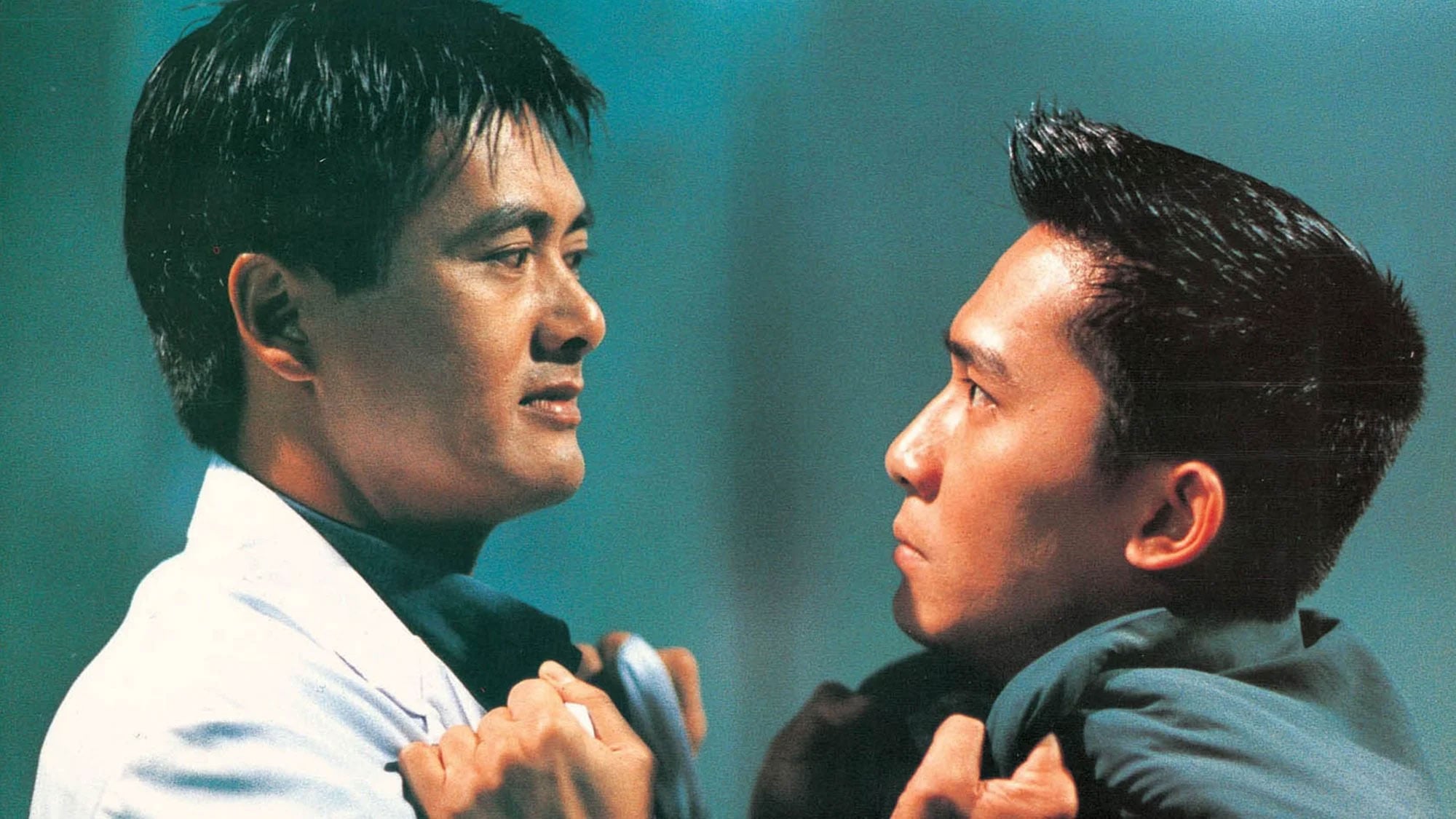
Enyedi has captured a serene variation of Leungian solitude. The actor’s eyes are gentle and inquisitive here; there is no pain or fear in them, despite the pandemic backdrop. But the director has also made use of Leung’s gift for evoking the undercurrents of relationships, especially new ones that have yet to be defined. Famous for his on-screen romances, Leung is equally vivid when playing one half of a friendship that hangs in the balance—as in John Woo’s Vietnam War melodrama Bullet in the Head (1990), which highlights Leung’s intense chemistry with co-star Jacky Cheung, and in Wong’s Happy Together (1997), in which Leung’s melancholy gay protagonist bonds briefly but unforgettably with a fellow restaurant worker (Chang Chen) in Buenos Aires. Like those films, Silent Friend casts Leung as a stranger in an unfamiliar place, where connections are tenuous and hard to come by. Working without a conventional plot or character arc, he conjures a palpable but inarticulable tension with Léa Seydoux, who turns up as a plant biologist Dr. Wong communicates with on video calls.
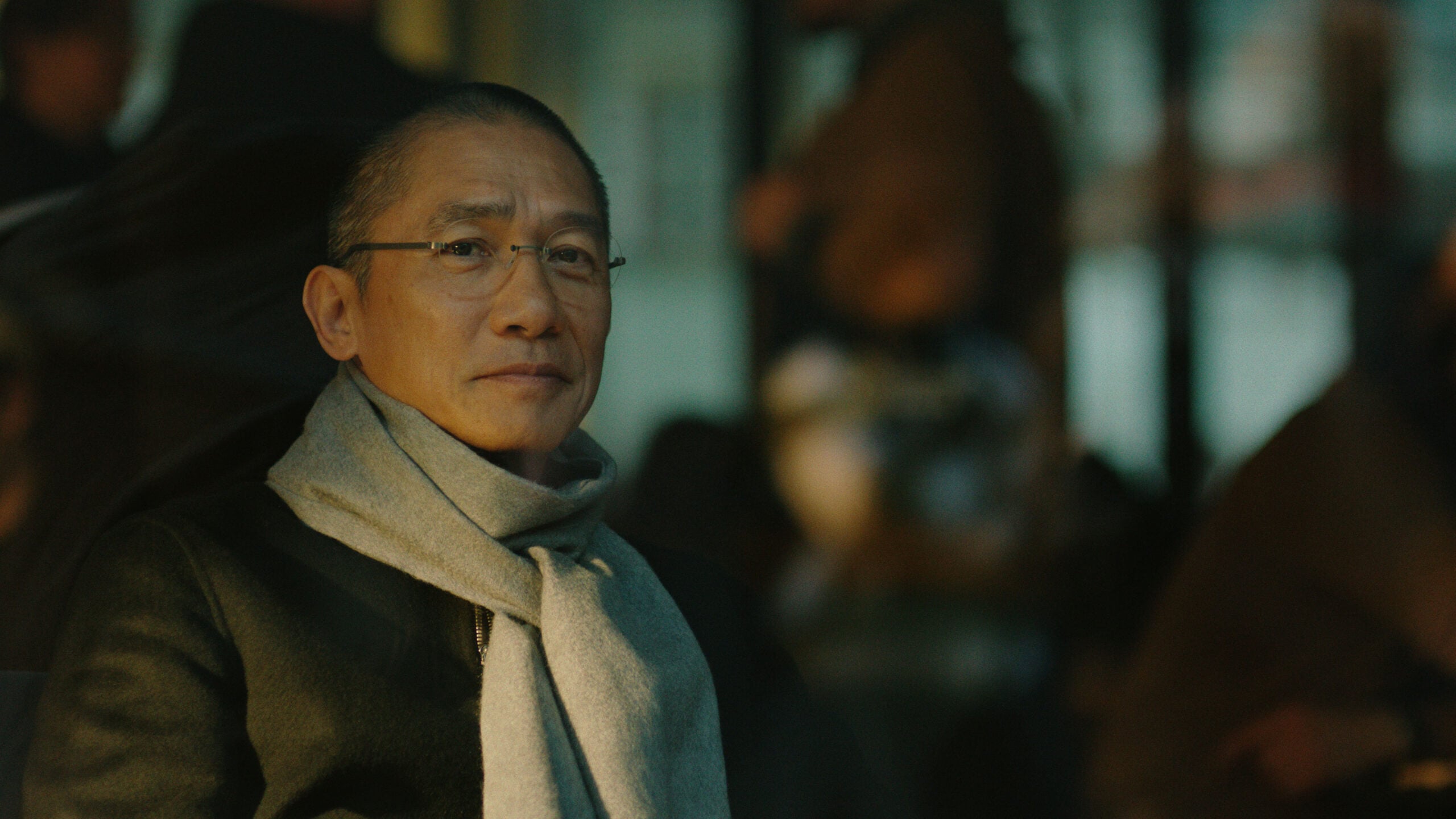
I told Leung that he strikes me as the sort of actor who is very responsive to how he is costumed and styled. The modest choices behind Dr. Wong’s look—buzz cut, glasses, scarf—are seamlessly connected to how he carries himself on screen. “I’m not one of those great actors like Marlon Brando,” Leung said. “I need something to get a hold of. I have always believed that a costume is an actor’s second skin. And sometimes I will ask for a little thing, like a mustache. I fought with Wong Kar Wai the first day on the set [of his 2004 film 2046]. He said, ‘No, I don’t want you to have this mustache,’ and I said, ‘No, I cannot act without it. I am trying hard to become somebody else, and I need to make myself believe.’ Then, after our screening at Cannes, he said, ‘Yes, you were right.’”
During our conversation, I clumsily tried to ask Leung about what he means to his audience. Movie stars don’t always get to connect with the public, the way touring pop stars do. (Let’s set aside the fact that Leung has had a not-insignificant singing career.) I wanted to know if he was conscious of all the people out there watching, but from his hesitant response, I got the impression that he would rather not be. I stopped myself from telling him that, as a Chinese-American millennial who grew up in both the United States and Malaysia, I feel fortunate to have found his movies at a pivotal time in my youth. It’s a hackneyed “representation matters” sentiment, but I don’t know who else could have delivered a more compelling demonstration of cosmopolitan Asian cool, an aspirational sensibility that stood in contrast to the stereotypes I had absorbed in the U.S. I was specifically drawn to Leung’s model of a Cantonese masculinity—one guided by the same zest for life that I recognized in my father, but heightened by a vulnerability and unassuming sexuality I had never seen before in any Sinophone star.
“I am very good at hiding my feelings in front of others,” Leung had said to me earlier in the interview. I wanted to respond: that may be true, but the paradox of your performances is that their elusiveness doesn’t preclude our sense of having been given access to something essential about your inner life.
Instead, I turned to another, related subject. I said that one of the reasons his iconic portrayal of the lovelorn journalist Chow Mo-wan in In the Mood for Love—perhaps the most widely referenced (and, unfortunately, memeified) art-house movie of our time—resonates so powerfully with people is that it shows a man harboring the sorrows of a foreclosed fate who nevertheless stands tall and firm, and even manages to crack a knowing half-smile. Chow Mo-wan neither denies the object of his desire nor deludes himself into thinking he can obtain it or is entitled to it. He is aware of life’s limitations—as Leung seems to be. Though Leung is just as capable of playing lunacy and villainy, it is this embodiment of hard-won, lightly worn dignity that may be his singular achievement.
I asked if his intuitive way of navigating his own path has been influenced by his Buddhism.
“Yes,” he said. “Meditation helps. I got into it about 10 years ago, and I really suggest that actors do it.” Then he offered a description of creative endeavor that could double as a philosophy for living: “I want to keep my mood in the middle, so that when I’m acting I have space to go up and down. If I’m too high, then I can’t go any higher. It’s not about religion—it’s about relaxing, so when you are doing something, you’re really doing it. If you’re reading a book, you’re really reading it. You’re ready to react to anything that happens around you. You’re not pretending.”
Andrew Chan is a senior editor at the Criterion Collection. He is the author of Why Mariah Carey Matters, published by the University of Texas Press.
This story is part of the Summer 2026 issue of Film Comment.
By clicking Sign up, you agree to our site’s Terms of Service and consent to our Privacy Policy.
Get full access to Film Comment with a paid subscription. Already signed up? Log in.
Thank you for signing up for The Film Comment Letter.
Check your email to set up your account and get access to select articles, or become a paid subscriber for full access.