Public Domains: Frederick Wiseman
For over 60 years, the filmmaker reflected the constant negotiations of life in a democracy
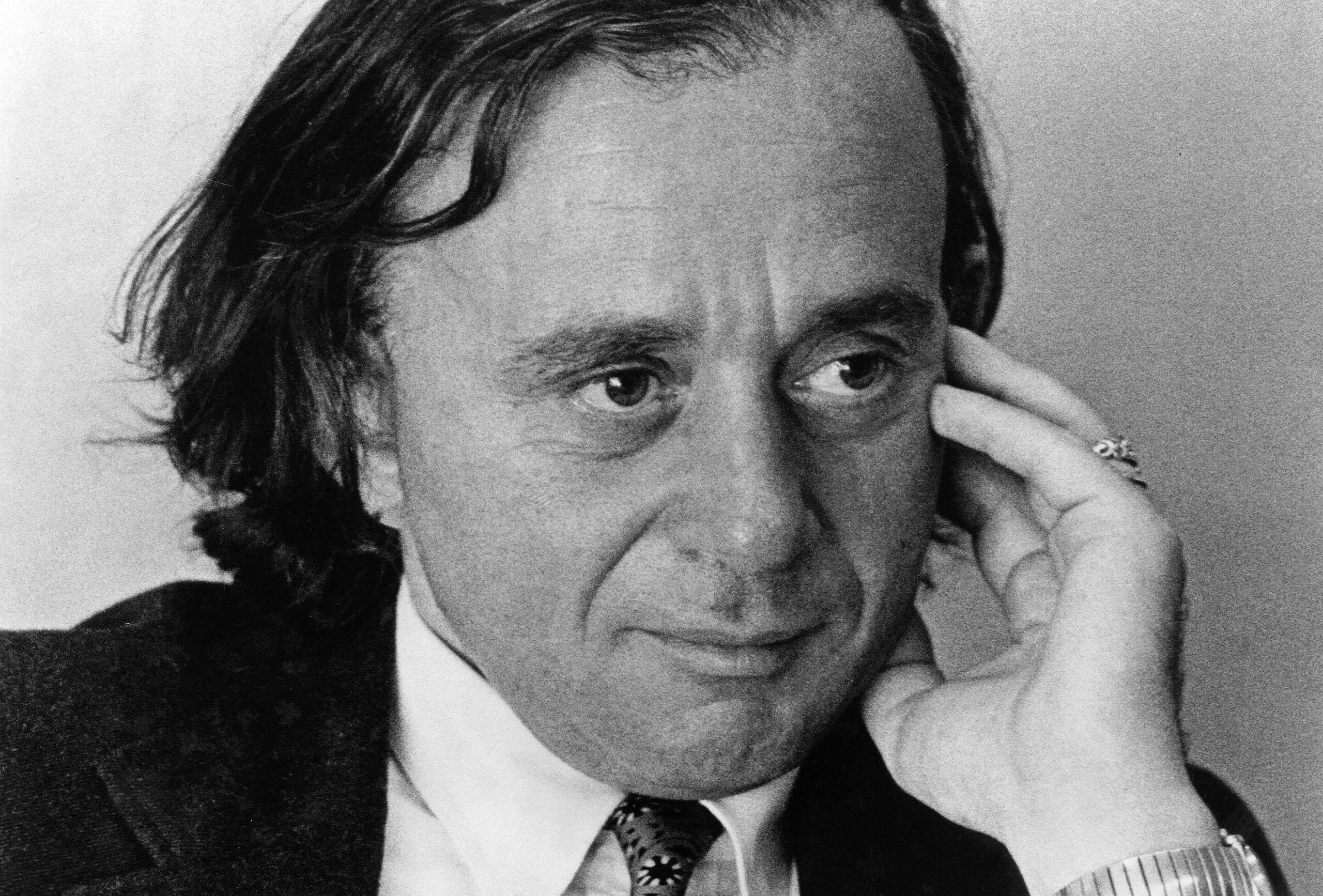
For over 60 years, the filmmaker reflected the constant negotiations of life in a democracy
The great filmmaker Frederick Wiseman passed away in February of this year, at the age of 96. He left behind 47 feature films, all but two of them nonfiction. It is an immense body of work, especially considering that he did not begin making films until he was 36, after a first career as a lawyer. He made a film roughly every year after that, and his production method remained unchanged throughout. Wiseman would select a location, loosely defined as an institution. He did not conduct research ahead of time. His crew of three would spend four to 12 weeks there, and amass anywhere from 50 to 250 hours of footage. There was his cameraperson—he worked with only six over the course of his career, including John Marshall, who shot his first film, Titicut Follies (1967); Richard Leiterman, who worked on High School (1968); and Giorgos Arvanitis, DP on The Last Letter (2002). Primarily, William Brayne shot 10 films from 1969 to 1978, and John Davey worked on 33 films from 1979 to 2022. Wiseman operated the boom mic himself, and a camera assistant rounded out the team. Jim Bishop—who shot the director’s last film, Menus-Plaisirs – Les Troisgros (2023)—had been working as an assistant since 2007’s State Legislature. After shooting, Wiseman would spend the next six to eight months editing. As soon as one film was completed, he moved on to the next.
All of Wiseman’s nonfiction films, save Crazy Horse (2011), aired on public television. This, I think, is one of the most important aspects of his career. In 1971, he created Zipporah Films, named for his wife, to distribute his works. The company oversaw exhibition on PBS and managed 16mm film rentals and DVD sales. For decades, cinephiles relied on bootlegs of his work; more recently, Wiseman’s films have been programmed in retrospectives, bringing new attention to his achievements (shout-out to the excellent Wiseman Podcast run by Shawn Glinis and Arlin Golden). Wiseman was not without criticism of the public-television apparatus in the United States. In 1988, he testified before the Senate Subcommittee on Communications to assail the board of directors of the Corporation for Public Broadcasting for inexperience, unaccountability, and an undemocratic way of determining what was shown to the American public. “[T]he real purpose of public television,” he said, “seems not to be programming but the maintenance and preservation of the public-television bureaucracy.” But he was committed to the mission of public broadcast and worked to make his films as accessible as possible. In 2018, his entire catalogue was licensed by Kanopy, a streaming service available through many public libraries. The obituary published by Zipporah Films asked, in lieu of flowers, for donations to be made to local PBS affiliates and independent bookstores.
Wiseman made films about everyone, with the idea that his audience was everyone. But not everyone agreed on this point. As one resident of Belfast, Maine, complained about the 1999 film of the same name: “They left out the more normal aspects of life—the population that was just normal.” There’s a whiff of class antagonism in the remark, which casts the predominantly working-class people we see—the donut-maker, the men sentenced in criminal court, the workers, the Vietnam vets who admit they’re afraid to venture into the woods—as abnormal, unsightly, and less deserving of attention than, say, the city’s picturesque shoreline. At the same time, what is normal depends on context, and Wiseman visited an incredible variety of those: a boot camp (Basic Training, 1971), a Benedictine monastery (Essene, 1972), a housing project in Chicago (Public Housing, 1997), an ICU ward in a Boston hospital (Near Death, 1989). One can find groupings of films, like his three on the American military, or the late-career works about cities. There are some sequels, including one about high schools, which also speak to an ongoing thematic interest in education. The magisterial Deaf and Blind series was initially conceived as one film, but after a couple days of shooting at the Alabama Institute for the Deaf and Blind, Wiseman expanded the project to four, with a combined running time of nine hours. At the risk of oversimplification, the films could be said to reflect the complexity of American civic life over the last 60 years. There is nothing simple about this, of course.
“At the risk of oversimplification, the films could be said to reflect the complexity of American civic life over the last 60 years. There is nothing simple about this, of course.”
If anything was abnormal, it was the sustained sight of people who are rarely shown on television, especially, in some of his most heartrending works, the disabled, the dying, and the working poor. We may feel far removed from the people we see, but Wiseman reminds us that we are not. In Domestic Violence (2001), a woman gives a tour of a shelter in Tampa, Florida. “We’ve had Josés and Michaels and Marthas, and probably your own children’s or grandchildren’s names; they’ve all been here,” she says. “And why that’s important is because I think sometimes the community thinks that maybe these are different people.” Earlier in the film, another guide mentions to a group of elderly women that by FBI estimates—“not a feminist organization,” she adds dryly—one in two women are physically abused at some point in their lives. The ladies gasp disapprovingly and shake their heads. You have to wonder how many of them, what half of this group, have suffered this way, or would be willing to admit as much.
Davey holds the frame on the women’s faces; Wiseman doesn’t cut away. So we look. These are films made with tremendous patience and with little to distract—no added music, titles, voiceover, or any explanation other than what the subjects themselves provide. Wiseman’s style is decidedly not slick. We see a lot of rooms with bad lighting, bland interiors, lengthy meetings in which people try to work out a problem, or fret over a budget, with or without resolution. On occasion he filmed a bystander who, like the viewer, wonders what on earth is happening in front of them. In Manoeuvre (1979), for instance, German villagers peer out of windows to watch the spectacle of American tanks rolling through town as part of a NATO military exercise. There is no waving, no hero’s welcome. The elders undoubtedly remember seeing similar sights at the end of World War II. Meanwhile, over their two-way radios, soldiers trade lewd remarks about the teenage girls they spot along the route.

It’s well known that Wiseman’s films are long, but less appreciated is his unparalleled skill in selecting and sequencing shots. Without a central character to follow, as one finds in a conventional documentary, he built structures that, over the course of a film, advance an idea, only to reverse or deepen it later. Sometimes this expanded over multiple films: a shot of a robot attempting, and largely failing, to fold a towel in a university laboratory in At Berkeley (2013) recalls a factory worker folding washcloths in Adjustment & Work (1986), and a blind student learning to do the same in Multi-Handicapped (1986). The repeated gesture makes a connection across a nearly 30-year interval. What will become of the factory worker, who is already underpaid and dependent on state assistance, when a robot renders his labor unnecessary? What kind of work will be available to the student?
Wiseman didn’t call himself a political filmmaker, and it’s true that he eschewed overt messaging. His films were sufficiently open, or at least subtle enough, to be taken as both critique and endorsement at the same time. Titicut Follies was initially embraced by Lieutenant Governor Elliot Richardson, who had been responsible for granting Wiseman access to the State Hospital for the Criminally Insane in Bridgewater, Massachusetts, the subject of the film. But once early reviews criticizing the institution came in, Richardson denounced it. Wiseman may not have been one to make declarative statements, but he was certainly interested in political questions. He was, in fact, one of cinema’s great dialecticians, drawn to the contradictions that make up life in a democracy: the unresolved antagonisms between freedom and conformity, individual and community, spirituality and materialism, and the constant negotiation of who belongs and who doesn’t.
Accordingly, capitalism is a constant, degrading presence in these films. It is felt in the desperation and loneliness expressed by Wiseman’s subjects, even when people apparently have so much. Aspen (1991), for instance, is filled with lost souls who don’t know whether to wear fur coats or shorts, who bloviate nonsensically about Matisse, and who think it’s a good idea to trade wedding vows in a hot-air balloon. Their wealth, of course, shields them from the material shortcomings that limit life for others in Wiseman’s universe. I think about the recently fired office cleaner in In Jackson Heights (2015), who says dejectedly, “one is sometimes left wondering what the reality of this country is.” The large rip in the sleeve of a slaughterhouse worker in Meat (1976). Or a characteristically unassuming moment in Model (1981), when a street vendor drops a few of his apples at a busy Manhattan intersection. A man in a suit reaches down to pick one up. At that exact moment, a car passes and obscures our view. Once the man reappears, he is walking quickly off. Did he pocket it? Give it back? Both are possible in a Wiseman film. “I think it is as important to document kindness, civility, and generosity of spirit as it is to show cruelty, banality, and indifference,” Wiseman said when he accepted an Honorary Oscar in 2016. (I rewound the shot several times; the man returns the apple.)
Wiseman disliked the term “documentary.” Welfare (1975) offers a clue as to why. Set in a welfare office in New York City, the film shows people enduring long waits and a bureaucratic snarl as they attempt to move through the system. They are hungry. Almost all of them have nowhere to go. The workers are generally sympathetic, but ineffectual. Mostly they refer people to other offices: Social Security, Employment, and an area called “Fair Hearing,” which sounds like anything but. What matters most are documents—a pay stub, a marriage certificate, a notarized letter from a young woman’s mother attesting that she will not financially support her troubled daughter. These make up the difference between receiving aid or not. They also suggest the inadequacy of the documentary form, which relies on a similar logic of authenticating proof. So many documentaries try to argue for their own importance, going to great lengths to furnish audiovisual evidence to underscore this point. Wiseman’s films are both less and more than that. Less because he never presumed to know his subjects, give them backstories, or even provide their names in many cases. And more, because he cut away before their situations had resolved, avoiding the artifice of narrative tidiness. Instead, we’re left to wonder what might have happened to them, and people like them. His films insist that the document and its corollary, the documentary, are inadequate to the lives that are often reduced to them.
Wiseman avoided filming himself, though one can find rare instances of his reflection in Mylar balloons or sunglasses. He rejected the cinema-verité trope of inserting a shot of the filmmaker in a mirror—what some took to be a reflexive acknowledgment of the director’s presence, Wiseman saw as solipsism. As he told NPR’s Fresh Air, he found “a certain amount of pretension among some documentary filmmakers, who I think see the real subject of their films as themselves.” Why focus on oneself when the world offers so much that is absurd, morbid, lyrical, and touching, sometimes all at once? Wiseman loved a one-sided telephone call, proffering a librarian in Ex Libris (2017) who patiently explains to a caller that unicorns are imaginary animals. There are several singing telegrams in his filmography, all of them awkward. And over the course of several surreal minutes, an executive in Meat proudly explains the patents that went into the slender tube he is waving, which is a long, industrially reconstituted egg made from a dozen standard eggs.
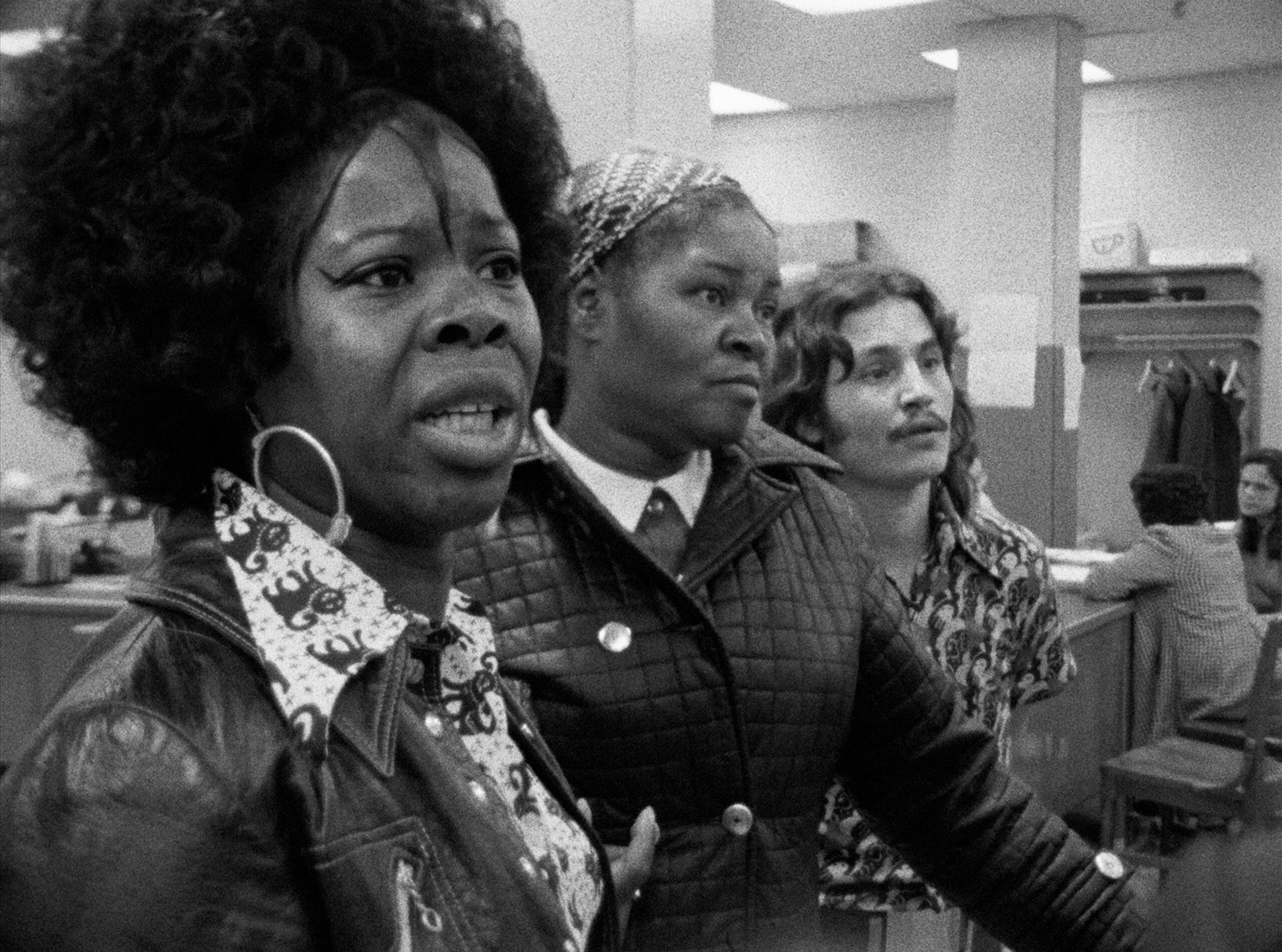
Still, I can’t help but find analogues for the filmmaker among Wiseman’s subjects—namely those who exhibit the same generosity, attention, and compassion that we feel when his camera pauses to observe a metal box, which contains a monkey inside, rattling on the floor in Primate (1974), or follows young Jason as he makes a solo journey through the school hallways in Blind (1987). Sometimes people seem to say what I imagine Wiseman must have been thinking or feeling—such as a woman who, in a book club in Aspen, shoots back at a man who disparagingly likens the heroine of Flaubert’s “A Simple Heart” to a “lowly worm.” He can’t impose his values onto this woman, she says, indignantly but also calmly. Who is he to determine what is a good life? Wiseman often said he filmed people who were doing their best, with whatever resources they had. Take the social worker in Belfast, Maine who visits the trailer of Leroy, a client who has recently suffered a stroke. After he reveals that his smoking habit is three to four packs a day—down from an astonishing seven to eight packs—she exclaims with satisfying gusto, “Leroy! That’s a lot!”
Perhaps the filmmaker’s longest scene comes from Deaf (1986): Peter, a 14-year-old student, is sullen and angry. His mother has driven five hours to meet with the school principal, the counselor, and her son, who, for most of the scene, refuses to look at her. In a New York Times interview, Wiseman discussed the scene at length:
Here we have so many major issues at work. She talks about having rubella and considering an abortion. There’s been a divorce, a remarriage, the breakup of a family, his father’s rejection of Peter, Peter’s talking about committing suicide. What is the efficacy of therapy, of special training for the handicapped? It’s all there. Can that be handled with jump cuts and some jazzy music? I spent 47 minutes to do that scene and every minute needs to be in.
All of this is there, and more, too. Peter eventually looks at his mother, with some coaching. (Characteristically, Wiseman invites us to feel ambivalent about this, because the adults’ encouragement is by turns coercive and supportive.) But the boy undeniably relaxes. He can finally embrace her. He tells her he loves her.
As I was preparing this essay, I decided to visit the Roosevelt Avenue Mall, where, a decade ago as documented by In Jackson Heights, a group of commercial tenants were organizing against gentrification. In the film, a dozen small-business owners gather in a hair salon to discuss their common plight. They are fighting a proposal to turn the mall into a Home Depot, and I feared that they had lost. I was relieved to find the mall still there, if not entirely thriving; many storefronts were empty, but there was a shoe repair shop, an employment agency, and an aquarium store. Someone was getting a tattoo on his thigh. “Life doesn’t come in this neat little package where there is an ultimate triumph or failure,” Wiseman once said. “Most of life just keeps going on and that’s what I’m trying to show.”
In Menus-Plaisirs, Michel Troisgros, a third-generation chef who is about to hand over his family’s restaurant to his son, chats with one of his patrons tableside. The process of creating a dish, he says, is “never finished . . . it’s always in movement.” In a similar way, Wiseman’s project was never finished. He always left the door open to what came next: to despair, to surprise, to anything at all. It’s hard to believe he’s gone. As a man in Welfare, after arguing with a social worker for several minutes, says, suddenly and sweetly: “Will I still have you tomorrow?”
Genevieve Yue is an associate professor of culture and media at The New School, and the author of Girl Head: Feminism and Film Materiality (2020) and Trains, due out in fall 2026.
This story is part of the Summer 2026 issue of Film Comment.
By clicking Sign up, you agree to our site’s Terms of Service and consent to our Privacy Policy.
Get full access to Film Comment with a paid subscription. Already signed up? Log in.
Thank you for signing up for The Film Comment Letter.
Check your email to set up your account and get access to select articles, or become a paid subscriber for full access.