Journals: Old and New Beginnings
The critic revisits his years as a Paris and London correspondent for the magazine
The critic revisits his years as a Paris and London correspondent for the magazine
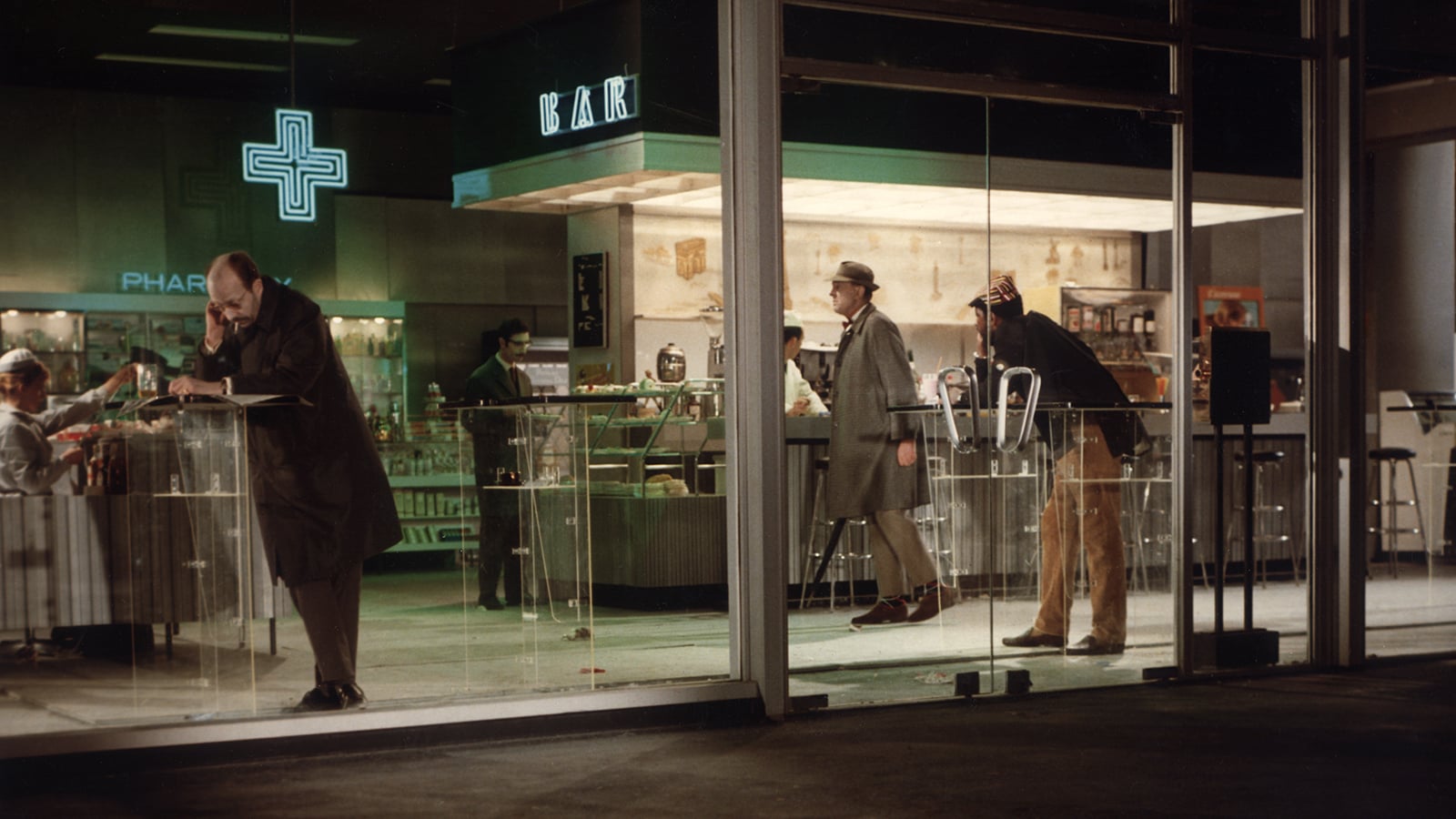
I started writing for Film Comment more than half a century ago in part to defend two of my favorite films, which I felt were being misunderstood at the time: Citizen Kane (1941) and Playtime (1967). Andrew Sarris, for instance, had referred to Playtime as a “non-human comedy.” Ordinary viewers seemed to have had an easier time with that movie than most critics. Citizen Kane, which I’d first watched as a high-school junior in a 16mm print, had been written about mostly negatively in Arthur Knight’s The Liveliest Art and Paul Rotha and Richard Griffith’s The Film Till Now, among the very few histories of film available in English in the early 1960s. Both critiqued Kane from what I would realize years later was the position of the Hollywood studios, viewing Welles’s narrative innovations as uncinematic because they were derived from radio and theater.
As bizarre as this sounds today, it was the same reason why Kane was excluded from the only film course I ever took, taught by Haig P. Manoogian (Martin Scorsese’s mentor) at New York University in 1961, because, as Manoogian explained to me, novices in film history like myself mistakenly thought it was cinematic. But already being a troublemaker, I won Manoogian’s reluctant permission to devote my term paper to a defense of Kane as cinematic, and recycled a few portions of it a decade later in an essay submission to Film Comment titled “I Missed It at the Movies: Objections to ‘Raising Kane’”—referring, of course, to Pauline Kael’s notorious, novel-length introduction to The Citizen Kane Book (1971), the shooting script by Herman J. Mankiewicz and Welles. The essay was published, without my title, as a review of the book in Film Comment’s Spring 1972 issue.
By this time, I was living not in Manhattan but in Paris, having moved there in the fall of 1969 after having spent most of the summer of 1968 in the same 6th arrondissement—where I arrived the day after the police recovered the Odéon Theater from protesting students, still early enough to catch some tear gas. My move to Paris was enabled by an inheritance from my paternal grandfather, a movie exhibitor in Alabama, and was partially motivated by the joint lessons of Paris and Playtime in teaching me how to derive pleasure from the sensory overloads of urban street life and make creative, comic discoveries.
Adjusting to this new world and language while knowing practically no one, and suffering from my realization that Paris was above all a city of cliques, I usually wound up meeting more people at the Cannes Film Festival in May than I did in the French capital during the rest of the year. One of these people was the Cuban-born cinephile Carlos Clarens, a protégé of film archivist and programmer Henri Langlois; Carlos lent me his copy of Orson Welles’s first unrealized script for Heart of Darkness. Paris being smaller than New York City made it easier to meet some people, and eventually I received an invitation from Welles, while he was editing F for Fake (1973), to discuss the Heart of Darkness screenplay over lunch—a meeting that enhanced the piece I wrote for the November-December 1972 issue of Film Comment. I was later able to interview Jacques Tati about both Trafic (1971) and Playtime for the May-June 1973 issue.
“The best part of writing my Paris Journals was the freedom it offered me, as both a writer and a critic, to range across film history”
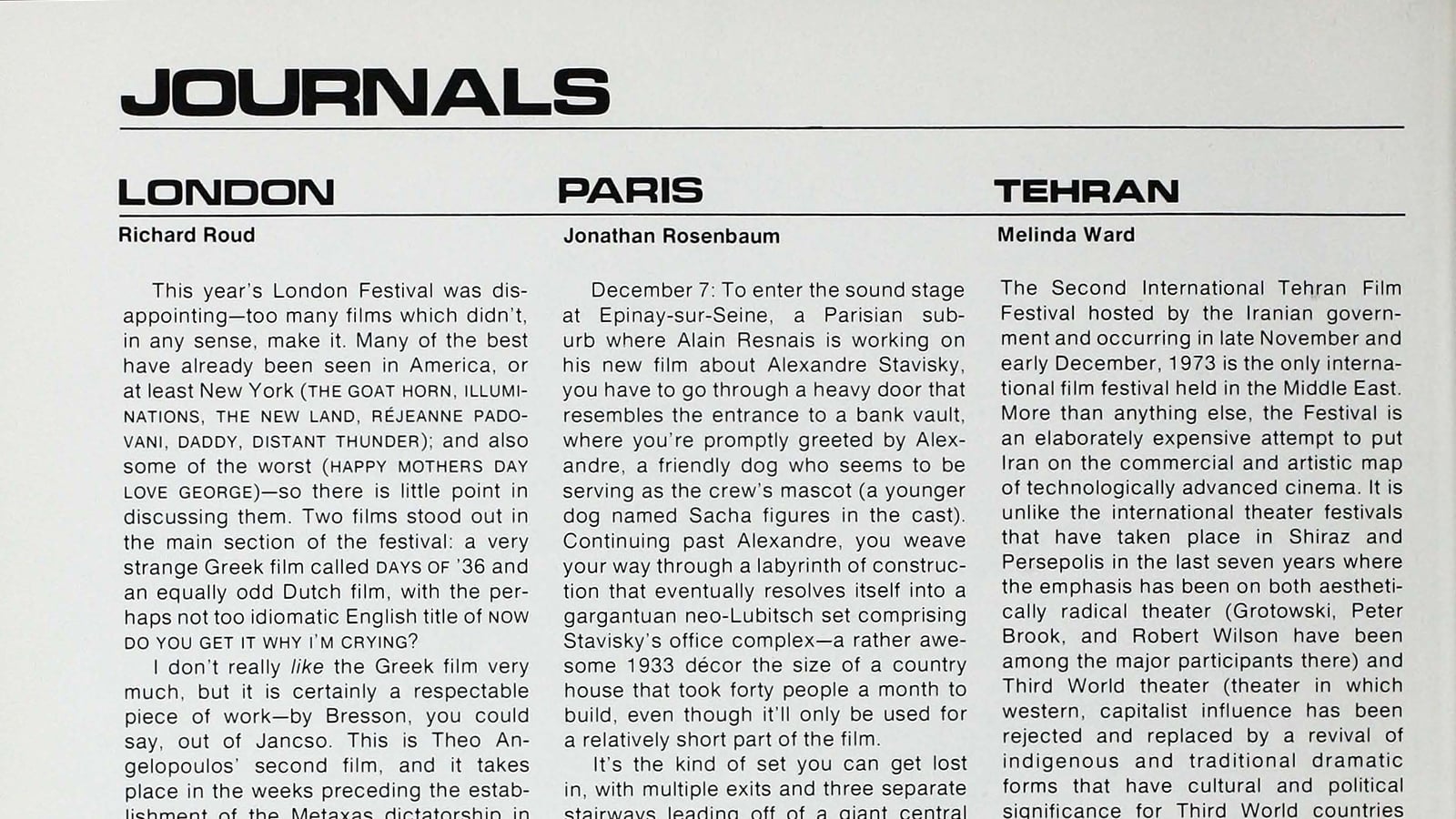
During one of my return visits to Manhattan, I’d proposed serving as Film Comment’s Paris correspondent to Editor Richard Corliss and Assistant Editor Melinda Ward. (After Brooks Riley replaced Melinda in the mid-’70s, I addressed the letters accompanying my Paris Journals to “Richard Brooks,” a French cinephile gesture.) My first such Journal, in the Fall 1971 issue, was ambitious enough to cover Jacques Rivette’s L’Amour fou (1969), Jacques Demy’s Donkey Skin (1970), Georges Franju’s The Demise of Father Mouret (1970), and several films by Jean-Daniel Pollet that were—and remain—largely unseen in the U.S. (I still regard Le Horla—Pollet’s half-hour-long, 1966 adaptation of Guy de Maupassant’s horror tale—as a staggering achievement.) It began inauspiciously and even disastrously, though, with an ill-informed account of a then-current intellectual debate about diverse matters (including Jean-Marie Straub and Danièle Huillet’s controversial 1970 adaptation Othon) raging between Cahiers du cinéma and Positif—two very characteristic Parisian cliques—that elicited a good-natured letter of detailed corrections from Positif’s editorial board, printed in a subsequent issue. My only friend at the time who’d written for Cahiers, Bernard Eisenschitz, helpfully told me that both the filmmaker “Maurice Burnan” and the country “Dubrovnia” cited in their letter were imaginary creations, ancient Surrealist put-ons, thus enabling me to expose them as jokes in my reply. (Much later I would be invited to contribute to both magazines.)
In my Spring 1972 Journal, I noted that “According to the current issue of Pariscope—an indispensable guide to local moviegoing—260 films will have public screenings in Paris this week: 217 at commercial theaters, and 43 at the two Cinémathèques. By rough count, only 67 of these (about one-fourth) are French. A hundred more are American, and the remaining 93 are split between fifteen other nationalities. Of the non-French films, approximately 40% are subtitled; except for a dozen or so at the Cinémathèques that will be shown without translation, the rest are dubbed [in French].” This gives a good notion of the riches available to Paris cinephiles during that period, when you could generally pay only two francs (about 40 cents) with a student card for admission at the Palais de Chaillot Cinémathèque, across from the Eiffel Tower, which was the theater I usually attended. (The mustier, older, even cheaper Left Bank branch on the Rue d’Ulm had fewer daily programs.) The only downsides were Langlois’s preference for silent films without musical accompaniment and flash intertitles over ones that could actually be read. More generally, he preferred to show films without subtitles or intertitles, and was even capable of such programming peculiarities as showing Satyajit Ray’s Apu trilogy with its films out of order.
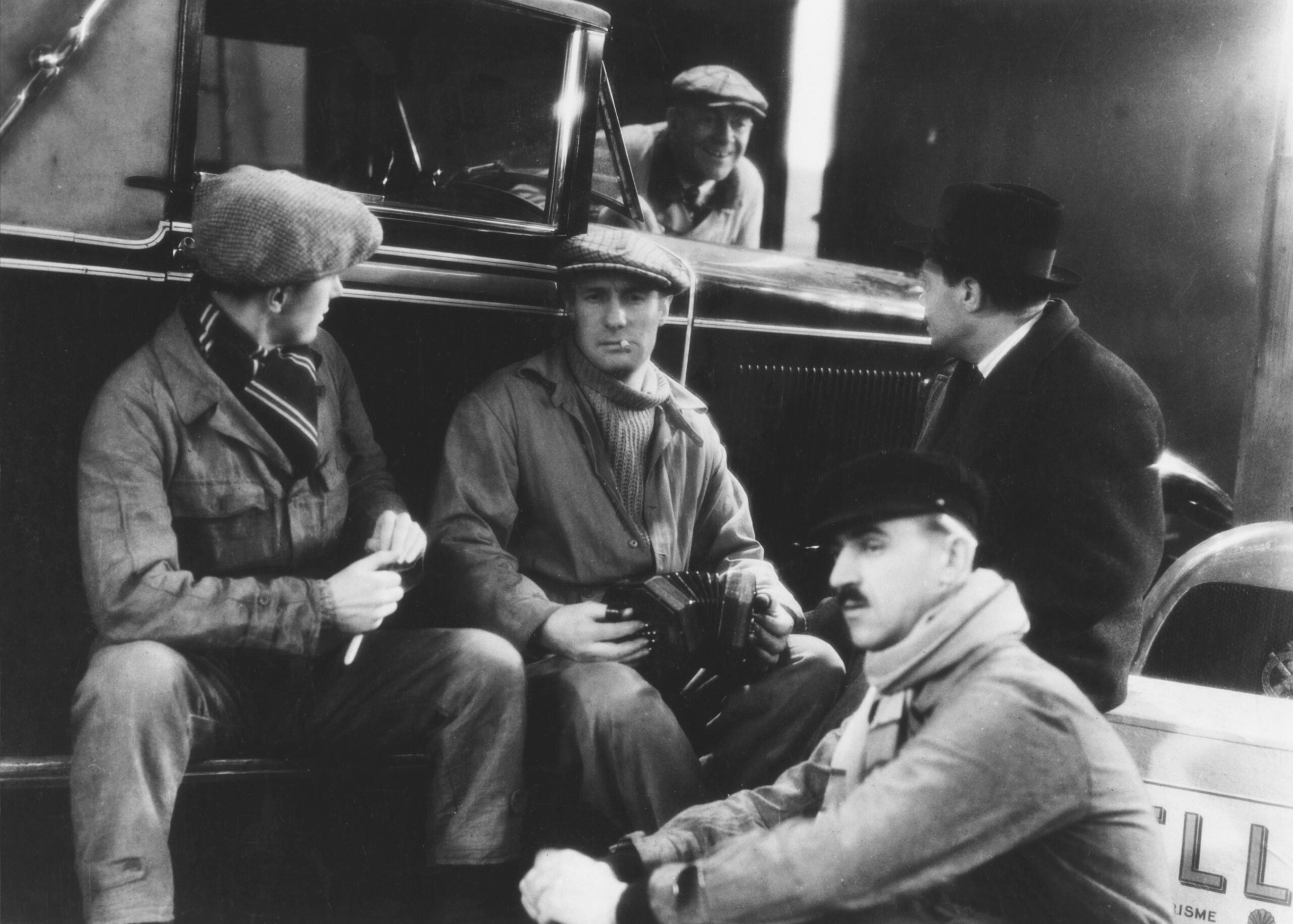
The best part of writing my Paris Journals was the freedom it offered me, as both a writer and a critic, to range across film history and often away from the current releases to cover revivals of Chaplin features, France’s first Ozu retrospective, or Jean Renoir’s Night at the Crossroads (1932)—a kind of constellation unconsciously inspired by Langlois’s own fanciful, ahistorical programming, which in effect brought Kenji Mizoguchi and Otto Preminger to the same table, encouraging a “discussion” (i.e., comparison) between them. The first time I ever visited Paris, I was amazed to attend a revival of Alexander Dovzhenko’s 1935 Frontier (Aerograd) in a new print at a commercial theater; as I recall, other local cinemas were showing it as well. The capacity to regard an “old” film as a contemporary one is at the root of what I value most about French cinephilia, something that the critics-turned-filmmakers of the New Wave imbibed from Langlois.
In my own Left Bank neighborhood, I lived only a short walk away from over two dozen cinemas, most of them quite small, including a specialized one known as the Styx, devoted only to horror movies. In the same Latin Quarter, nearer the Sorbonne, was a café and student hangout called the Polly Maggoo, named after William Klein’s first feature, Who Are You, Polly Maggoo? (1966). On the Right Bank, my favorite specialty house, Studio Act Lafayette, mainly screened Hollywood genre films, and listed the condition of the print being shown on the box-office window. It was a cinema where one could rewatch The Searchers (1956) at a Natalie Wood retrospective, as I did, or see an incomplete French-subtitled print of Johnny Guitar (1954) with its missing moments replaced by their French-dubbed equivalents; it was also where I once met a fellow cinephile, Jill Forbes, who later wrote books on Children of Paradise and post-New-Wave cinema, at a screening of Fritz Lang’s Dr. Mabuse, the Gambler (1922).
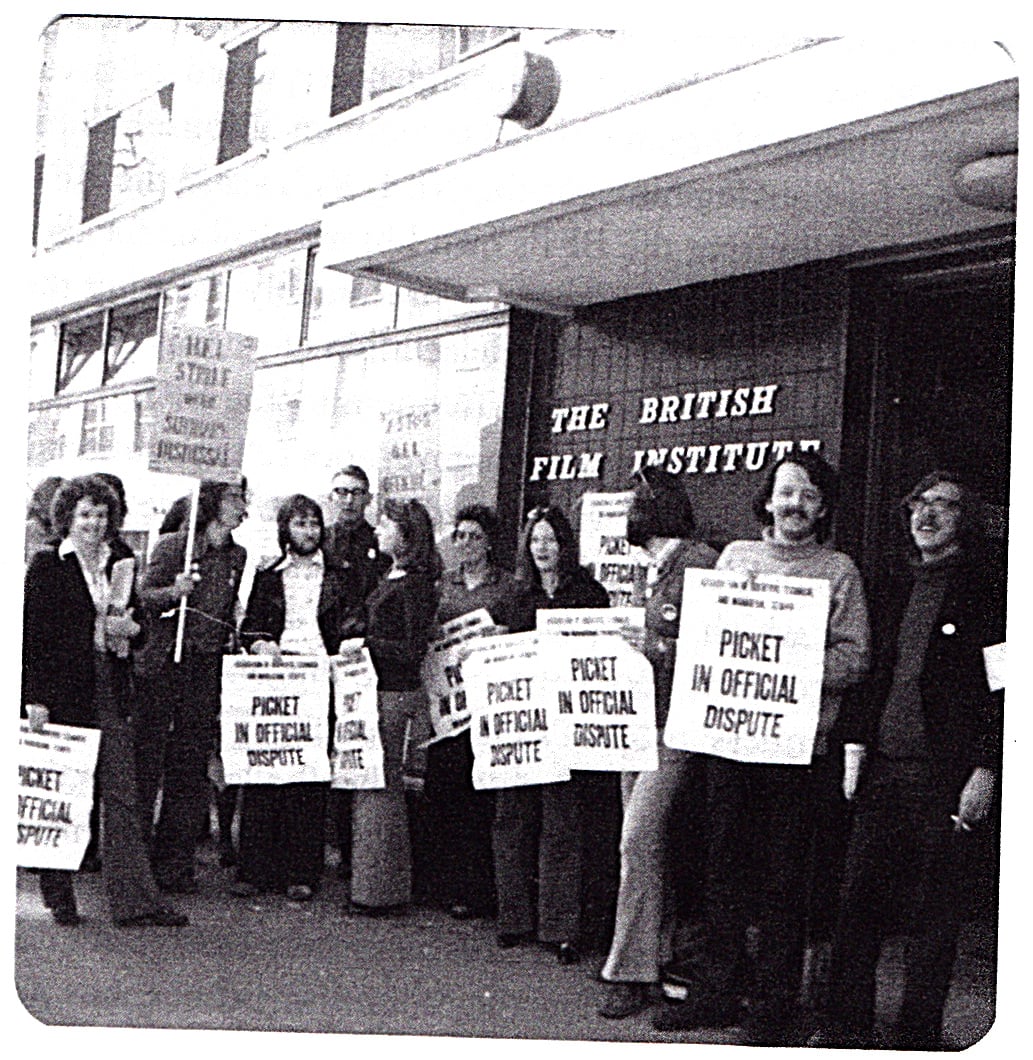
Although my Paris Journal became a London Journal in mid-1974 when I was hired to join the editorial boards of Monthly Film Bulletin and Sight and Sound (both published by the British Film Institute)—my grandfather’s inheritance had been exhausted circa 1973—my position as a Film Comment columnist continued unabated, with further occasional modifications (e.g., a “London and New York” Journal in July-August 1976). The Paris or London Journals then became a column called simply “Moving” once I finally returned to the U.S. in 1977 to replace Manny Farber for two quarters at the University of California, San Diego; that eventually became the literal “Prelude” to my first book, Moving Places: A Life at the Movies (1980), for which I traveled from Los Angeles back to Florence, Alabama—with a side trip to William Faulkner’s home in Oxford, Mississippi—to reexamine my own legacies.
My most popular contribution to Film Comment from London, in the November- December 1976 issue, wasn’t a column but the results of a detailed survey I conducted about local film tastes, specifically polling the favorite films and film-related texts of 29 people and pointedly including in the mix scholars based at the academic journal Screen as well as more mainstream figures. This was a tactic designed to expose the enormous cleavages I found in British film culture that often came to a head at the Edinburgh Film Festival, where hardcore theorists and experimental filmmakers dominated the sidebar events, often enraging the newspaper reviewers. Finding myself in the crossfire between these factions, I wanted to dramatize some of the issues at stake.
By the time I’d left Paris for London, I’d acquired a cinephile clique of my own, consisting of Eduardo de Gregorio (then Rivette’s main screenwriter, who hailed from Buenos Aires, and later directed his own scripts); his American boyfriend and sometime co-writer Michael Graham; Scottish author Gilbert Adair, who later became well-known for his literary pastiches, novels, and screenplays for Raúl Ruiz and Bernardo Bertolucci; and American writer Lauren Sedofsky, who joined Gilbert and me in interviewing Rivette about Celine and Julie Go Boating (1974) and Out 1: Spectre (1972) in my flat on the Rue Mazarine for the September-October 1974 issue. Years later, Lauren would co-script Pola X (1999) with Leos Carax. Among the other writers we met regularly for dinners were Paul Auster (then almost exclusively a poet) and Lydia Davis, who were far more tempered and casual as cinephiles than we were.
The problem with belonging to a clique was that, contrary to what I’d imagined, it made us not more city smart but more small-town provincial—that is, petty and snobbish rather than expansive and egalitarian. This became even more obvious once I began to sound off, in my May-June 1974 Paris Journal, on what I took to be the philistine responses of my Manhattan counterparts who embraced Louis Malle’s Lacombe, Lucien (1974), a movie that for me had more to do with the evil of banality than with the banality of evil; and in my May-June 1977 column, in which I hooted at the delicate Surrealist conceits and ambiguities of Alain Resnais’s Providence (1977). As I noted three years after my attack on the Malle film, “The first indication I had that Alain Resnais’s Providence might be something special—apart from the enthusiasm of the French press—was the report that most Manhattan critics hated it.” Indeed, what I took to be the philistinism of New York’s gatekeepers was clearly the target of Paris-bred elitism, saddled with its own brand of small-town mentality.
Having by now lived almost four decades in the far less trendy and less power-mongering city of Chicago, which lacks the chutzpah of New York, Los Angeles, Paris, and London—and thus comes closer to the marginality experienced by everyone living elsewhere—I can no longer cling to my surroundings as an excuse for my taste, even though my former cinematic educations in those four cities account for much of my grounding. But ever since home video and the internet have made the cultural rift smaller, many of the same films can now be accessed from anywhere, at least if one has the right equipment—the issues of where and how moviegoers live, watch, listen, and converse with one another are obviously no longer the same. This makes my former status as a prospector during the ’70s less a matter of locations and more a question of temperaments—those of my readers and my own.
Jonathan Rosenbaum is the former film critic for the Chicago Reader (1987-2008), and the author, coauthor, and/or editor of 21 books, including In Dreams Begin Responsibilities: A Jonathan Rosenbaum Reader (2024) and Camera Movements That Confound Us (2025).
This story is part of the Summer 2026 issue of Film Comment.
By clicking Sign up, you agree to our site’s Terms of Service and consent to our Privacy Policy.
Get full access to Film Comment with a paid subscription. Already signed up? Log in.
Thank you for signing up for The Film Comment Letter.
Check your email to set up your account and get access to select articles, or become a paid subscriber for full access.