Lucrecia Martel’s Ghosts
Colonialism has always been the subtext of the Argentine filmmaker's work. In her first documentary feature, it is the text
Colonialism has always been the subtext of the Argentine filmmaker's work. In her first documentary feature, it is the text
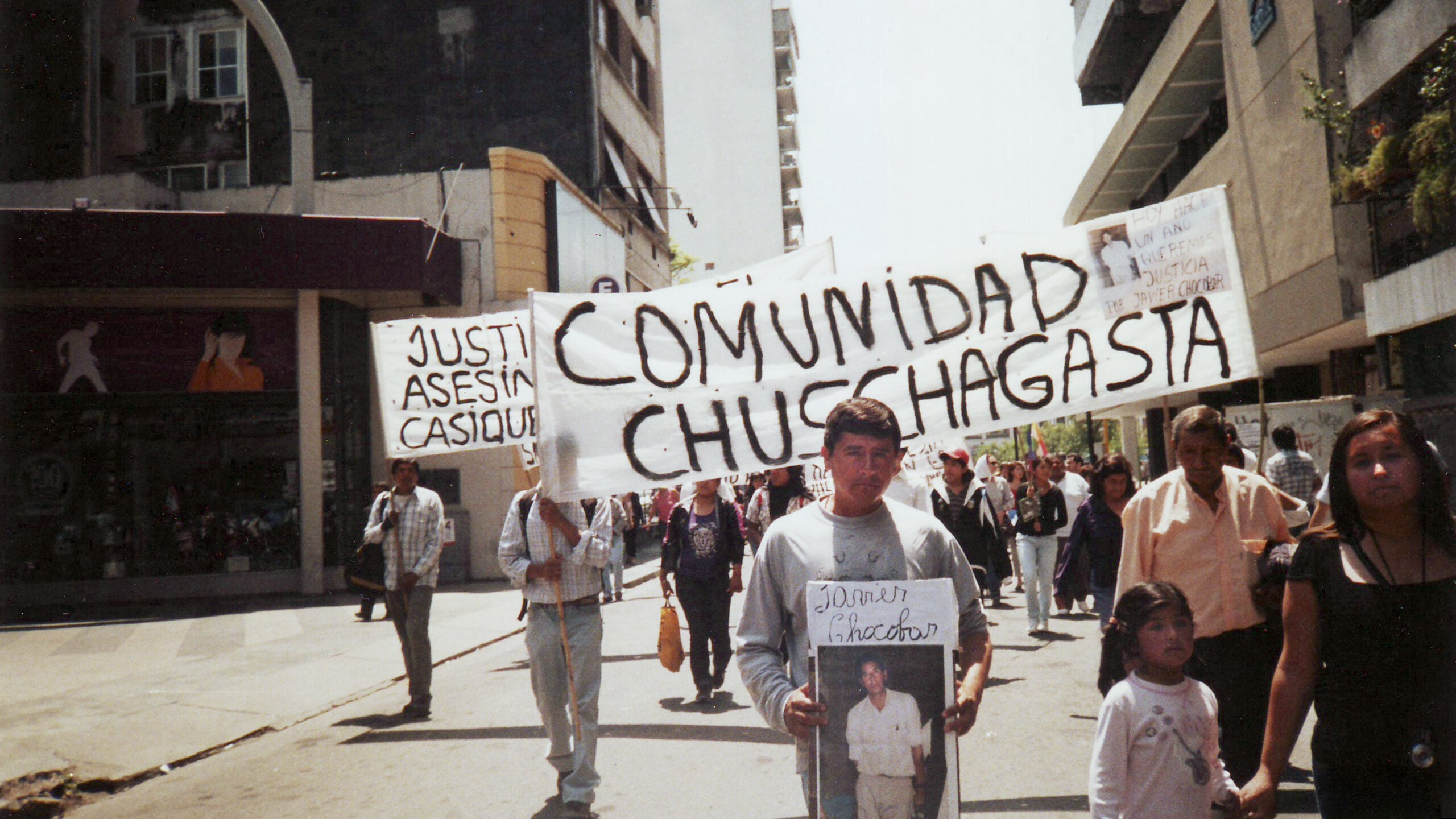
The logline for Lucrecia Martel’s most recent film, Our Land (Nuestra tierra, 2025), might make it sound like a courtroom drama. The Argentine auteur’s first feature documentary takes as its nucleus the 2018 trial of landowner Darío Luis Amín and two former police officers for the 2009 murder of Javier Chocobar, a man belonging to the Chuschagasta Indigenous Community in the northern province of Tucumán. Chocobar was killed while attempting to defend his ancestral lands; Amín claimed the terrain belonged to him and that he was seeking access to a quarry. Captured on video, their armed confrontation is presented early in Our Land, in images made doubly uncertain by their pixelation and the chaotic movement of the handheld camera, which renders the episode as a motion blur of rocks, twigs, and dirt. What is there to see in this document of violence? Precious little. What can be learned from the legal proceedings in which it is marshaled as evidence? Something, but still not much—mostly that the judicial system of the settler state produces its own verities, which very often sit at a stark distance from justice, disconnected as they are from any reckoning with centuries of dispossession.
Martel recognizes that to tell this story, detours will be necessary into other spaces and times. In the 1986 film Handsworth Songs, a response to uprisings against racist policing that had occurred in the United Kingdom the previous year, the Black Audio Film Collective issued a memorable declaration: “There are no stories in the riots, only the ghosts of other stories.” In Our Land—which is not only the director’s first feature documentary but also her first time putting Indigenous perspectives at the heart of a film—it is as if Martel tacitly repeats this caution with regard to Chocobar’s murder and its adjudication. She allows herself to be haunted, refusing the convenience of oblivion and denial, and treats a present flash point as an accumulation of sedimented pasts reaching far beyond any single individual or event. In the pandemic-plagued 2020 edition of the Locarno Film Festival, prizes were given to films whose production had been interrupted by COVID-19, and Martel won the main award for what was then called “Chocobar.” Her subsequent shift to a title that foregrounds communality chimes with how Our Land attends to the specificities of a single death while also seizing it as a portal through which to embark on an expansive journey across occluded histories of Indigenous life in the region—a journey that takes the viewer into people’s homes, into churches and archives, across an array of image textures, and even up in the air, as Martel uses a drone to register soaring aerial views of the contested area. All this makes the film something very different than the courtroom drama it might seem at first glance to be.
Appearing nearly a decade after Zama (2017), an adaption of Antonio di Benedetto’s 1956 colonial novel of the same name, Our Land is in some respects a major mid-career departure for Martel. By making a debut feature documentary in her fifties, after four immensely acclaimed fiction features, she bucks convention. It is far more common for directors to work in the relatively low-budget realm of nonfiction early in their careers, and then to leap into what is typically (albeit wrongly) perceived to be the more elevated domain of fiction. Martel, by contrast, swerves out of fabulation and into bracing actuality, while also moving away from stories focused on the group to which she and the murderers belong: a white middle-class that largely remains blithely unaware of colonial wrongs. Our Land’s first images show a satellite orbiting the Earth, recalling the director’s declared interest in science fiction and her aborted adaptation of the postapocalyptic Argentine comic The Eternaut—a project that had been in development for years, but which eventually foundered, giving way to Zama. More importantly, though, this sidereal prologue is an immediate indication of the perspectival shift operative in the documentary, which sees Martel decenter the world in which she grew up, the world through which she established her reputation as a filmmaker.
“Martel recognizes that to tell this story, detours will be necessary into other spaces and times.”

Martel was born in Salta, a provincial city not far from where Our Land takes place, and which serves as the setting of her first three features: The Swamp (La ciénaga, 2001), The Holy Girl (La niña santa, 2004), and The Headless Woman (La mujer sin cabeza, 2008). The director has often spoken of how firmly these films are grounded in memories of her own upbringing, which occurred in the shadow of Catholicism, far from the sophistication of Buenos Aires, and in a large family of relative privilege. As if to manifest this personal entanglement visually, in her Salta films Martel often keeps her camera close to her performers and/or frames them in intense physical proximity to one another, evoking a claustrophobic carnality that James Quandt in Artforum called an “aesthetic of profusion.” At the beginning of The Swamp, set at a country estate that has seen better days, masses of pink flesh sag and bulge next to a purulent green pool, as insects hum and wine the color of cherry Kool-Aid splashes about in goblets, ice cubes clinking. When the drunk matriarch Mecha (Graciela Borges) stumbles and falls, splaying out on the concrete amidst broken glass, no less than seven swimsuit-clad bodies share the frame, barely moving. It is a tableau of indolence and rot, one that inaugurates a centrifugal family tale touched by hints of incest and adultery—a fitting start to Martel’s prolonged probing of the willed ignorance and casual prejudice of her own class. These are stories of contagion and stagnation told from the inside, colored by a mixture of contempt and pity for her adult characters, women especially, and a fascinated love for her young girls, who carry within them the promise of a different future.
By plunging back into the 18th century and adopting a palette of near-hallucinatory vibrancy, Zama to some degree breaks with this pattern. Not entirely, though: the film’s magistrate protagonist (Daniel Giménez Cacho)—a desperate man, stuck at a colonial outpost, caught in a miasma and starting to crack up—might as well be an ancestor of those who populate the “Salta trilogy.” Our Land is the real rupture, wherein Martel takes the side of a culture that is not her own but with which she shares a geography and a history. Decisively, the proximate profusion that had been her signature opens onto a recurrent assertion of distance. There are courtroom scenes, archival photographs, and some interviews: familiar documentary techniques. But the film’s most consequential formal device is its sustained use of drone cinematography. Such a discorporate view from above is often allied with detached, militarized mastery, but here its supraindividual vantage arguably inscribes an ethical posture.
Contrary to Amín, who claims the land as his own, Martel acknowledges that she is an alien visitor. Floating vistas of verdant expanses foreground the immensity of the terrain and refuse the penetrating scrutiny of the ethnographic gaze. These calm, gliding images clear a space for attentive listening, for members of the Chuschagasta community to speak in voiceover of inhabitation, eviction, and erasure. Near the end of the film, shortly after a man recounts that “everyone who wants a piece of land says that the Indigenous people have disappeared”—a wish disguised as a lie—a bird collides with the drone, sending the camera swirling. When the smooth movement resumes, all is upside down and a woman details the Chuschagastas’ long-standing presence in the area. Through her pairing of sound and image, Martel transforms a cinematographic accident into metaphor: false presumptions of emptiness will meet with correctives, and attending to what has been ignored and denied will result in the creation of a different picture. She casts doubt on the apparent invulnerability of the drone’s-eye view and, by extension, her own outsider position.
With its radical overturning of the representational hierarchies that govern Martel’s fictions, Our Land as a whole effects its own inversion of the field of vision and invites one to reconsider the director’s entire body of work through the lens of Indigeneity. In an interview with programmers James Lattimer and Eva Sangiorgi, conducted shortly before the documentary’s premiere at the 2025 Venice Film Festival, she described it not as any kind of left turn in her oeuvre, but as a consolidation of themes she has long pursued: “I think that many of the things that were already present in my fictions converge in this documentary—the figure of an ‘other,’ almost like a ghost. But here it had to be addressed directly because it’s about a crime committed against a member of an Indigenous community. In that sense, I feel that this film is like the root of all my other films.” Things already present, yes, but only in spectral form, “almost like a ghost.” Roots, meanwhile, typically exist underground, mostly hidden. Our Land makes manifest, unearths, that which in Martel’s fictions had hovered at the threshold of perception.
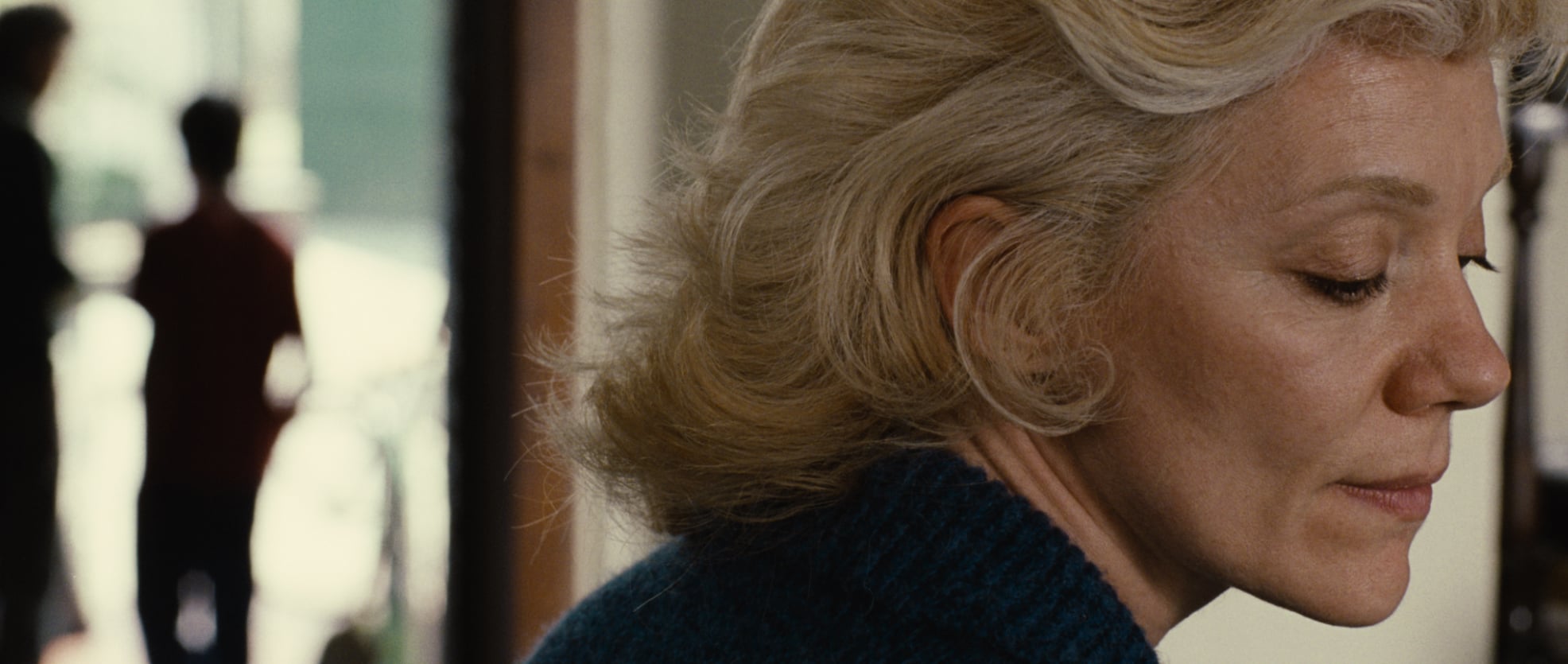
Indigenous life is a structuring absence in the director’s early features, an outside pressing in at the edges of the frame, glimpsed only fleetingly in minor characters or mentioned in passing remarks. It is everywhere, yet nearly invisible. In The Swamp, for instance, Mecha’s inebriated fall notably occurs while her daughter snivels and sobs inside, distraught that her mother has accused the maid Isabel (Andrea López) of theft and is thus firing her. Throughout the film, Mecha proliferates derogatory remarks about the “Indians” who facilitate her life through their labor. If this theme is less apparent, albeit still present, in The Holy Girl and its hotel staff, it comes to occupy the core of The Headless Woman, in which the titular protagonist, Verónica (María Onetto)—a bottle blonde whose coiffure screams of invented whiteness—experiences mounting psychic distress after committing a hit-and-run. Did she kill an animal, or was it a child, the relative of one of her domestic workers—a boy glimpsed in the film’s prologue and subsequently declared missing? When she goes to his neighborhood, she cannot find her way out. But no matter: the ruling class circles the wagons and ensures that her crime, if it did indeed occur, will never be discovered.
Quandt writes that he is tempted to call The Headless Woman a “political allegory, an oblique commentary on Argentina’s ‘dirty war’ of state-executed assassinations and disappearances and the ensuing era of coerced silence,” while acknowledging that “Martel has vigorously rejected such an interpretation.” One wonders if she would equally reject a reading of the film as an allegory of settler colonialism; perhaps not. Certainly the crimes of the military dictatorship that ruled the country from 1976 to 1983 are deeply resonant with the film’s themes of impunity and amnesia. But there is no hint of the state apparatus within it, no reference, however oblique, to the days of the junta. What is there is a recurring reminder of the ongoing life of coloniality. “The official history of Argentina is built on denial,” Martel told Lattimer and Sangiorgi. Long before the disappearances of the dictatorship, the nation had ample time to rehearse the song of disavowal in relation to its Indigenous populations—and this, as the years have passed, has come to be a growing preoccupation of Martel’s.
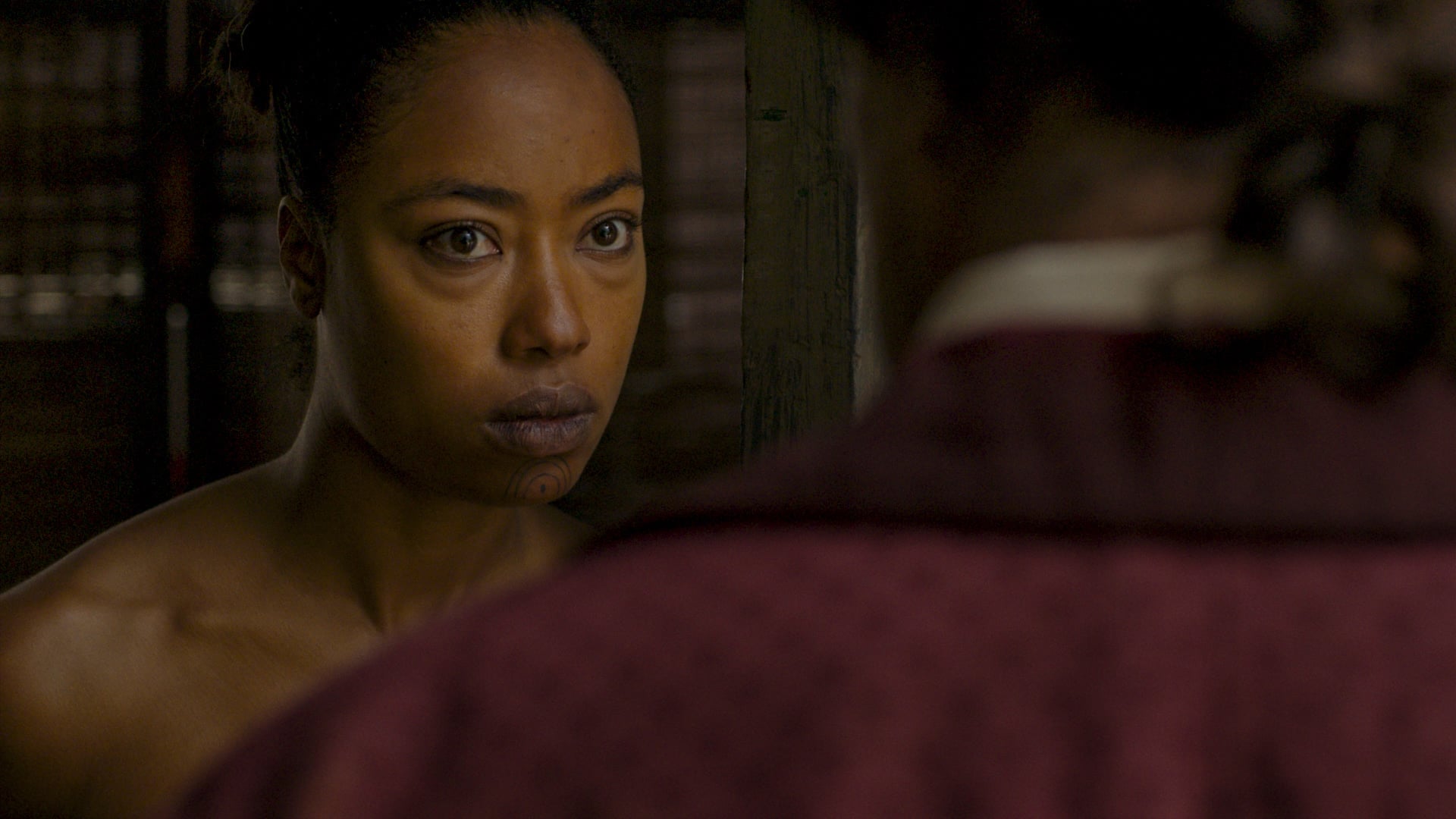
In Martel’s fictions, it feels as if things are always happening in the background or just out of view, creating a disquieting uncertainty. To draw out the sickness of settler society, these films purposefully reproduce its hierarchies of visibility. It is a brilliant strategy for evoking a stifling atmosphere of repression and delusion, yet it means that the films dramatize situations of racist exclusion but do not offer any alternative to them. As if in gradual recognition of the limitations of this approach, Indigenous presence becomes more and more palpable in Martel’s cinema as time goes by, claiming attention. In The Headless Woman, unacknowledged violence is the catalyst for the protagonist’s breakdown. With Zama’s scenes of imperial administration and enslavement, Martel begins a more frontal confrontation with colonialism. The film’s first image shows the beleaguered magistrate individuated in the foreground and a less discernible group of Indigenous children gathering water in the distance. But by the end of this story of imperiled whiteness, it is the Indigenous boy who, framed in close-up, holds the butchered Zama’s fate in his hands and asks, “Do you want to live?”
Our Land is the culmination of Martel’s gradual abandonment of obliquity, making it not only an impetus to reconsider her previous work but also a reason to wonder where she will go next. By its conclusion, when the guilty verdict arrives, it has become clear that any punishment for the murder of Javier Chocobar is but a small suture in a much larger wound that continues to bleed. The final moments of the documentary depict members of the community outside at night, watching scenes of Martel’s from the film they have participated in making, the film we have just seen. In this makeshift cinema, a voiceover rings out through the evening air, uttering a prophecy of cosmological ruin: “I believe that if they found another planet in the universe, they would also tear it apart.” The director’s dream of making a science-fiction film awaits realization.
Erika Balsom is a reader in film studies at King’s College London. Her criticism collection, The Edges of Cinema: Essays on 21st Century Film Culture, will be published by Columbia University Press later this year.
This story is part of the Summer 2026 issue of Film Comment.
By clicking Sign up, you agree to our site’s Terms of Service and consent to our Privacy Policy.
Get full access to Film Comment with a paid subscription. Already signed up? Log in.
Thank you for signing up for The Film Comment Letter.
Check your email to set up your account and get access to select articles, or become a paid subscriber for full access.