Lucrecia Martel on Our Land
“Who determines what the cause and the consequence is?”
“Who determines what the cause and the consequence is?”
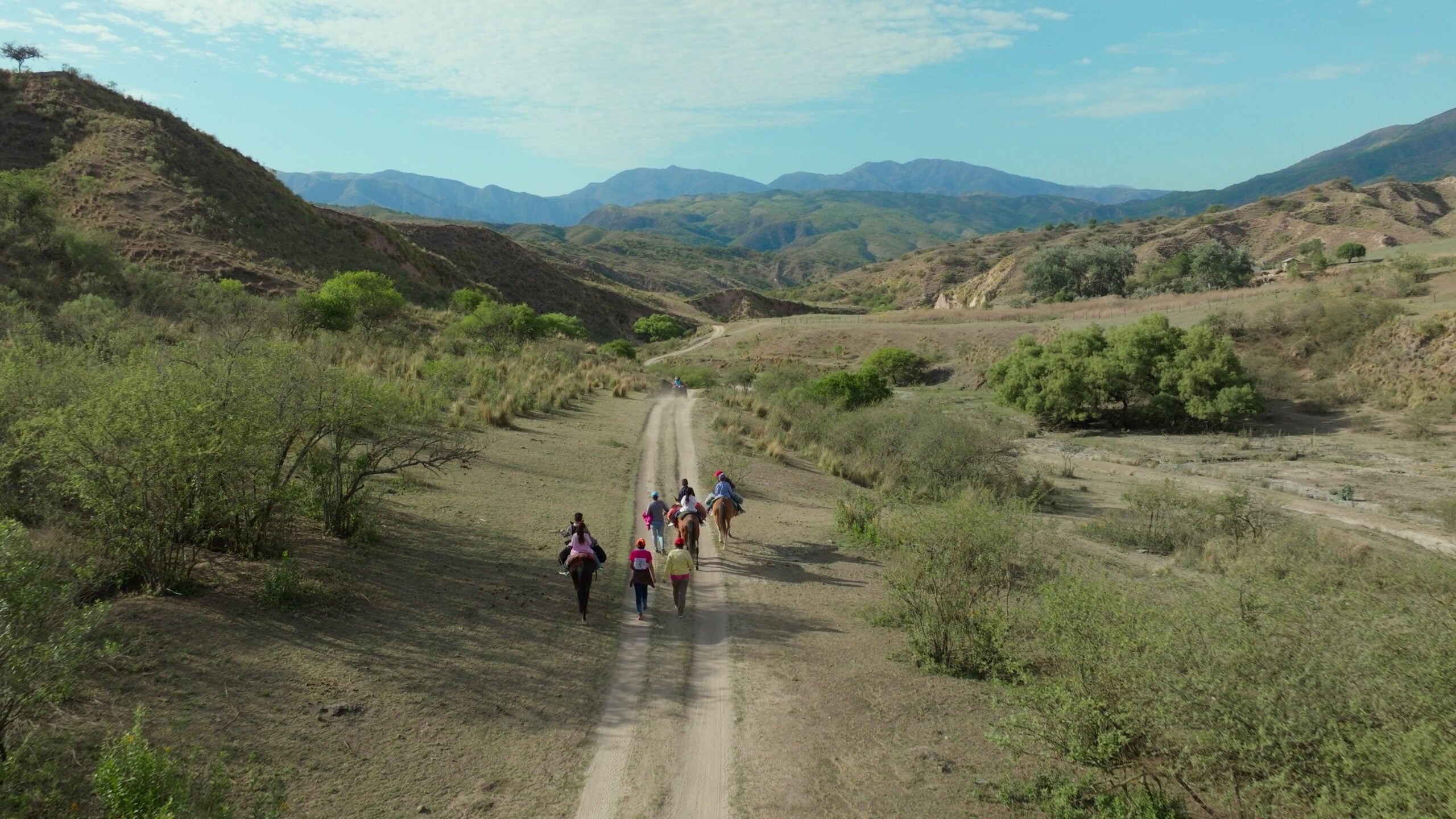
For Lucrecia Martel, time is of the essence—in particular, what she calls the “conventional straight-arrow version, like a ray of light,” which hurtles past both history and the present in the name of progress. Her feature documentary debut, Our Land (formerly titled Landmarks), starts with the 2009 killing of Indigenous activist Javier Chocobar by police and landowners trying to evict the Chuschagasta community from their ancestral lands. But the film treats this incident not as an exceptional rupture—a point on a line—as the judicial system makes it out to be. Her approach is centrifugal, spinning out from footage of the shooting and the ensuing hearings to extensive research into the thefts and sleights of legal hand that have, over centuries, turned bureaucracy into a weapon of the slow, ongoing, and entirely sanctioned murder of Indigenous life. In a visual corollary, occasional drone shots pull us out of the present, evoking the ghostly feeling that the land precedes all the rigmarole we see on screen—that it stood witness to lives that came before even the state of Argentina.
Our Land premiered at the 2025 Venice Film Festival, where I chatted with Martel about the making of the film. We had a follow-up conversation at the 2025 New York Film Festival, where, in addition to presenting the film, Martel also delivered the Amos Vogel Lecture—an annual speech given in honor of the eponymous critic, curator, and co-founder of the New York Film Festival. The following Q&A combines both conversations and has been edited for clarity and length.
I am curious about your early childhood encounters with the history of Indigenous people in Argentina.
I remember once I was traveling with my family in the northern region of Argentina—in Salta, in an area called Valles Calchaquíes. These are valleys with Indigenous culture. We went through this region, and at a certain moment, my mother said, “That mountain up there is what is left of the path of the Incas. They had so many paths in order to stay in touch.” We could see one path, and she said we were on another path. We could see where this other path was going.
That was very revealing because I understood: that was not our path. It was the first time that I thought, “Oh, maybe in this place, people used to cross this area in a different way.” I felt that there was a country on top of another country, and on top again of another country.
Then, when I was 11 or 12, I had this feeling that I wanted to do some kind of social work. Salta is a very small province, so my mother told me, “Why don’t you go to the parish?” So I asked the cleaning lady—the young girl working in our home, who must have been 17 or 18—to come with me. At a certain point, I felt like I was the queen and I needed this lady to protect me. It felt so shameful. My family was not a rich family, but we were middle class. We all have these moments of revelation, but we like so much the comfort of having someone doing things for us that we keep doing it.
It can be hard to recognize oneself as the oppressor.
It takes work to recognize your place in the system. It’s a very vulnerable position, which does not stand on anything that is stable, and it’s quite amazing that it can last and endure for such a long time.
You’ve often talked about the importance of time in your movies. In an interview with MoMA, you talked about how, as a society, we never deal with the present—we’re always dwelling in the past or anticipating the future. That’s a crucial aspect of how Indigenous people are marginalized: they are viewed as a relic of the past, primitive and historical, and colonialism as a problem that we don’t have to think about today. How did that affect your formal approach to time in this film?
When I started working with María Alché on the script, I started reading about all the legal proceedings, all the things the Chuschagasta community had had to do to reclaim the land—going from one office to another office, staying a long time in a line, walking from one building to another building. This takes so much space and time in the life of a person. That is the power that the state has—to make them lose a lot of time. I think society invented bureaucracy so that people are not able to get what they want, what they need, even though they document their need. From the beginning, María and I talked a lot about how to create a continuity. The continuity would have been through space. The space is always present. Space can only be now, in the present. That was very useful in the film because it led us to think about things that had to be in the film in the form of collective memory. In Argentina, the way to deny the other person is to say, “This space is empty. I want that space because no one is there, no one—there is nothing over there.”
Terra nullius.
Yes, like the fiction of colonialism—to pretend the land is empty. And if someone is there, that person is a bandit. There is another idea related to the continuity of space: colonization arrived in Latin America with Catholicism from Europe. They were reading the Requerimiento [a declaration of Spain’s right of conquest in the New World] in Spanish to these people who knew nothing about the Spanish language. So that was pure theater, saying that God was the owner of the land, of all the lands in the world, and that he had given them to the Spaniards. The perception was that these people, since they did not believe in this God, were using a land that was not theirs. That message was so effective that it worked. Either they would submit to [the colonizers] or they were obliged to leave.
I had to wonder: how is it possible for a person who comes from a mother, from a father, who has relatives, who has been living in a human context—how can they be able to cut and torture and kill children who are screaming? How can a person do that? And that is done in the name of God. God makes people crazy. God takes away the complexity that there is in being human.
This is the most difficult thing about this idea of the Promised Land and colonization. The only images I’ve seen that resemble what we see in Palestine now are images from the concentration camps. So I do wonder: how is it that people can tolerate doing the same to other people? I think that racism is really the sign of the craziness of this civilization.
I feel like a lot of what you’re saying is embodied in the drone shots in the film. The drone shots remind us that this land existed before we existed.
Yes, at the beginning we have satellite images—images that are not human. It’s kind of divine. But I wanted to convert it into something that could be an advantage for the community, to put it together with the human voice.
I noticed you use very little non-diegetic sound in the movie—that is, sound that’s not from the scene it accompanies.
I almost don’t use it at all. Music is for me—it’s always been a huge problem in filmmaking, because it creates or generates the feeling that you know where the story is going, you know what is going to happen. It tells you how to feel. It’s kind of a safety net that is under the image, and I didn’t want that net.
When there’s music, the viewer stops thinking and becomes a little bit lazy, just waiting. In some of my films, I use music of the ’50s and ’60s because that was when Latin America wanted to seduce Hollywood. But I only use it in some small parts.
And in this film?
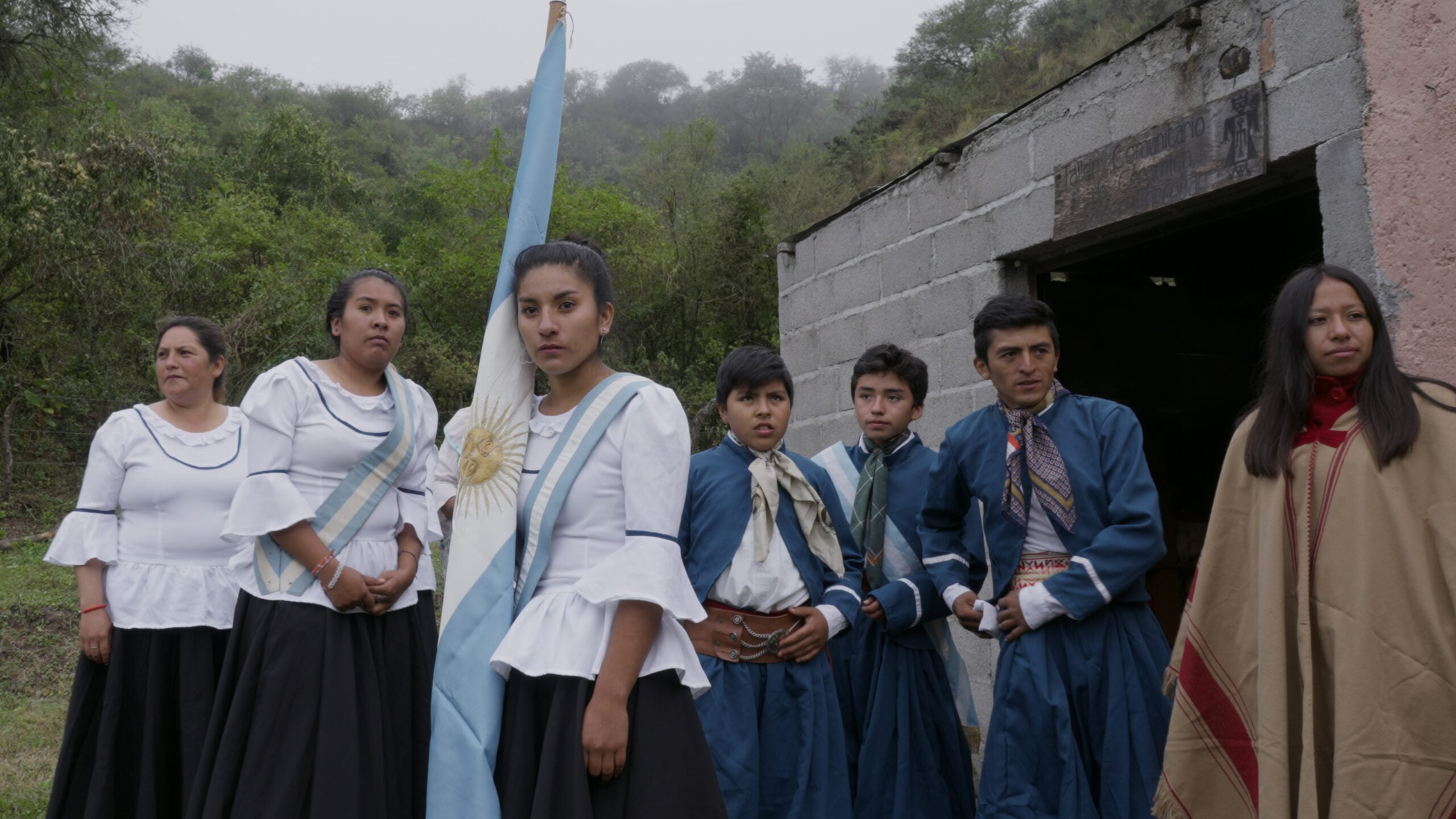
A lot of the sound was taken from the community itself—from the cell phones of the local people. They gave us their SIM cards so that we could copy them, make backups, and we could use the music that was there. Sometimes ambient sound, or a person singing, a child playing—background sounds of life.
I wanted to ask you about the visual grammar of the courtroom scenes. The courtroom drama is a whole genre, but your version feels different, in rhythm and in point of view. I was wondering how you approached that during the shoot.
For many years, I didn’t really think that I would be using the trial scene. I knew it was something that I wanted to have. I thought the movie would be something else. I wasn’t sure what yet. In terms of the position of the cameras, they were in the places where the judges allowed us to have them. So I was not able to choose. The only one that I was able to choose was the one that was opposite the defense, where I could zoom in.
During the trial, I took a lot of notes. Even though I was in the front row, I didn’t really get to see that much. In terms of the camera, the very few instructions that I gave to the crew would happen at the end of the day when we would be reviewing the material, and I would make certain adjustments like, “pay attention to the coffee as it’s passing by, the water, the papers when they’re being reviewed.” So any notes that I would have would happen at the end of the day or at the beginning of the next day.
What about the cutting?
The idea honestly wasn’t very different from the work that I did in my fiction films. It is really about choosing the combination of sound and image that enhances the potency. I always tend to use off-screen sounds, background sounds. I’m very comfortable with not seeing who is speaking. In general, I’m more interested in the listener. I feel like we pay a lot more attention to what is being said when you do it this way. Obviously you can’t abuse that, but it’s something that I lean toward.
One amazing moment in the film is when you track down the historian who wrote in an article that the Chuschagasta people were extinct by the 1800s, and you confront him. He is shocked to know that his words were used in court. How did you find him? Why did you want to find him?
That man—he has since died, by the way—was somebody that wrote every day in the main newspaper of the city of Tucumán, and he would always have the last page of the newspaper. He would have some kind of historical note. Just when the Chuschagasta family was fighting for justice, he wrote two notes that were instrumental to the defense. So it’s a man who is absolutely important and key to this story. I knew I had to track him down. He’s somebody who is part of the oligarchy of landowners in Tucumán.
He mentions in the film that this old guy who didn’t know his father, known to be a chief in the community, came to the historian looking for archival materials. The historian ended up sending him to another historian, a woman. The first time I went to this community, Demetrio, this old man, came out and showed me a chapter in the book of the woman. The two historians cited each other—she cites the notes of the first guy. Demetrio showed it to me as proof that they had existed. I pointed out that in the book it says that they were extinct. He didn’t give that much importance to the information. He was glad that at least they were being named. I thought it was really smart because they know that the historians are lying, but they were saying, “at least here they are saying that we were here,” and that opens up the case for investigation further.
It’s incredible and painful that these people who have so much access to documentation, to libraries, to bookstores, want to push this narrative because [the truth] puts at risk their land ownership. Sometimes, it’s not like they’re trying to deceive in this malicious way; they really believe it. It’s ingrained within them that they have more rights, even in the face of evidence that these communities are there.
The historian says that he mentioned the community being extinct just to “add some color” to a report about a carnival. That is an example of how these oppressive systems function—violence is not just shooting someone. Violence can be something so simple as adding color to an article.
It’s how fake news can seem normal. These writings that have no historical rigor are shown again and again as evidence. I’m writing a book about the research process because there’s so much more that didn’t go into the film.
I loved what you said at the Amos Vogel lecture at the New York Film Festival about the “hero” narrative and how it supports the warmongering mentality. I was thinking about how the victim narrative can sometimes do the same thing, because you end up focusing on that one person who died or who has to be saved, and you forget that there’s a whole system. You said in an interview somewhere that it’s easier to represent an outburst than to represent a chronic injustice. I’m curious how you balanced mourning and honoring Javier Chocobar’s life and also making sure that it doesn’t become the story of just one person’s life, distracting us from the big picture.
It’s something that I always discussed with the team—that this wasn’t about who killed Chocobar, but how it’s possible that these killings continue to happen with impunity. It’s inevitable when you’re thinking about that to reference the entire system. This way of telling history—and this is something that I wanted to say at the lecture, so I’m really glad that it has come up now—this linear chronology of cause and consequence is a tool of power. Who determines what the cause and the consequence is? When you decide that you’re not going to follow this linear path of cause and consequence, you start to see the story unravel.
When there is a crime, we are obsessed with who did it. We examine the evidence, look for who was at fault. But the question should be “why did it happen?”
We always think that it’s best to look for the criminal rather than try to understand why the story came to be what it is.
This story is part of the Summer 2026 issue of Film Comment.
By clicking Sign up, you agree to our site’s Terms of Service and consent to our Privacy Policy.
Get full access to Film Comment with a paid subscription. Already signed up? Log in.
Thank you for signing up for The Film Comment Letter.
Check your email to set up your account and get access to select articles, or become a paid subscriber for full access.