Mare’s Nest
The latest feature from filmmaker and artist Ben Rivers offers a treasury of strange delights
The latest feature from filmmaker and artist Ben Rivers offers a treasury of strange delights
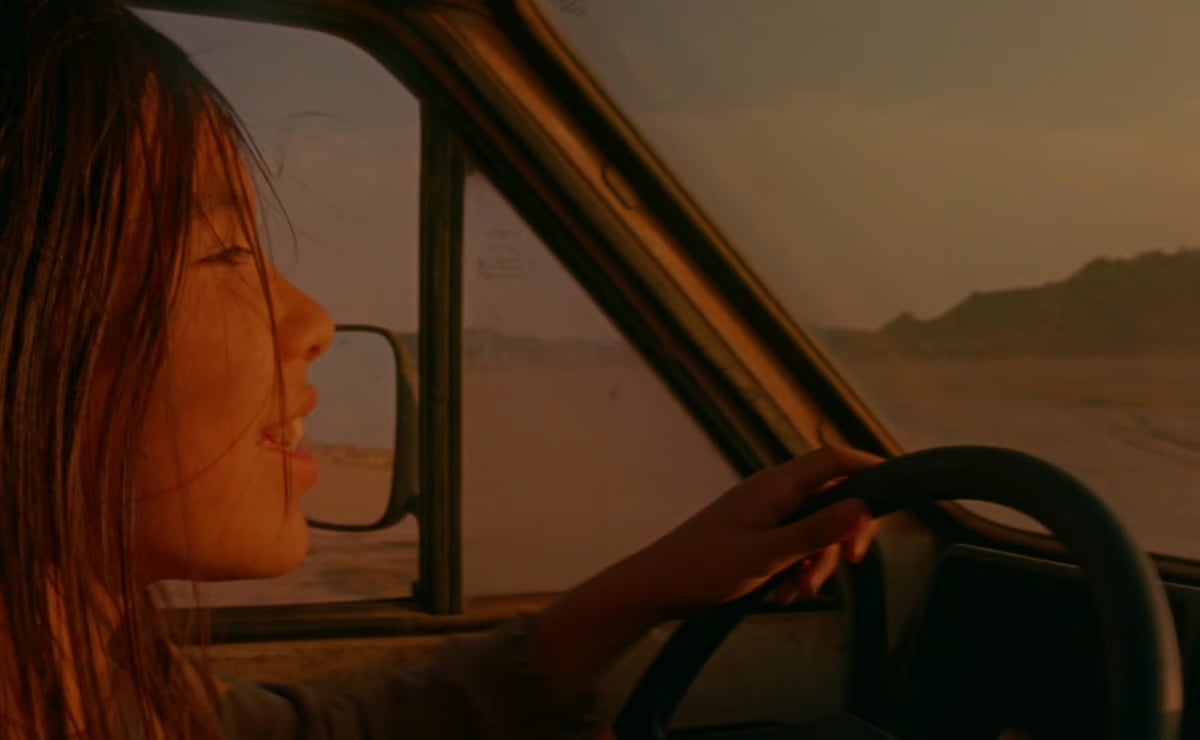
Screen depictions of the postapocalyptic commonly feature societies existing on salvaged remnants of the bygone world. Appropriately, Mare’s Nest, the new film by British filmmaker/artist Ben Rivers, is itself composed of fragments. One is Don DeLillo’s 2007 one-act play The Word for Snow, performed in the film by three children; another is a monologue by British writer Daisy Hildyard; and yet another is a film-within-the-film featuring the Minotaur. These pieces combine to bewitching effect in Mare’s Nest; the title comes from a British expression that can mean a “false discovery” or a “state of confusion.”
Threading it all together is a girl named Moon, who wanders through a world populated only by kids. Played with mesmerizing confidence by Moon Guo Barker, who aged from 9 to 12 while the film was shot, our young protagonist opens Mare’s Nest by explaining the origin of life on Earth to a turtle. She subsequently encounters various tribes of children, discovers the fossilized remains of adults in a Pompeii-like tableau vivant, and consults a sage, whose gnomic insights are relayed through an acolyte. The latter is the DeLillo section, and its enigmatic proposals on the breakdown of the environment and language attain an incantatory resonance from the intense, formal delivery of the child actors.
Shooting in Super 16, and moving between color and black-and-white, Rivers offers a treasury of strange delights: Heath Robinson contraptions; a precocious organ-playing bard singing his own eerie ballad; and the unearthly landscapes of the Mediterranean island of Menorca. Mare’s Nest suggests at once a visionary glimpse of an anarchic future Eden and a newly unearthed testament to an impossibly distant past.
Jonathan Romney is a critic based in London. He writes for The Observer, Sight and Sound, Screen Daily, The Financial Times, and other publications.
This story is part of the Summer 2026 issue of Film Comment.
By clicking Sign up, you agree to our site’s Terms of Service and consent to our Privacy Policy.
Get full access to Film Comment with a paid subscription. Already signed up? Log in.
Thank you for signing up for The Film Comment Letter.
Check your email to set up your account and get access to select articles, or become a paid subscriber for full access.