Cannes 2026: From Time to Time
New films from Ryûsuke Hamaguchi and Lisandro Alonso speak to our current moment with clarity and empathy
New films from Ryûsuke Hamaguchi and Lisandro Alonso speak to our current moment with clarity and empathy
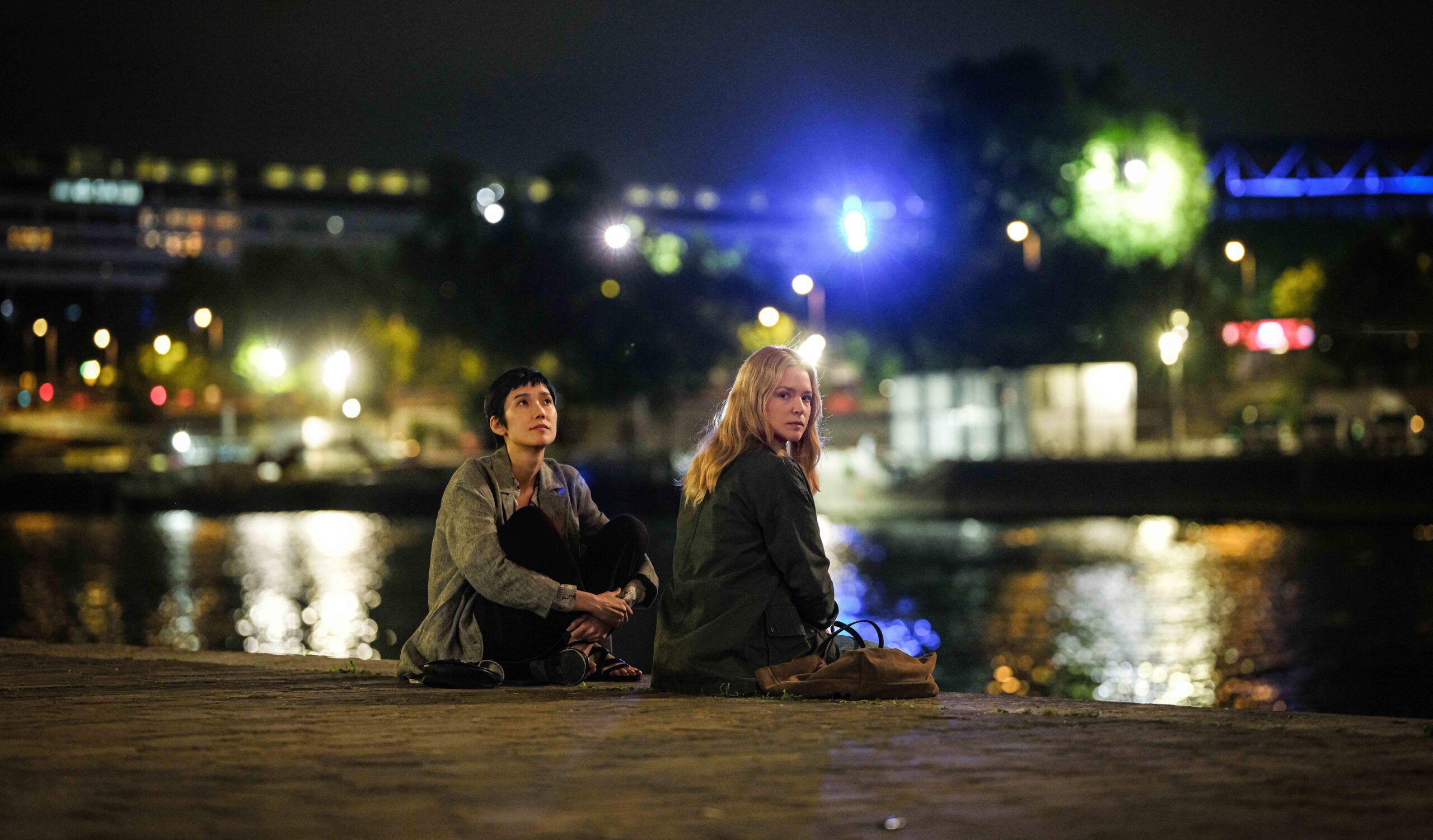
What would it mean for a film to meet the moment, especially a moment as calamitous as ours? To be honest, the very thought rings alarm bells: many recent movies that are said to have accomplished this strike me as grandiose grabs at topicality, gestures toward real-life horrors that exceed token attempts at representation and reflection. But there are less overweening ways of being contemporary. Watching Ryûsuke Hamaguchi’s breathtaking All of a Sudden—which premiered on Friday in the Cannes Competition—I realized how much I had yearned for a film simply to describe with clarity and empathy some of the challenges of present-day existence, and to acknowledge a few basic truths about being alive in this shared world.
The first movie Hamaguchi has made outside his native Japan, All of a Sudden is based on a volume of correspondence between Maho Isono, a medical anthropologist, and Makiko Miyano, a philosopher with terminal cancer. (As yet untranslated into English, the book was published in 2019, shortly after Miyano died.) Hamaguchi has drawn from existing texts before, most famously expanding a Haruki Murakami short story into Drive My Car (2021), and the unconventional source material here inspires his freest and bravest adaptation to date. The women’s epistolary relationship becomes in the film a real-life encounter—and a faintly enchanted one, built on elements of chance and coincidence that verge on the miraculous.
Accounting for the dictates of international co-production, but also true to Hamaguchi’s fascination with language, translation, and the intimacies and gaps of communication, the principals here are a French and a Japanese woman. Marie-Lou (Virginie Efira) is the put-upon director of an eldercare facility on the edge of Paris, battling both intransigent staff and budget-slashing upper management as she strives to implement a new methodology called Humanitude. (Cronenbergian name notwithstanding, this is an actual technique, emphasizing respect and autonomy in the care of patients with cognitive decline, pioneered in France and since adopted in other countries including Japan.) Mari (Tao Okamoto) is a theater director on tour in France with a play inspired by Franco Basaglia, the anti-psychiatry reformer responsible for the closure of Italy’s repressive asylums. The traveling production carries some risk: Mari has metastatic cancer and her condition, she has been told, may rapidly worsen at any moment. Down to their names, Marie-Lou and Mari are mirror figures, seemingly bound by symmetrical fate: a French woman who studied anthropology at Waseda University and a Japanese woman who studied philosophy at La Sorbonne, fluent in each other’s languages, each preoccupied in her own way with the importance and difficulty of human dignity.
It is first a relief, then a thrill, to see how seamlessly Hamaguchi has transported his sensibility and interests to a new setting and production context. No one who knows his previous films will be surprised that it is at Mari’s play—a one-man piece in which the lone actor’s severely autistic grandson is welcomed as a variable intrusion into the proceedings—that Marie-Lou and Mari first recognize their mutual affinity. For Hamaguchi, as for Jacques Rivette before him, the stage within the screen is a charged transition zone; it opens up a potential alterity.
In All of a Sudden, the specter of illness serves a similar function. Almost half the running time of this three-hour-plus film is given over to the women’s first extended meeting. As they make their way from the theater to the Seine and eventually to Marie-Lou’s workplace, amid fading light and into the still suspension of night, the gravity of Mari’s situation stretches time and imbues it with urgency, imparting a tender, searching intensity to their flowing conversation. All of a Sudden deepens the philosophical inquiry of Evil Does Not Exist (2023). If that film contemplates the folly and fragility of human existence on a despoiled planet, this one asks how we might live in a failing body (as we all will) and within a tangle of broken systems (as we already do).
Adapted from an exchange between two scholars, this is unreservedly a film of ideas, at times frontal in its didacticism, as when Mari uses a whiteboard to diagram the depredations of capitalism. The gist of this impromptu lesson will be familiar to anyone who has encountered any variety of Marxist thought, yet it is meaningful and moving to see these notions laid out so plainly. We have heard the diagnoses of capitalism’s terminal phase; we understand that its stranglehold owes to a communal failure of imagination. Hamaguchi agrees, but he does not succumb to despair. Confronting individual and collective mortality with bracing directness, this film of extraordinary grace and plenitude suggests that in a time of catastrophic collapse and incalculable loss, we might do well to turn our attention to what exists, and what is still possible.
The care home in All of a Sudden is called Le Jardin de la Liberté (“The Garden of Freedom”), an ironically Edenic designation that resonates with another Cannes highlight, Lisandro Alonso’s La libertad doble, screening in the Directors’ Fortnight section. The new film revisits Alonso’s landmark first feature, La libertad (2001), which chronicled the repetitive existence of Misael, a woodcutter in the Argentine Pampas, over a single day. A nominal sequel, La libertad doble begins almost as a remake: Misael is where we left him a quarter-century ago, chewing on hunks of grilled armadillo by a fire. The next morning, armed with chainsaw and axe, he goes about his rounds, as he did in the first film, felling trees and preparing logs for transport. The once-wiry Misael has thickened in middle age, but not much else seems to have changed. Could it be that the intervening 9,000-plus days have unfolded in this fashion?
The first 30 minutes, along with our memory of La libertad and Alonso’s other films, condition us so fully to the rhythms of the quotidian that it comes as a shock to realize that we are witnessing what proves to be a most consequential, even life-changing, day. Misael is summoned to the psychiatric clinic where his sister, Micaela, has been a resident for the last 15 years. The money has run out, and everyone is being discharged. In any case, according to the plainspoken doctor who explains the situation to Misael (and who insists on using the word “asylum”), the treatment there consisted simply of locking up the patients and pumping them full of psychotropics. It will now fall on Misael to care for the childlike Micaela, whose “illness” the doctor never names.
Although tonally quite far removed from All of a Sudden, Alonso’s film is, like Hamaguchi’s, a philosophical endeavor at its core; one might even say the movies are asking versions of the same questions. If La libertad posed an open-ended query about Misael’s daily toil, whether it represents freedom or its opposite, La libertad doble raises a new set of thornier concerns about freedom and its relationship to madness, to personal responsibility, to the judgments and expectations of society. The long interval between installments—as with, say, Richard Linklater’s Before trilogy (1995-2013) or Twin Peaks (1990-2017)—gives this follow-up its meaning and poignancy. The 25-year lacuna imposes its own durational weight. La libertad strictly monitored a circadian cycle; La libertad doble asks us to consider extradiegetic time, the movie’s before and after. In enacting the doubling of the title—moving from a solitary man’s single day to two characters observed over a period twice as long—the film expands its vantage from the individual to the societal, and from a day in the life to the span of a life.
Dennis Lim is the artistic director of the New York Film Festival and the author of Tale of Cinema (2022) and David Lynch: The Man from Another Place (2015).
This story is part of the Summer 2026 issue of Film Comment.
By clicking Sign up, you agree to our site’s Terms of Service and consent to our Privacy Policy.
Get full access to Film Comment with a paid subscription. Already signed up? Log in.
Thank you for signing up for The Film Comment Letter.
Check your email to set up your account and get access to select articles, or become a paid subscriber for full access.